
Fables
Explore hundreds of illustrated fable stories to read online for free — from Aesop’s timeless classics to Panchatantra tales, La Fontaine favorites, and beyond. Filter by age or collection to discover the perfect fable for any reader, and explore our article for inspiration.






















Fables – Short Fable Stories to Read Online for Free
A fable is one of the oldest and most universal forms of storytelling — a short tale, often featuring animals with human qualities, that ends with a clear moral lesson. From ancient Greece to medieval India, from Renaissance France to nineteenth-century Russia, fables have crossed every cultural boundary. On Ririro you’ll find hundreds of fable short stories to read online for free, spanning Aesop’s timeless classics, La Fontaine’s elegant adaptations, the ancient wisdom of the Panchatantra, and works by authors like Leo Tolstoy and Edgar Allan Poe. Many are illustrated and suitable for young readers, making this one of the most welcoming fable websites for families, classrooms, and curious readers of all ages.
Aesop’s Fables
With over 300 fables on Ririro, Aesop is the undisputed heart of this collection. Attributed to a storyteller from ancient Greece, Aesop’s fables are among the most widely read and retold stories in history. These are some of the most popular illustrated fables you’ll find here — timeless, free to read online, and perfect for every age.
1. The Lion and the Mouse
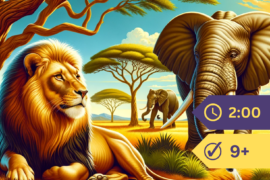
A mighty lion spares a tiny mouse — and the mouse later repays the favor by gnawing through a hunter’s net. One of the most beloved and popular fable short stories for kids, it teaches that even the smallest act of kindness can make a world of difference. A perennial classroom and bedtime staple.
2. The Hare and the Tortoise
Overconfident in his speed, the hare falls asleep during a race — and the slow, steady tortoise wins. One of the top 10 fables children encounter at school, its moral about persistence over arrogance has lost none of its punch in two and a half thousand years.
3. The Ants and the Grasshopper
While the ants labor all summer storing food, the grasshopper sings and plays. When winter arrives, only the ants are prepared. A short fable story about hard work and foresight that resonates just as strongly today as it did in ancient Greece — and a reliable favorite in English primary classrooms.
4. The Ant and the Dove
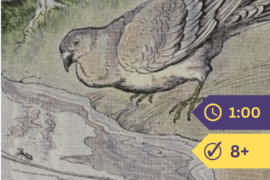
A drowning ant is rescued by a dove who drops a leaf into the water. Later, the ant saves the dove from a hunter’s arrow. This gentle illustrated fable about reciprocal kindness is perfectly short for young readers, full of warmth and easy to discuss.
5. The Fox and the Stork
The cunning fox serves soup in a shallow dish the stork cannot eat from — only for the stork to repay the trick at her own dinner party. A sharp fable about fairness, and one of the most satisfying “getting your comeuppance” stories in the English fable tradition.
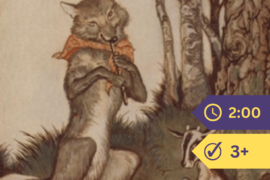
6. The Shepherd Boy and the Wolf
A bored shepherd boy repeatedly cries wolf to trick the villagers — until a real wolf comes and no one believes him. One of the most widely recognised Aesop fables, with a moral about honesty and trust that children grasp immediately.
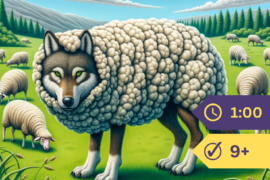
7. The Wolf in Sheep’s Clothing
A wolf disguises himself in a fleece to sneak undetected into a flock. A short, vivid fable whose central image has become a phrase used in every language — and a powerful entry point for talking with kids about hidden dangers and misleading appearances.
La Fontaine Fables
Jean de La Fontaine, the seventeenth-century French poet, based his celebrated Fables on the same ancient Aesop source material — expanding them into witty verse with sharper social satire. On Ririro, the classic fable stories associated with La Fontaine appear in the Aesop collection, letting you read the English prose versions of tales La Fontaine made famous across Europe.
1. The Fox and the Crow
A crow clutches a piece of cheese; a flattering fox tells the crow what a magnificent voice it must have — and the cheese tumbles down the moment the crow opens its beak to sing. One of La Fontaine’s most celebrated fables, and a perfect illustrated short fable story about vanity and deception.
2. The Fox and the Grapes
Unable to reach a cluster of ripe grapes, the fox walks away declaring they were probably sour anyway. The origin of the phrase “sour grapes,” this compact fable story about self-deception is as sharp and funny today as when La Fontaine adapted it from Aesop.
3. The North Wind and the Sun
The wind and the sun compete to make a traveler remove his coat. Brute force fails; gentle warmth succeeds. A timeless illustrated fable about persuasion over power, frequently used as a reading comprehension text in English classrooms worldwide.
4. The Town Mouse and the Country Mouse
A country mouse visits her sophisticated city cousin, only to find that urban luxury comes with constant danger. A perennially popular fable short story whose contrast between comfort and excitement still sparks lively discussion with young readers.
Panchatantra
The Panchatantra is a collection of ancient Indian fable stories, likely compiled around 300 BCE, that influenced storytelling traditions from Persia to medieval Europe. Unlike Greek fables, Panchatantra tales are often more intricately plotted, with animal characters used to illustrate principles of wisdom and leadership. Ririro features a selection of these fables, illustrated and free to read online.
1. The Lion and the Rabbit
A clever rabbit outwits a fearsome lion by convincing him there is a rival lion living in a well — and the lion charges to his own defeat. A Panchatantra classic that makes a wonderful counterpart to Aesop, showing that wit can triumph over brute strength in every storytelling tradition.
2. The Elephant and the Rabbit
A herd of elephants is devastating a colony of rabbits — until a quick-thinking rabbit tricks the elephant king into believing the moon itself is angered by his actions. Another delightful Panchatantra fable for kids, perfectly illustrated and surprisingly funny.
Other Fables – Leo Tolstoy, Edgar Allan Poe, and More
The fable tradition did not stop with the ancients. On Ririro you’ll find fables by Leo Tolstoy, who wrote spare, morally charged fable short stories for Russian peasant readers, as well as a striking entry by Edgar Allan Poe, whose gothic take on the genre is unlike anything else in this collection.
1. The Peasant and the Cucumbers
A peasant daydreams about stealing cucumbers and growing rich — his fantasy snowballing until he imagines himself a wealthy merchant — only to be caught the moment he reaches for the first cucumber. Tolstoy’s fable is a wry one-page warning against wishful thinking, and one of the shortest stories in the collection.
2. The Foundling
A peasant family takes in an abandoned child, and the act of mercy ripples quietly through their lives. A gentler fable from Tolstoy — short, quietly moving, and a welcome contrast to the sterner morality of many Aesop fables.
3. Silence—A Fable
Edgar Allan Poe’s only work subtitled “a fable” is a gothic, dreamlike prose poem set at the edge of a desolate lake, where a demon narrates a tale of solitude and existential dread. A fascinating outlier for older readers who think they already know what a fable looks like.
Fables About Consequences
The single most common moral thread running through this fable collection is consequences: actions have results, and those results arrive whether or not the characters planned for them. These fable short stories make that lesson vivid and hard to forget.
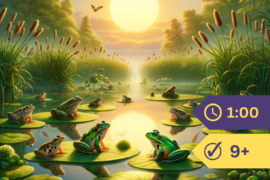
1. The Frogs Who Wished for a King
Bored with their freedom, a colony of frogs demands that Jupiter send them a king. First he sends a log — they complain it does nothing. Then he sends a stork, which begins eating them. A pointed fable about the dangers of demanding change without thinking through what comes next.
2. The Miller, His Son, and Their Ass
A miller and his son try to please every passerby as they travel with their donkey — and in trying to satisfy everyone, end up losing the donkey entirely. A wonderfully comic fable about the folly of seeking universal approval, and one of Aesop’s longer short fable stories for older readers.
3. The Wolf and the Lamb
A wolf accuses a lamb at a stream of various offences, each more absurd than the last, until he has manufactured a justification for devouring it. A sobering fable about power, injustice, and the way the strong invent reasons to prey on the weak.
Fables About Greed
Several of the most popular fable stories on Ririro turn on a single dangerous impulse: wanting more than you have. These illustrated fables each deliver the same warning through a completely different story.
1. The Goose and the Golden Egg
A farmer owns a goose that lays one golden egg each day. Impatient, he cuts it open to get all the gold at once — and finds nothing. One of the most quoted Aesop classics, this fable gave the English language one of its most enduring phrases.
2. The Dog and the Shadow
A dog carrying a bone sees his reflection in the water and snaps at it to steal the “other” bone — dropping his own in the process. A short fable story ideal for young readers, with an image vivid enough to stick for a lifetime.
3. The Fox and the Grapes
Unable to reach the grapes, the fox declares them sour — a self-serving rationalization that doubles as a lesson in greed and self-deception. Works beautifully paired with The Dog and the Shadow for a classroom discussion about wanting what we cannot have.
Fables About Friendship and Kindness
Not all fables are cautionary tales. Some of the best-loved stories in this collection celebrate what happens when characters choose generosity over self-interest — and what can grow from a single act of compassion.
1. The Lion and the Shepherd
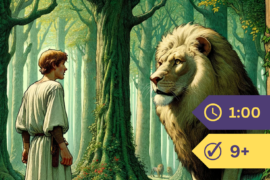
A shepherd removes a thorn from a lion’s paw — and years later, when he is thrown to the lions in an arena, that same lion recognizes him and refuses to attack. A fable about long-remembered kindness, and one of the most emotionally satisfying stories in the entire Aesop collection.
2. The Scorpion and the Tortoise
A scorpion asks a tortoise to carry it across a river, promising not to sting. Midway across, it stings anyway — and both drown. From the ancient Bidpai tradition, this fable is a sobering counterpoint to the friendship stories, asking whether some natures can truly change.
3. The Eagle and the Fox
An eagle and a fox become neighbors and close companions — until the eagle steals the fox’s cubs to feed her eaglets. Consequences follow swiftly. A more complex fable about trust, betrayal, and the long reach of injustice, suited to older readers who are ready to wrestle with moral ambiguity.
Fables About Deception
Trickery runs through the fable tradition like a golden thread. These stories feature characters who lie, flatter, and manipulate — and they rarely end well for the deceiver.
1. The Fox and the Crow
Flattery is the fox’s weapon: he praises the crow’s beauty until the vain bird opens its beak to sing and drops its cheese. One of the most-loved illustrated fables on Ririro and an ideal starting point for talking with children about manipulation and false praise.
2. The Wolf in Sheep’s Clothing
The wolf’s disguise fools everyone — until the shepherd reaches for what he believes is a sheep. A fable whose central image has become one of the most universally understood metaphors for hidden danger in the English language.
3. The Monkey and the Cat
A crafty monkey convinces a cat to pull chestnuts from the fire, pocketing each one as it appears while the cat singes its paw. The origin of the expression “cat’s paw,” this is a fable about being used by someone cleverer and less scrupulous than yourself — and a surprisingly funny one.
Discover all Fables on Ririro
Whether you’re a parent looking for a bedtime fable story, a teacher searching for illustrated fable short stories for the classroom, or a reader working through the full Aesop collection, Ririro has everything in one place. Browse fables for kids for the most age-appropriate titles, or dive into the complete fable collection for hundreds of free, illustrated stories from every tradition — all available to read online, with many offered as audio versions too, and no sign-up required.