
Edgar Allan Poe
Dive into Edgar Allan Poe’s complete short stories and poems—read them online for free, filter to discover your favorites or explore our article for inspiration.























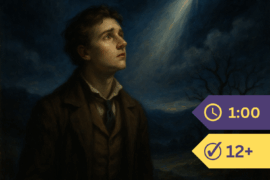
The Complete Works of Edgar Allan Poe: Short Stories & Poems
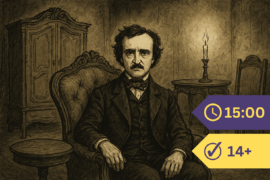
Edgar Allan Poe (1809–1849) is, in Sir Arthur Conan Doyle’s words, “the world’s supreme short story writer”—a judgment that has only grown more accurate with time. In the century and a half since his death, his work has been read across France, Spain, Germany, Italy, Russia, and Scandinavia, his spell felt, as the critic Edmund Clarence Stedman wrote, “wherever our own English speech goes with the flags of its two great overlands.” The private life behind that fame was shaped by loss from the start: his foster father secretly intercepted his love letters to his college sweetheart, Sarah Elmira Royster—a betrayal one contemporary biographer called “probably the biggest tragedy in Poe’s life”—and later, when his young wife Virginia lay dying of tuberculosis, Poe bore hunger and cold himself so that she would not go without food, medicine, or comfort. His cottage at Fordham was filled with vines, flowering plants, and caged singing birds; those who knew him described not a tortured wreck but a devoted husband and a man of genuine warmth. Both the darkness of his fiction and that private humanity are worth discovering.
The Life Behind the Work
Poe’s own journals record the facts of his beginning plainly: “My father David died when I was in the second year of my age and when my sister Rosalie was an infant in arms. Our mother died a few weeks before him. Thus we were left orphans at an age when the hand of a parent is so peculiarly requisite.” The orphan boy was taken in by John Allan, a Richmond merchant, who enrolled him with Prof. Joseph H. Clarke—using words Clarke himself recorded decades later: “Mr. Clarke, I have heard much about your school, and as Edgar shows a decided aptness for classics I have determined to place him under your care.” Poe became, in Clarke’s account, “one of the most distinguished scholars” in the school. At the end of one summer session, when Poe was no older than twelve or fourteen, his classmate Nat Howard submitted his composition written in Latin after Horace—Poe submitted his in verse. Clarke showed the poems to a professor at St. Mary’s College, who replied: “Mr. Clarke, these compositions would do honor and credit to the best educated professor in my college.” Clarke, interviewed in 1879 at the age of 89, still remembered the boy clearly: “He was always cheerful, brimfull of mirth and a very great favourite with his schoolmates. I never had occasion to say a harsh word to him while he was at my school. Edgar was a poet in every sense of the word.” Yet Allan never recognised what Clarke saw. When Poe fell in love with his neighbour Sarah Elmira Royster at college, Allan secretly connived with her parents to intercept their letters—a betrayal one biographer called “probably the biggest tragedy in Poe’s life”—and throughout Poe’s youth “cruelly discouraged the lad’s literary efforts and belittled his creativeness”: the very gifts that would outlast them both. Poe himself recorded the final chapter: when he was seventeen, Allan inherited a fortune of some $60,000 a year from an uncle—wealth that, in Poe’s own words, “nearly turned his brain, and, worse, confirmed him in habits of habitual drunkenness.” Allan then married a second wife, had children, and died, as Poe wrote with barely concealed bitterness, “without leaving me anything.”
“Women are the impassioned defenders of his name; women were the idols and guardians of his household; women are the themes of his most exquisite poems,” wrote one 1914 critic. His most constant protector was Maria Clemm—his aunt, and later what she herself called, in a letter written eighteen months after his death, his “beloved son”—whom one period writer described as the “guardian angel of Poe,” a domestic anchor who kept him writing through decades of poverty. The elegiac tone that runs through so many of his poems may have its roots in his frequent solitary visits to his mother’s grave in St. John’s Churchyard, Richmond, and his silent vigils at the grave of Mrs. Allan—the woman who had loved him without reservation. In a secret ceremony at St. Paul’s Episcopal Church on September 22, 1835, Poe married Maria’s thirteen-year-old daughter Virginia; he was twenty-six. A second, announced ceremony followed in Richmond in May 1836. Maria Clemm later described their household in words that cut through every later legend: “Eddie was domestic in all his habits, seldom leaving home for an hour unless his darling Virginia or myself was with him. He was truly an affectionate, kind man and husband, impulsive, generous, affectionate and noble. His tastes were very simple and his admiration for all that was good and beautiful very great.” The illness that would take Virginia began with a single moment: she ruptured a blood vessel in her throat while singing and playing the harp for her husband in their Philadelphia home. She lived six more years, and it was during that long vigil—at the Fordham cottage, in near-total poverty—that Poe wrote some of his most enduring work. A Richmond paper, surveying this period in 1899, put the economics plainly: farm labourers were better paid than the man who had established his country’s literary independence. Poe was reportedly overheard repeating to himself the daily wage of a local farm hand—six shillings a day—having just realised it exceeded what his pen earned him. The paper’s verdict on his life was simple: “a martyr to his ideals.” When she finally died on January 30, 1847, she “rested on a bed of straw with Poe’s coat for a blanket and a cat by her side for the animal heat it gave out.” “Thereafter,” wrote one observer, “Poe was a harp unstrung.”
Poe himself, in a letter to Lowell, gave the clearest account of what drove him: “My life has been whim, impulse, passion—passion for beauty and for poetry, which is its truest expression—a longing for solitude, a scorn of all things present.” Writing separately to a cousin in 1835, he made clear he felt no self-pity about his poverty: “I am glad to think that I was freed from high affluence to comparative poverty, or at least a reliance on my own resources.” The legend of debauchery that shadowed his name was largely the work of his literary executor, Rufus Griswold, who published in the New York Tribune just two days after Poe’s death: “Edgar Allan Poe is dead. This announcement will startle many, but few will be grieved by it… he had few or no friends”—those last words in italics. Against this, Lambert Wilmer, who knew Poe daily for twelve years, left unambiguous testimony: “I have been in company with him every day for many months together. I did not see him inebriated—not once. Poe never wrote a line that gave expression to a libidinous thought. The female creations of his fancy are all either statues or angels. His conversation at all times was as chaste as that of a vestal.” A close friend who had spent weeks in the “closest intimacy” with Poe wrote separately that he had never seen him “drink a drop of liquor, wine or beer” — but that Mrs. Clemm had explained what happened when, on the importunity of a companion, he did: “it suddenly flashed through his nervous system and excitable brain, and he was no longer himself, or responsible for his acts.” Not a drunkard by habit; physiologically unable to tolerate even one glass. Mrs. Whitman, one of America’s most gifted women poets and among those closest to him in his final years, said simply: “As a conversationalist I do not remember his equal.” What Griswold’s campaign obscured—and what the critics of Poe’s centenary worked to restore—was the other Poe: razor-sharp logician, foremost literary critic of his generation, and speculative philosopher ahead of his time. The French critic E. D. Forgues had seen it early: “The inspiring faculty of Poe is reasoning.” His treatise Eureka (1848), which he insisted on calling a “poem,” advanced a pantheistic theory of the cosmos that one 1909 critic noted “contains some previsions of the trend of scientific and spiritual speculations which have been developing within the 60 years since his death.” The darkness was in the work. The man, by the testimony of those who actually knew him, was something far more complicated—and more sympathetic—than the legend he was handed. He died on Sunday morning, October 7, 1849. As one contemporary wrote: “as the Angelus was ringing all over the city, his soul passed with the bells out into the surging sea of death.”
Poe in the Words of His Contemporaries
The most reliable measure of Poe’s stature is not the critics who came after him but the writers who encountered him directly. John P. Kennedy—a Baltimore author and one of the judges who awarded Poe his first literary prize in 1833—described reading through the submitted manuscript tales in a single sitting: “When I had finished I went to the second, then to the third, and did not stop until I had gone through the volume,” interrupted only by exclamations of “excellent” and “how odd.” Kennedy became Poe’s earliest patron, helping him secure the editorship of the Southern Literary Messenger that would make his name.
By 1875, when Baltimore finally dedicated its first public monument to Poe’s memory—twenty-six years after his death—John Greenleaf Whittier sent a letter to the ceremony: the city was at last giving Poe what “the marble-hearted world denied to the living man.” Henry W. Longfellow, writing to the same committee in August of that year, chose to respond by quoting Poe from memory: the only lines he could recall as “in any way appropriate to the purpose” were from “For Annie” — “The fever called Living is conquered at last.” That Longfellow could summon those lines unprompted says more than any formal tribute. William Cullen Bryant, then in his eighties, also wrote expressing his regret at not being able to attend. One contemporary survey of Poe’s legacy was blunter still: he was “a wonderful genius, whose value to literature obliterates scores of the men of his day who looked down upon him.”
The European verdict had never wavered. The Dutch novelist Maarten Maartens, visiting New York, said plainly that Poe is “at the head of American literature,” and that “Europe is quite agreed, as it has been from the first, in recognizing the overshadowing genius of Edgar Allan Poe.” Surveying the reception across France, Germany, Italy, Russia, and Scandinavia, one 1909 critic wrote: “The fame of Poe is founded upon rock.” Tennyson, writing from his home at Freshwater, Isle of Wight, confirmed in his own hand that he had “long been acquainted with [Poe’s] works, and am an admirer of them.” By other accounts he had said the only thing he wanted to see in America was the grave of Edgar Allan Poe.
Short Stories by Edgar Allan Poe
1. The Tell-Tale Heart
Perhaps the most viscerally efficient story in American literature. A narrator insists on his sanity while confessing to murder—driven to confession not by guilt but by the imagined sound of his victim’s still-beating heart. Its compression is astonishing: in under ten minutes of reading, Poe constructs a complete psychological collapse.
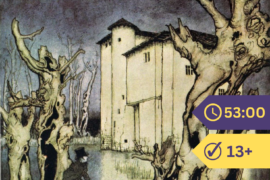
2. The Fall of the House of Usher
The centrepiece of Poe’s Gothic fiction and the story that most fully demonstrates what one contemporary critic called his mastery of “tone”—”the truths of keeping an atmosphere in composition.” A narrator visits the crumbling estate of his childhood friend Roderick Usher and finds a household in psychic and physical disintegration. The house itself becomes a character; its final collapse is one of literature’s great sustained images.
3. The Cask of Amontillado
Set during carnival season, this cold-blooded tale of revenge is a study in the pleasure of plotting. Montresor lures his rival Fortunato into the catacombs on the promise of rare wine—and bricks him in alive. What makes it unsettling isn’t the violence but Montresor’s serene, unhurried satisfaction. A classroom staple for good reason.
4. The Masque of the Red Death
A prince seals himself and his courtiers inside a fortified abbey to escape a deadly plague, filling the time with a masked ball of grotesque splendour. When a strange figure appears at the feast, Poe makes mortality itself walk through the door. Few allegories land with such physical force—the coloured rooms, the ebony clock, the silence that falls on the hour.
5. The Black Cat
Darker than The Tell-Tale Heart and in some ways more honest about self-destruction, this story traces a man’s descent through alcoholism, violence, and self-justification. A black cat is at the centre of it—a domestic detail that becomes an instrument of doom. Poe himself was fond of cats; he kept them at Fordham, which gives the story an unsettling autobiographical shadow.
6. The Pit and the Pendulum
Pure suspense, stripped to essentials: a prisoner of the Inquisition in a dark cell with an ever-descending blade and an unknown abyss at his feet. The genius of this story is its refusal to over-explain. The reader lives inside the narrator’s terror, calculation, and eventual wild hope. A masterclass in pacing.
7. The Premature Burial
Poe turned his era’s very real fear of being buried alive into both horror and ironic comedy. The narrator’s obsessive dread eventually consumes him—until a shocking reversal deflates the terror entirely. It’s one of Poe’s most structurally inventive stories, and one of the funniest, if you have the stomach for it.
8. The Oval Portrait
One of Poe’s shortest and most concentrated works. A wounded traveller shelters in an abandoned château and becomes fixated on a portrait of a young woman of breathtaking realism—and the story of its creation, found in a notebook, reveals something terrible about the cost of art. Under 1,000 words; lingers for days.
Edgar Allan Poe Detective Stories
1. The Murders in the Rue Morgue
Poe did not merely write the first great detective story—he invented the genre’s entire grammar. C. Auguste Dupin, the brilliant, reclusive reasoner who solves an apparently impossible locked-room murder, is the prototype for every great fictional detective that followed, from Sherlock Holmes to Hercule Poirot. Conan Doyle acknowledged the debt explicitly, calling Poe “the father of the detective tale.”
2. The Purloined Letter
The third and most intellectually elegant of the Dupin stories. A stolen letter is hidden in plain sight, and Dupin’s method—reasoning not just as a logician but as a psychologist who enters the mind of the thief—anticipates modern profiling. Its central insight (that the obvious hiding place is the one no one thinks to look) has been cited by philosophers and cryptographers ever since.
3. The Gold-Bug
A cryptography adventure on Sullivan’s Island, South Carolina, in which a man deciphers a coded message to hunt buried pirate treasure. When it was published in 1843 it won a $100 prize and became the most widely read story of Poe’s lifetime. The same puzzle-obsessed mind once challenged magazine readers to send him any cipher he could not crack—and solved every one. When Poe read the first instalment of Dickens’s Barnaby Rudge, he predicted the outline of every chapter still to come. Dickens’s reported response: “The man must be the very devil.”
Poems by Edgar Allan Poe
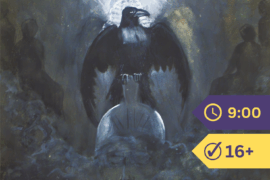
1. The Raven
Poe’s most famous poem arrived in January 1845 and made him a celebrity overnight—paid $5 or $10 for it, a sum spent within days. A grieving man is visited by a raven that answers every question with “Nevermore”—a single word that accumulates unbearable weight across eighteen stanzas. Poe scholar Richard Gimbel, who spent years assembling the definitive Poe collection, noted that Poe “wrote ‘The Raven’ three times, each time improving it vastly”—a passion for self-criticism that equalled his creative genius. He later published “The Philosophy of Composition,” explaining the poem’s construction step by step, as if to prove that genius can also be entirely deliberate.
2. Annabel Lee
The last poem Poe completed, published just after his death. It mourns a love so pure and total that even the angels envied it—and insists that love survives death, that the narrator and Annabel Lee remain united in spirit even now. Its melody is irresistible, and it has been set to music, recited at funerals, and quoted in novels (most famously Nabokov’s Lolita) more than almost any other American poem.
3. A Dream Within a Dream
Two stanzas that ask whether anything we perceive or hold dear is real—or whether life itself is only a dream within a dream. The image of sand slipping through fingers while waves crash has become one of the most recognisable emblems of modern anxiety about time and loss. Short enough to memorise; deep enough to revisit for years.
4. The Haunted Palace
Originally embedded in The Fall of the House of Usher, this poem works as an allegory of a mind collapsing into madness—a once-glorious palace invaded by “evil things, in robes of sorrow.” Reading it alongside the story reveals the full architecture of Poe’s Gothic vision. Reading it alone, it stands as a poem of unusual sustained power.
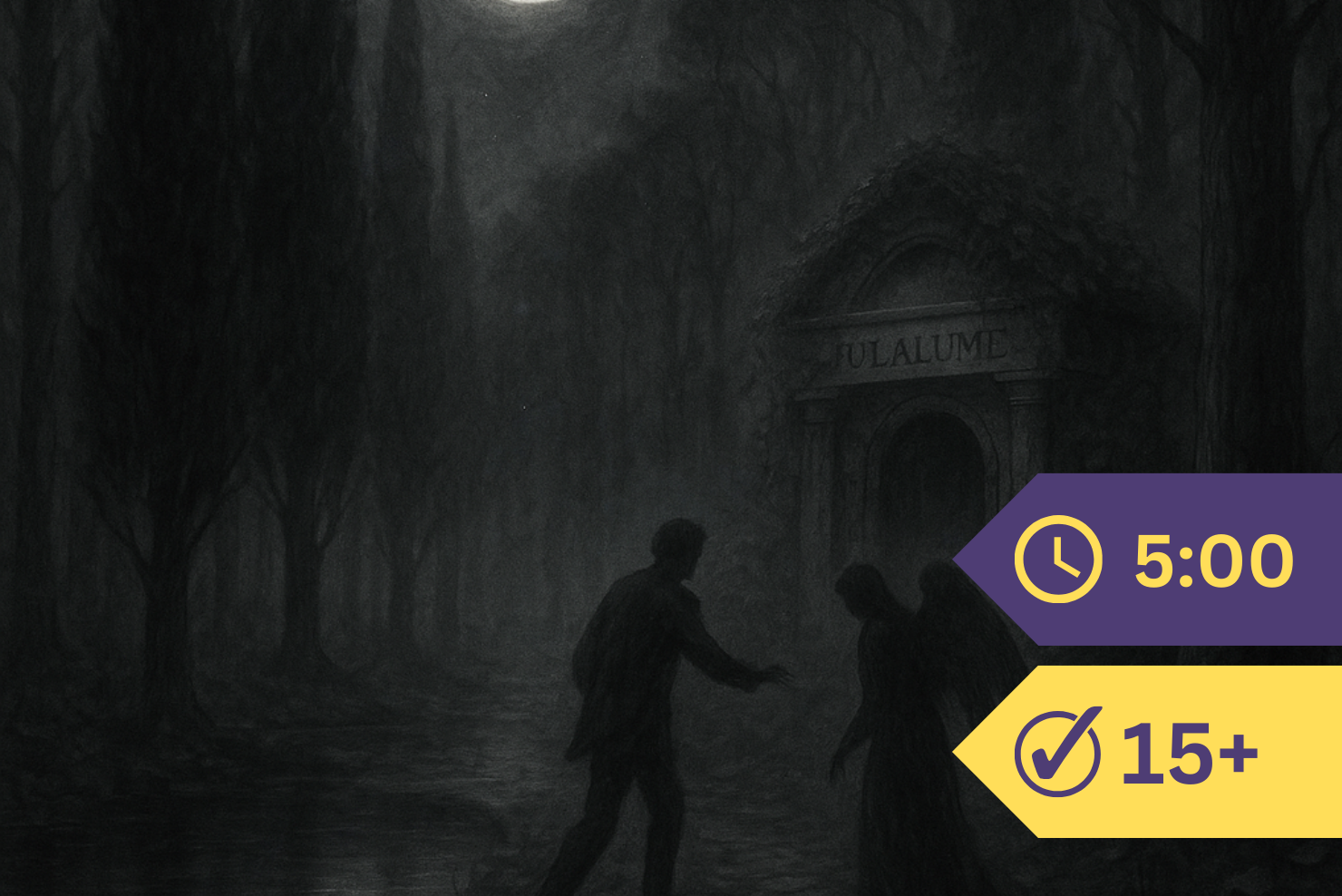
5. Ulalume
Among Poe’s most musically ambitious poems—dense with invented place names, mythological references, and an incantatory rhythm that carries the reader forward almost without comprehension. A narrator wanders through an autumnal landscape and discovers, with horror, where his feet have led him. It rewards multiple readings and reveals something new each time.
6. Lenore
Where most of Poe’s elegies collapse into grief, Lenore pivots toward something more defiant. The narrator argues against conventional mourning, urging instead a song of joy for a soul liberated from suffering. It is an unusual note of resilience in Poe’s canon—and one that illuminates his more despairing works by contrast.
Common Themes in Poe’s Works
Across 147 stories and poems, a handful of preoccupations recur with the force of obsession. Mapping them is one of the pleasures of reading through his complete works.
- Death & Gothic Horror — the dominant register of his fiction, from plague allegories to buried-alive nightmares to crumbling ancestral houses.
- Madness & Obsession — Poe’s narrators are rarely reliable; their certainty of their own sanity is often the surest sign they have lost it.
- Love & Grief — his poems return again and again to lost women, mourned with an intensity that his 1908 centenary critics attributed to real, private devotion.
- Satire & Irony — a side of Poe that surprises new readers: he wrote 29 satirical pieces, and his comic timing is underrated.
- Mystery & The Supernatural — whether rational (the detective stories) or inexplicable (the ghost tales), Poe’s plots hinge on secrets that demand to be uncovered.
- Melancholy & Symbolism — even his lightest works carry a tonal weight, and his imagery—the raven, the pendulum, the beating heart—has passed into the shared vocabulary of Western culture.
All 147 of Poe’s works are available to read online for free on Ririro, with audio narrations for many titles and downloadable PDFs for reading offline. Whether you’re a high school student encountering The Tell-Tale Heart for the first time, an adult revisiting the poems, or a teacher building a Gothic literature unit, the full collection is here—filter by type, theme, or reading time to find exactly what you need. You can also own the complete Poe collection from our store.