The Olive-Tree and the Fig-Tree

Summary


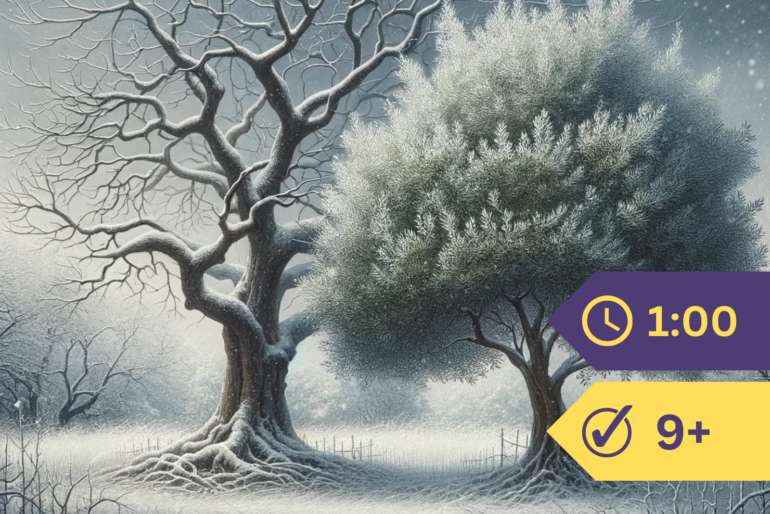
"The Olive-Tree and the Fig-Tree" is a short Aesop fable about a proud olive tree that mocks the fig tree for shedding its leaves each season. The olive boasts its year-round greenery as a mark of superiority — until a heavy snowfall arrives. The very foliage the olive prized becomes a trap, weighing down its branches until they break. The bare fig tree, stripped of leaves, lets the snow pass harmlessly through. In just a few lines, Aesop frames the tension between pride in appearance and the quiet strength of adaptation.

Read Online

The Olive-Tree ridiculed the Fig-Tree because, while she was green all the year round, the Fig-Tree changed its leaves with the seasons. A shower of snow fell upon them, and, finding the Olive full of foliage, it settled upon its branches and broke them down with its weight, at once despoiling it of its beauty and killing the tree. But finding the Fig-Tree denuded of leaves, the snow fell through to the ground, and did not injure it at all.



Credits

Aesop was an ancient Greek storyteller, believed to have lived around the 6th century BCE, whose fables have shaped moral literature across the world for over two millennia. "The Olive-Tree and the Fig-Tree" is a particularly concise example of his craft — using two familiar Mediterranean trees to illustrate a universal truth about the dangers of pride with almost mathematical economy.