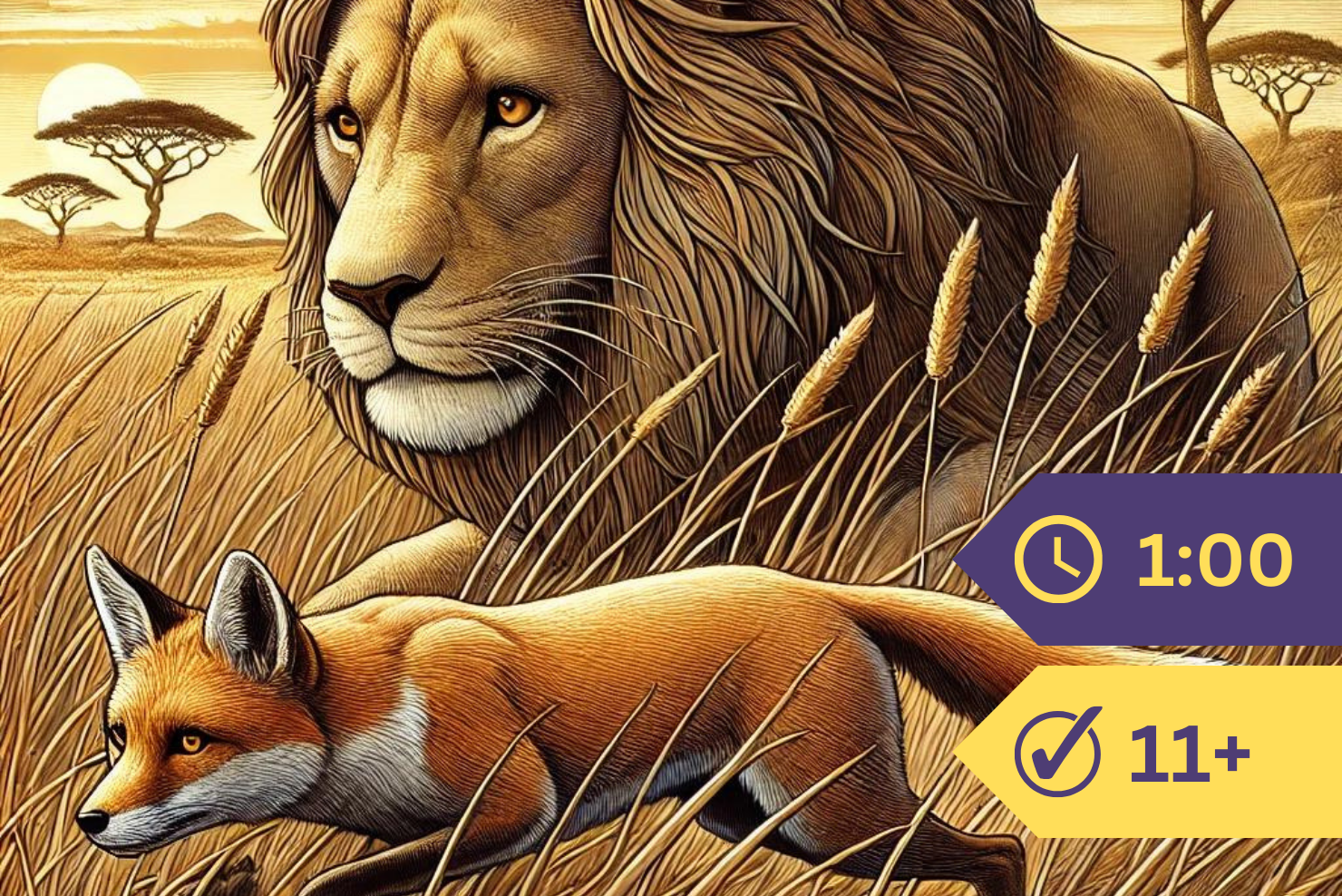
The Lion and the Shepherd

Summary


"The Lion and the Shepherd" is a short fable by Aesop in which a simple act of compassion sets off a chain of events neither a man nor a lion could have anticipated. When a shepherd removes a painful thorn from a lion's paw, a bond forms across the divide between wild and tame. Seasons later, that same shepherd faces death in an arena — and the lion he once helped is the very beast released to kill him. What happens next puts kindness and loyalty to their ultimate test.


Read Online

A Lion, roaming through a forest, trod upon a thorn. Soon afterward he came up to a Shepherd and fawned upon him, wagging his tail as if to say, “I am a suppliant, and seek your aid.” The Shepherd boldly examined the beast, discovered the thorn, and placing his paw upon his lap, pulled it out; thus relieved of his pain, the Lion returned into the forest. Some time after, the Shepherd, being imprisoned on a false accusation, was condemned “to be cast to the Lions” as the punishment for his imputed crime. But when the Lion was released from his cage, he recognized the Shepherd as the man who healed him, and instead of attacking him, approached and placed his foot upon his lap. The King, as soon as he heard the tale, ordered the Lion to be set free again in the forest, and the Shepherd to be pardoned and restored to his friends.



Credits

Aesop was an ancient Greek storyteller, believed to have lived around 620–564 BCE, whose fables have been retold across cultures for over two millennia. "The Lion and the Shepherd" is one of his most enduring moral tales, illustrating the principle that a good deed, however small, is never truly forgotten. The story's courtroom-like resolution — in which a king must weigh animal loyalty against human justice — gives this fable an unusually dramatic shape among Aesop's works.