Once upon a time, in a sunny forest, there lived a fox named Freddy. One day, Freddy was walking along a path when he saw something that made his eyes sparkle.
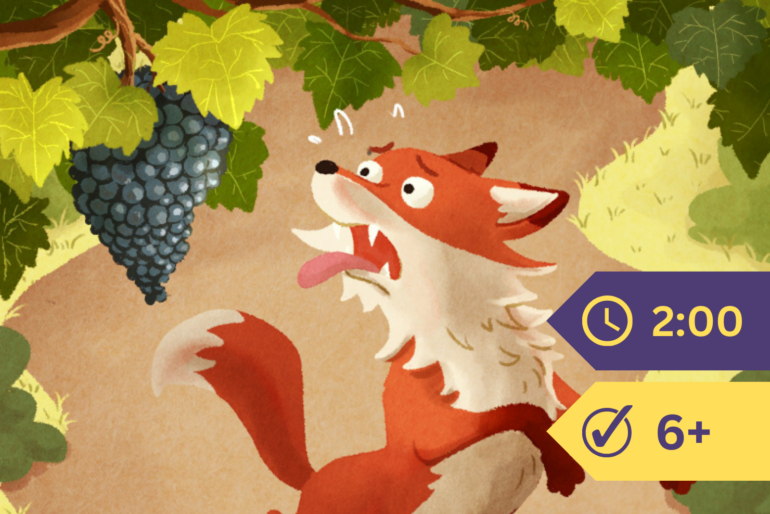
“Yummy! Look at those grapes!” Freddy exclaimed. High above him, hanging from a vine draped over a tall tree branch, was a bunch of the juiciest, plumpest grapes he had ever seen. Just thinking about them made his mouth water.

“I have to taste those grapes,” Freddy decided. He jumped up to grab them, but they were too high. He missed by a lot!
“Maybe if I take a big run-up, I can reach them,” he thought. So, Freddy stepped back, took a deep breath, and ran as fast as he could toward the tree. He leaped into the air—but still couldn’t reach the grapes.

He tried again and again, running and jumping, but no matter how hard he tried, the grapes were just out of reach. Tired and a little embarrassed, Freddy sat down to rest.

“Those grapes are probably sour anyway,” he said loudly, hoping no one heard him trying so hard. “Who wants sour grapes? Not me!”
With his nose in the air, Freddy turned around and trotted off as if he didn’t care at all.
So, we’ve learned that it’s easy to say you don’t want something when you can’t have it.