The Man and the Lion

Summary


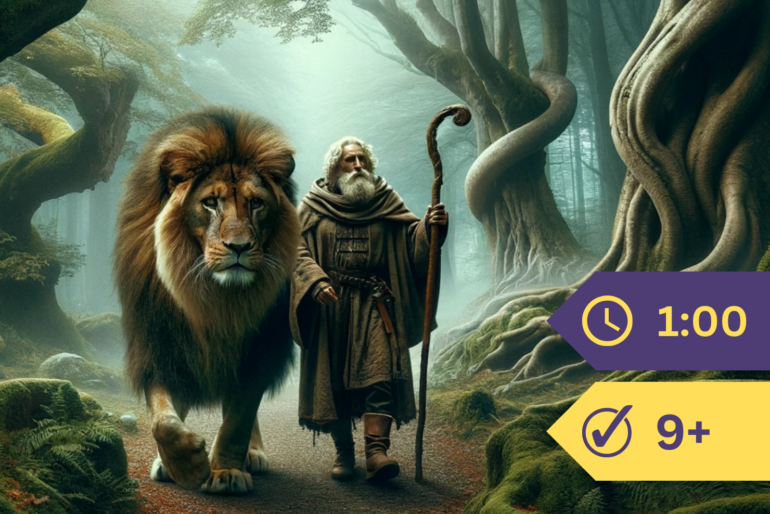
"The Man and the Lion" is a short fable by Aesop in which a man and a lion travel together through a forest, each claiming to be the superior creature. When they pass a stone statue showing a man strangling a lion, the man uses it as proof of human dominance — but the lion's sharp response cuts straight to the heart of the argument: the statue was made by a man. The fable raises a pointed question about whose perspective shapes the stories we accept as truth.


Read Online

A Man and a Lion traveled together through the forest. They soon began to boast of their respective superiority to each other in strength and prowess. As they were disputing, they passed a statue carved in stone, which represented “a Lion strangled by a Man.” The traveler pointed to it and said: “See there! How strong we are, and how we prevail over even the king of beasts.” The Lion replied: “This statue was made by one of you men. If we Lions knew how to erect statues, you would see the Man placed under the paw of the Lion.”


Credits

Aesop was an ancient Greek storyteller, believed to have lived around 620–564 BCE, whose fables have been retold across cultures for over two thousand years. "The Man and the Lion" is one of his most philosophically charged short fables, using a single stone statue as the pivot for a debate about bias and the power of the storyteller.