The Charger and the Miller

Summary


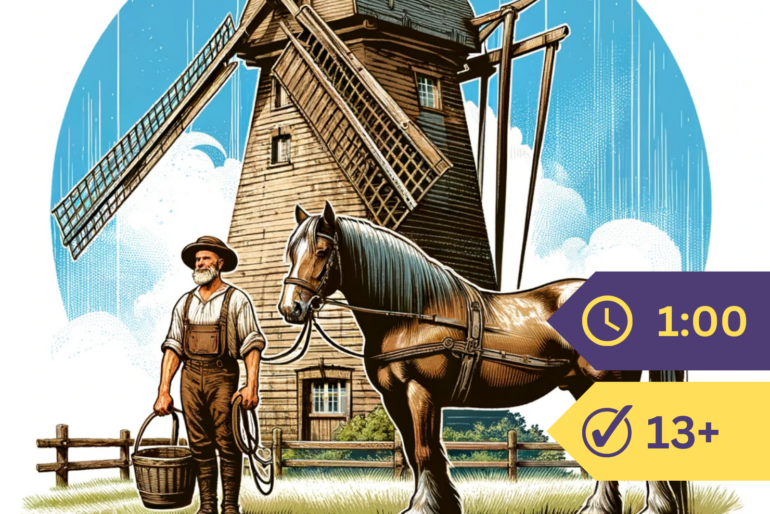
"The Charger and the Miller" is a short Aesop fable about a once-proud warhorse who, weakened by age, is sent from the battlefield to grind grain in a mill. Bitter and humiliated, the Charger mourns his former glory — the armor, the grooming, the honor of war — unable to accept his diminished place. The Miller listens patiently before offering a blunt reminder: the rise and fall of fortune is the common lot of all living things.

Read Online

A Charger, feeling the infirmities of age, was sent to work in a mill instead of going out to battle. But when he was compelled to grind instead of serving in the wars, he bewailed his change of fortune and called to mind his former state, saying, “Ah! Miller, I had indeed to go campaigning before, but I was barbed from counter to tail, and a man went along to groom me; and now I cannot understand what ailed me to prefer the mill before the battle.” “Forbear,” said the Miller to him, “harping on what was of yore, for it is the common lot of mortals to sustain the ups and downs of fortune.”



Credits

Aesop was an ancient Greek storyteller, believed to have lived around 620–564 BCE, whose fables have been retold across cultures for over two millennia. His short moral tales typically use animals to illuminate human nature and social truths. "The Charger and the Miller" reflects one of Aesop's recurring themes — the inevitability of change and the folly of clinging too tightly to past greatness.