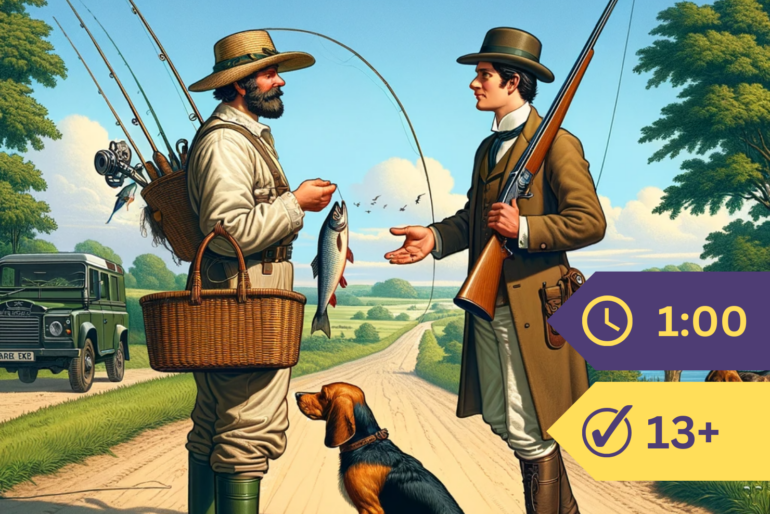
The Huntsman and the Fisherman

Summary


"The Huntsman and the Fisherman" is a short fable by Aesop about two men who discover unexpected joy in swapping what they have for what they want. A huntsman and a fisherman chance upon each other and, delighted by the trade, repeat it day after day — until a wise neighbor warns them that habit may quietly drain the pleasure from even the best arrangement. The fable explores how novelty and desire can lose their edge the moment they become routine.

Read Online

A Huntsman, returning with his dogs from the field, fell in by chance with a Fisherman who was bringing home a basket well laden with fish. The Huntsman wished to have the fish, and their owner experienced an equal longing for the contents of the game-bag. They quickly agreed to exchange the produce of their day’s sport. Each was so well pleased with his bargain that they made for some time the same exchange day after day. Finally a neighbor said to them, “If you go on in this way, you will soon destroy by frequent use the pleasure of your exchange, and each will again wish to retain the fruits of his own sport.”


Credits

Aesop was an ancient Greek storyteller, traditionally dated to around the 6th century BCE, credited with hundreds of short moral fables that have shaped Western literature ever since. "The Huntsman and the Fisherman" is one of his lesser-known works, but it carries a quietly sharp insight into human psychology that feels as relevant today as ever.