
Joseph Jacobs
Dive into Joseph Jacobs’ complete collection of English fairy tales and folk stories — read them online for free, filter to discover your favorites, and explore our article to learn more about the author.



Joseph Jacobs (1854–1916) was an Australian-born folklorist, historian, and literary scholar who spent much of his career in England and later the United States. He is best known for his monumental work collecting and editing English, Celtic, Indian, and European folk tales, bringing them to a wide readership at a time when serious scholarly attention to oral tradition was growing rapidly. Jacobs studied at the University of Sydney and later at Cambridge, where his intellectual interests broadened to encompass comparative folklore, Jewish history, and anthropology. He worked alongside leading figures in the folklore movement, including Andrew Lang, and served as editor of the journal Folk-Lore.
What set Jacobs apart from many folklorists of his era was his deliberate effort to preserve the voice and rhythm of oral storytelling rather than smooth tales into polished literary prose. He drew heavily from English regional traditions, Scottish ballads, and earlier printed sources, and he was careful to document his sources meticulously. His most influential collections — English Fairy Tales (1890) and More English Fairy Tales (1894) — gathered stories that had circulated in various forms for centuries and gave them a lasting standard text.
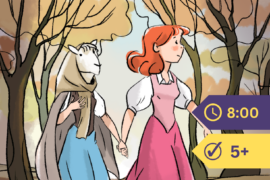
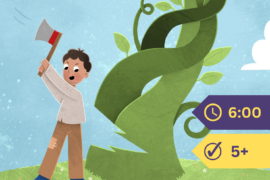
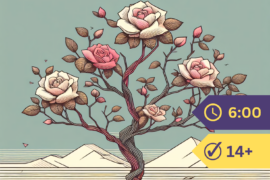
The tales Jacobs collected range widely in tone and type. Some, like Jack and the Beanstalk and Lazy Jack, follow a familiar comic-heroic pattern of a seemingly foolish young man who stumbles or tricks his way to fortune. Others, such as Molly Whuppie and Kate Crackernuts, feature resourceful and courageous young women as their central figures — a characteristic that distinguishes a number of the English tales Jacobs favored. Comic cumulative tales appear alongside darker narratives: The Three Sillies revels in absurdist humor, while The Rose-Tree carries the grim weight of a cruel stepmother story. Shorter pieces like Tom Tit Tot, the English analogue to Rumpelstiltskin, retain strong regional dialect and a sharp wit that Jacobs was careful not to edit away.
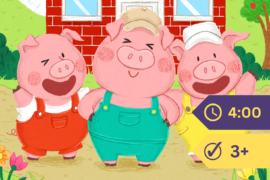
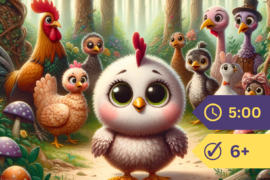
Jacobs’ work had a lasting influence on how English folklore was understood and taught. By presenting tales such as The Three Little Pigs and Henny-penny in accessible but faithful retellings, he helped establish the English folk tradition as a subject worthy of the same scholarly respect afforded to the German tales collected by the Brothers Grimm or the French stories of Charles Perrault. His editions remain standard references in the study of British folklore to this day.