Eulalie

Summary


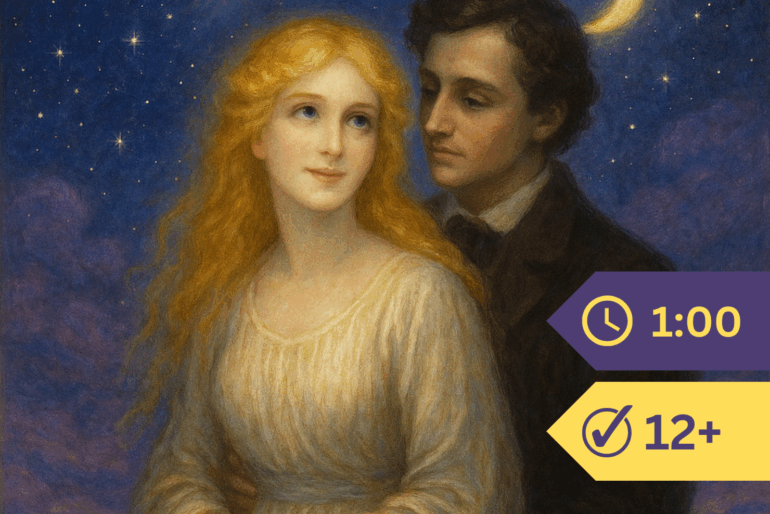
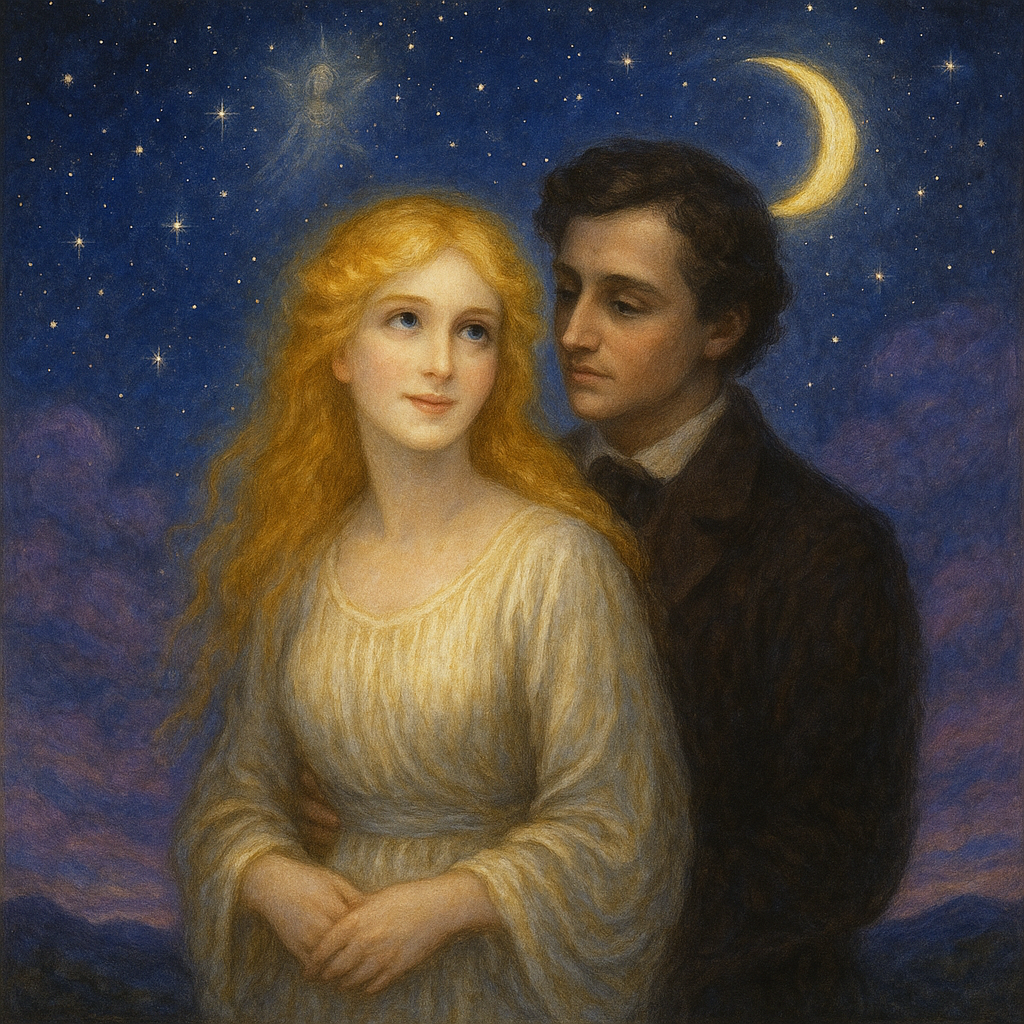
"Eulalie" is a short poem by Edgar Allan Poe in which a narrator describes his life before and after love. Once dwelling alone in a world of grief, his soul a stagnant tide, everything transforms when the yellow-haired Eulalie becomes his bride. Poe fills the verse with luminous imagery — stars, moonlight, purple and pearl — to capture a devotion so complete that Doubt and Pain vanish entirely, replaced by a calm, radiant joy watched over by the goddess Astarté herself.

Listen to audio


Read Online

I dwelt alone
In a world of moan,
And my soul was a stagnant tide,
Till the fair and gentle Eulalie became my blushing bride—
Till the yellow-haired young Eulalie became my smiling bride.

Ah, less—less bright
The stars of the night
Than the eyes of the radiant girl!
And never a flake
That the vapour can make
With the moon-tints of purple and pearl,
Can vie with the modest Eulalie’s most unregarded curl—
Can compare with the bright-eyed Eulalie’s most humble and careless curl.

Now Doubt—now Pain
Come never again,
For her soul gives me sigh for sigh,
And all day long
Shines, bright and strong,
Astarté within the sky,
While ever to her dear Eulalie upturns her matron eye—
While ever to her young Eulalie upturns her violet eye.

Credits

Edgar Allan Poe (1809–1849) was an American writer celebrated for his mastery of Gothic fiction, mystery, and poetry. "Eulalie," published in 1845, stands apart from his darker work as one of his most tender and openly joyful poems, believed to have been written in tribute to his young wife, Virginia Clemm.