The last night that she lived

Summary


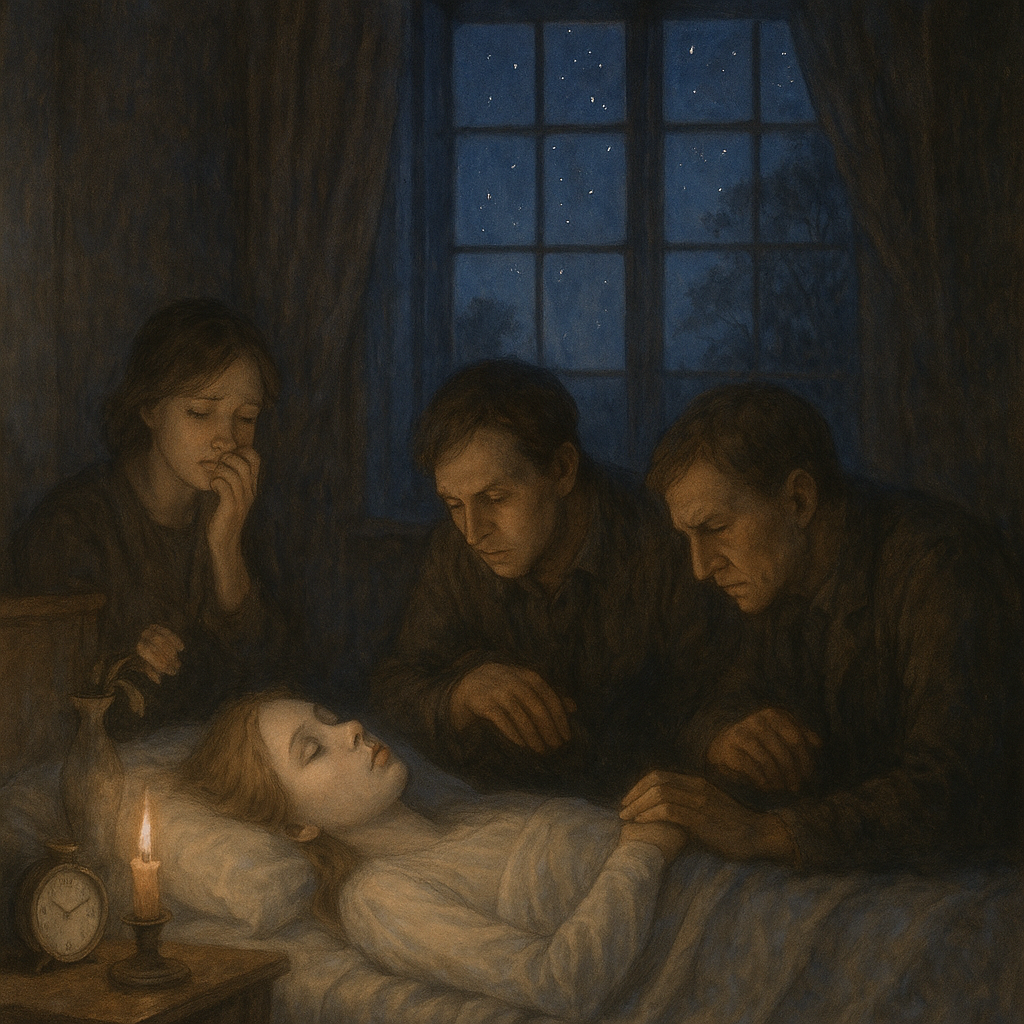
"The Last Night That She Lived" is a poem by Emily Dickinson that places the reader inside the hushed, disorienting vigil at a dying woman's bedside. Those gathered notice ordinary things with strange new intensity, their grief sharpened by the simple fact that the world continues while she does not. Dickinson captures the jealousy, the silence too heavy for words, and the odd stillness that follows — when the mourners are left with only their shaken faith to steady them.


Read Online

The last night that she lived,
It was a common night,
Except the dying; this to us
Made nature different.

We noticed smallest things,—
Things overlooked before,
By this great light upon our minds
Italicized, as ‘t were.

That others could exist
While she must finish quite,
A jealousy for her arose
So nearly infinite.

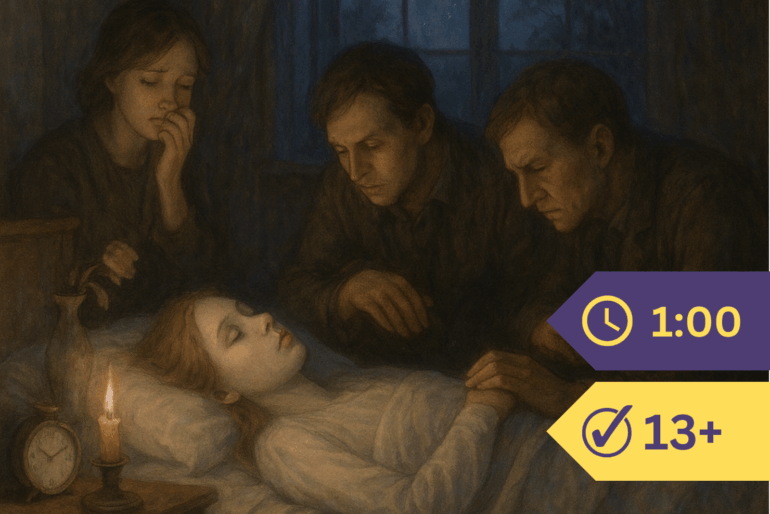
We waited while she passed;
It was a narrow time,
Too jostled were our souls to speak,
At length the notice came.

She mentioned, and forgot;
Then lightly as a reed
Bent to the water, shivered scarce,
Consented, and was dead.

And we, we placed the hair,
And drew the head erect;
And then an awful leisure was,
Our faith to regulate.

Credits

Emily Dickinson was an American poet of the 19th century, now regarded as one of the most original voices in English-language literature, known for her slant rhyme, compressed imagery, and unflinching meditations on death and immortality. "The Last Night That She Lived" is thought to draw on Dickinson's own experience attending the deaths of people close to her, a recurring presence in her life and work.