
Thomas Hardy
Dive into Thomas Hardy’s complete novels and poems — read them online for free, filter to discover your favorites, and explore our article to learn more.


Thomas Hardy (1840–1928) was an English author and poet, widely regarded as one of the most significant literary figures of the Victorian and Edwardian eras. Born in Higher Bockhampton, Dorset, he spent much of his life in the rural English countryside that would become the defining backdrop of his work. Hardy is celebrated both for his sweeping novels and for a substantial body of poetry that he devoted himself to in the later decades of his career.
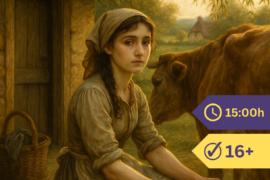
Hardy’s fiction is deeply rooted in the landscapes and communities of southwest England, a region he fictionalised as “Wessex.” His novels examine the pressures that social convention, class, and fate exert on ordinary individuals — particularly women navigating a rigid Victorian world. His novel Tess of the d’Urbervilles: A Pure Woman stands as one of his most powerful works, following the tragic life of Tess Durbeyfield as she struggles against poverty, betrayal, and a moralistic society that condemns her. The subtitle, “A Pure Woman,” was a deliberate provocation, challenging Victorian assumptions about female virtue and culpability.
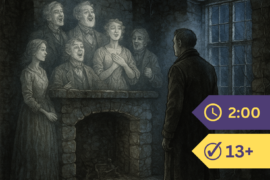
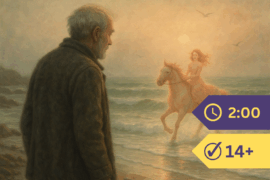
Hardy’s poetry, though less immediately famous than his novels, has earned lasting critical respect for its emotional precision and formal craftsmanship. Much of it is preoccupied with memory, grief, and the persistence of the past. The Oxen is a quietly reflective Christmas poem that weighs childhood faith against adult doubt, imagining the old country legend that oxen kneel in their stalls at midnight on Christmas Eve. The Phantom Horsewoman is among the poems he wrote in the wake of his first wife Emma’s death, portraying a man haunted by a vision of a woman riding along the shore — a study in grief and involuntary memory. Similarly, My Spirit Will Not Haunt the Mound meditates on what lingers after death, suggesting that a spirit would be drawn not to its grave but to the living places it once loved most.
Hardy’s work occupies a pivotal position in English literary history, straddling the boundary between Victorian realism and early modernism. His unflinching treatment of social injustice, rural decline, and human vulnerability drew both admiration and controversy in his lifetime. After the hostile reception of his final novel, Jude the Obscure, in 1895, he turned exclusively to poetry — a form in which he continued to produce distinctive work well into the twentieth century. His influence on later poets, including Philip Larkin and W. H. Auden, has been widely acknowledged.