The Phantom Horsewoman

Summary

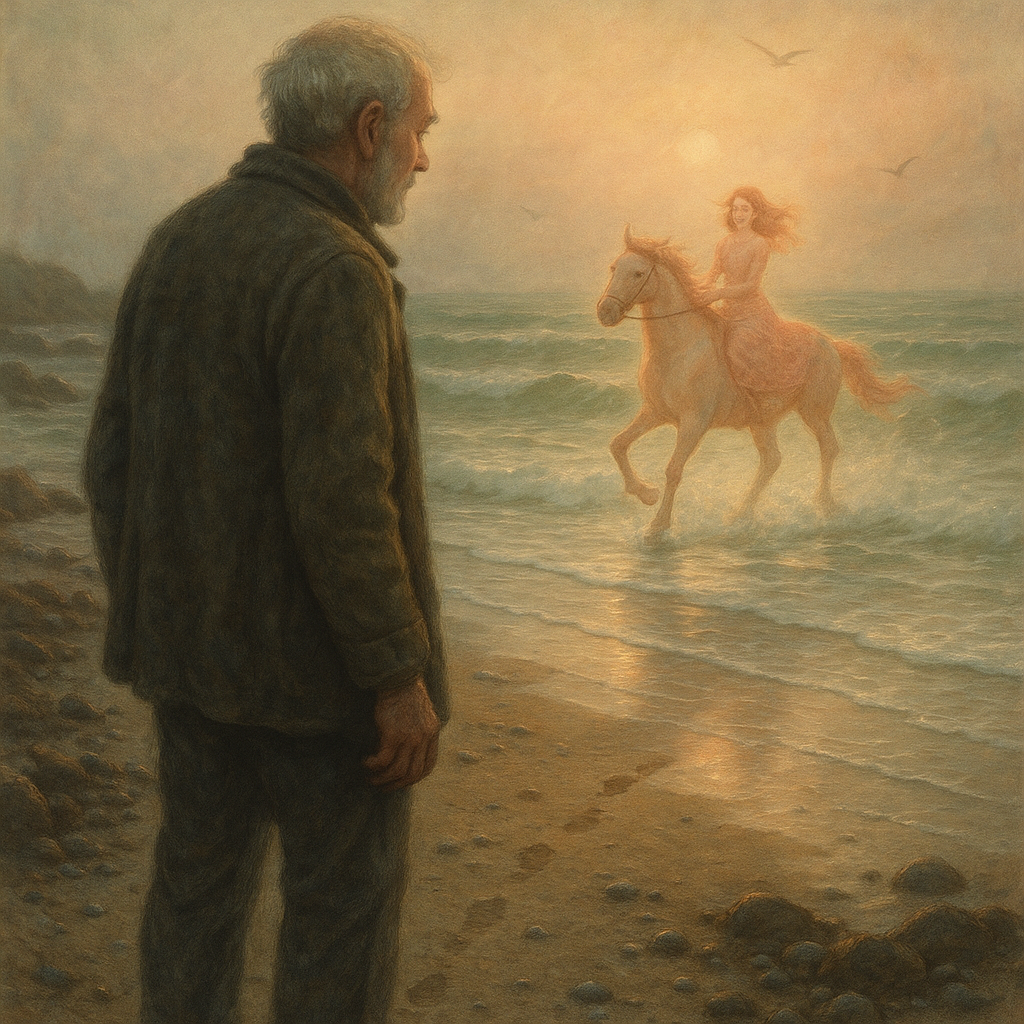
"The Phantom Horsewoman" is a poem by Thomas Hardy in which a grieving man returns obsessively to a coastal shore, staring into the haze while those around him wonder what he sees. His gaze reaches beyond the present into a vivid, rose-bright memory: a young woman on horseback, riding freely along the Atlantic cliffs. While he withers with the years, she remains untouched by time in his mind — still reining her horse, still singing to the rhythm of the tide.

Read Online

                      I
Queer are the ways of a man I know:
            He comes and stands
            In a careworn craze,
            And looks at the sands
            And the seaward haze
            With moveless hands
            And face and gaze,
            Then turns to go…
And what does he see when he gazes so?

                      II
They say he sees as an instant thing
            More clear than to-day,
            A sweet soft scene
            That once was in play
            By that briny green;
            Yes, notes alway
            Warm, real, and keen,
            What his back years bring—
A phantom of his own figuring.

                      III
Of this vision of his they might say more:
            Not only there
            Does he see this sight,
            But everywhere
            In his brain—day, night,
            As if on the air
            It were drawn rose-bright—
            Yea, far from that shore
Does he carry this vision of heretofore:
                      IV
A ghost-girl-rider. And though, toil-tried,
            He withers daily,
            Time touches her not,
            But she still rides gaily
            In his rapt thought
            On that shagged and shaly
            Atlantic spot,
            And as when first eyed
Draws rein and sings to the swing of the tide.

Credits

Thomas Hardy was a Victorian English novelist and poet, celebrated for works such as *Tess of the d'Urbervilles* and *Far from the Madding Crowd*. "The Phantom Horsewoman" is widely believed to have been written in memory of his first wife, Emma, whom he fell in love with near the Cornish coast — making the poem's seaside setting deeply personal.