The House of Hospitalities

Summary


"The House of Hospitalities" revisits a place once alive with Christmas carolling, warm fires, and gathered friends — now silent, cobwebbed, and eaten by rust and worms. Hardy sets the joy of those past celebrations against the cold stillness of the present, where moles labour where voices once rang. The poem's power lies in its final turn: at midnight, under moonlight, ghostly forms of the long-dead return and smile — offering the speaker a bittersweet communion with a vanished world.

Read Online

Here we broached the Christmas barrel,
Pushed up the charred log-ends;
Here we sang the Christmas carol,
And called in friends.

Time has tired me since we met here
When the folk now dead were young.
Since the viands were outset here
And quaint songs sung.

And the worm has bored the viol
That used to lead the tune,
Rust eaten out the dial
That struck night’s noon.

Now no Christmas brings in neighbours,
And the New Year comes unlit;
Where we sang the mole now labours,
And spiders knit.
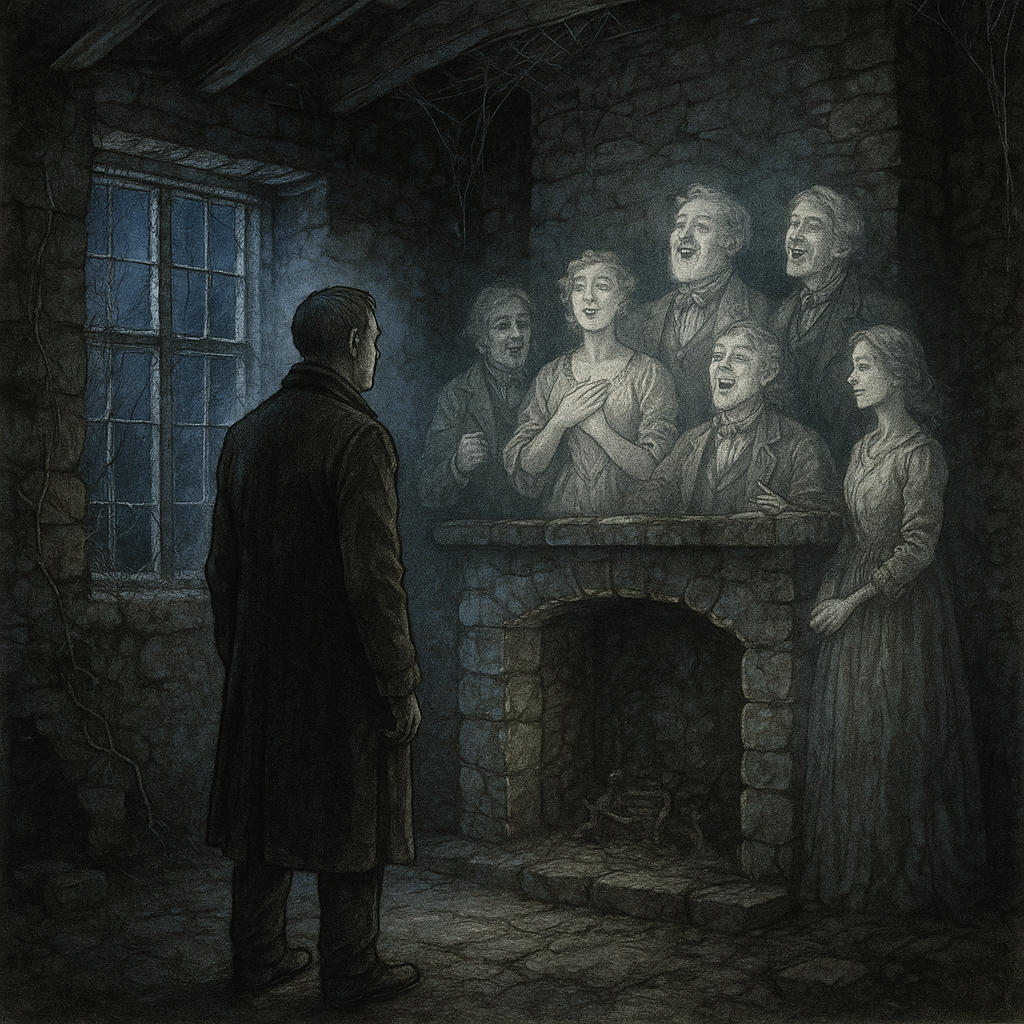
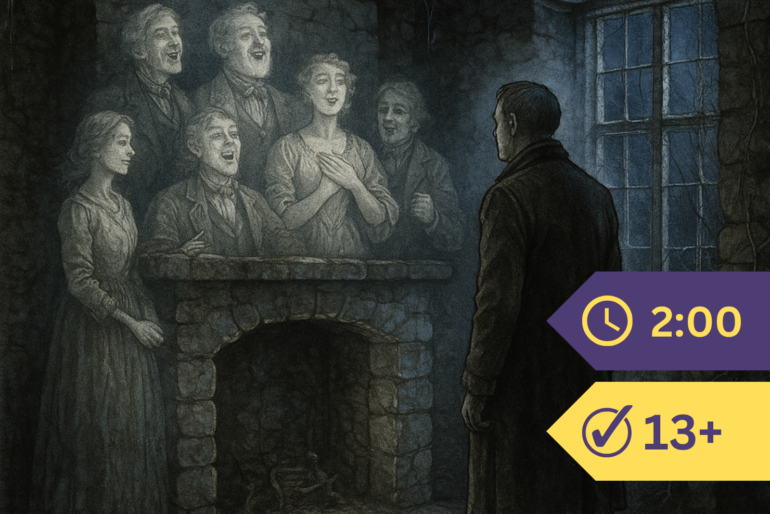
A lone man sees ghostly Victorian revellers by a moonlit hearth, illustrating The House of Hospitalities by Thomas Hardy.

Yet at midnight if here walking,
When the moon sheets wall and tree,
I see forms of old time talking,
Who smile on me.

Credits

Thomas Hardy was a Victorian English novelist and poet, celebrated for works such as Tess of the d'Urbervilles and Far from the Madding Crowd. In his later years he devoted himself almost entirely to poetry, and "The House of Hospitalities" reflects his characteristic preoccupation with time's erosion of joy and the ghostly persistence of memory in familiar landscapes.