
Peter Christen Asbjørnsen & Jørgen Moe
Dive into Asbjørnsen & Moe’s complete collection of Norwegian fairy tales and folk stories — read them online for free, filter to discover your favorites, or explore our article to learn more.



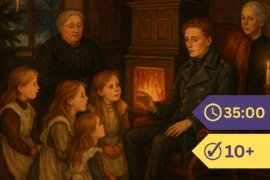
Peter Christen Asbjørnsen (1812–1885) and Jørgen Moe (1813–1882) were Norwegian folklorists and authors who together collected and published the most important body of Norwegian folk and fairy tales in the nineteenth century. Their collaboration, inspired in part by the work of the Brothers Grimm in Germany, produced Norske Folkeeventyr (Norwegian Folk Tales), first published in the 1840s. The collection is widely regarded as the foundation of Norwegian literary identity and a landmark in the broader tradition of European folklore.
Asbjørnsen trained as a naturalist and spent much of his life in the Norwegian countryside, where he gathered stories from rural communities. Moe was a poet and later a bishop, and brought a refined literary sensibility to the retellings. Together they shaped raw oral material into written narratives with a distinctive voice — grounded in the Norwegian landscape, full of dry humor, and populated by clever youngest sons, trolls, giants, and enchanted places.
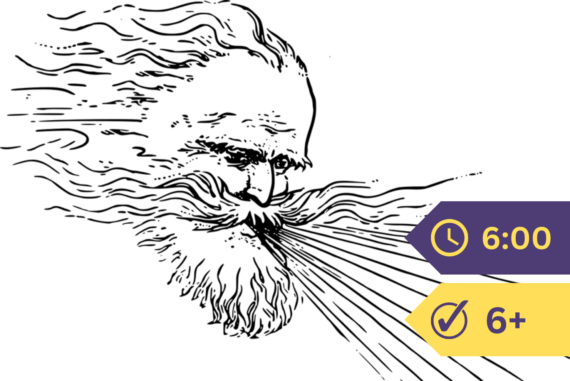
Their tales frequently feature a humble or overlooked hero who triumphs through courage, wit, or sheer stubbornness. In The Lad Who Went to the North Wind, a boy refuses to accept injustice and demands restitution from the wind itself — a story built on persistence and nerve. Soria Moria Castle follows Halvor, a boy dismissed as a good-for-nothing, who journeys to the ends of the earth and defeats giants to rescue captive princesses. The Princess on the Glass Hill places the youngest of three brothers in an impossible contest, only for him to succeed where his older siblings fail — a pattern repeated across many of the duo’s best-known tales.
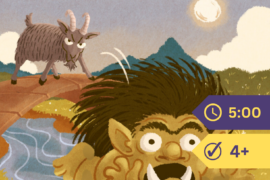
Supernatural antagonists are a recurring presence. The Giant Who Had No Heart in His Body is one of the collection’s most striking stories, featuring a villain who has hidden his heart — and therefore his mortality — outside his own body, a motif found across world folklore but rendered here with characteristic Norwegian directness. Three Billy Goats Gruff, perhaps the most internationally recognized story in the collection, reduces this dynamic to its simplest form: three goats, a bridge, and a troll.
Asbjørnsen and Moe’s work had a lasting influence on Norwegian culture and language. Their retellings helped establish a written Norwegian prose style at a time when the country’s literary language was still being defined. Scholars, translators, and storytellers across Europe and North America have returned to their collection repeatedly, and many of the tales they preserved remain in active circulation in children’s literature and oral tradition more than 175 years after first publication.