Because I could not stop for Death,
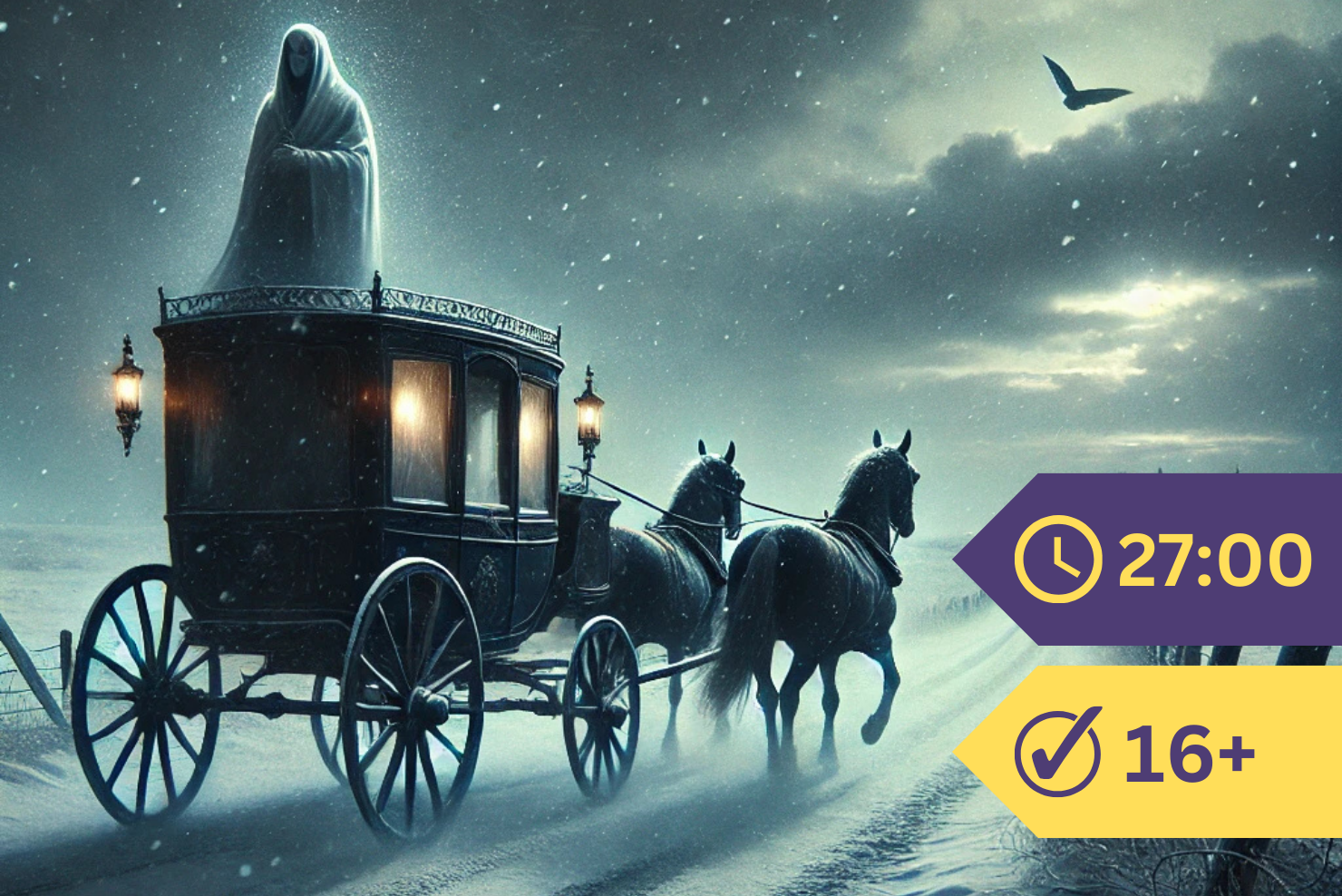
He kindly stopped for me;
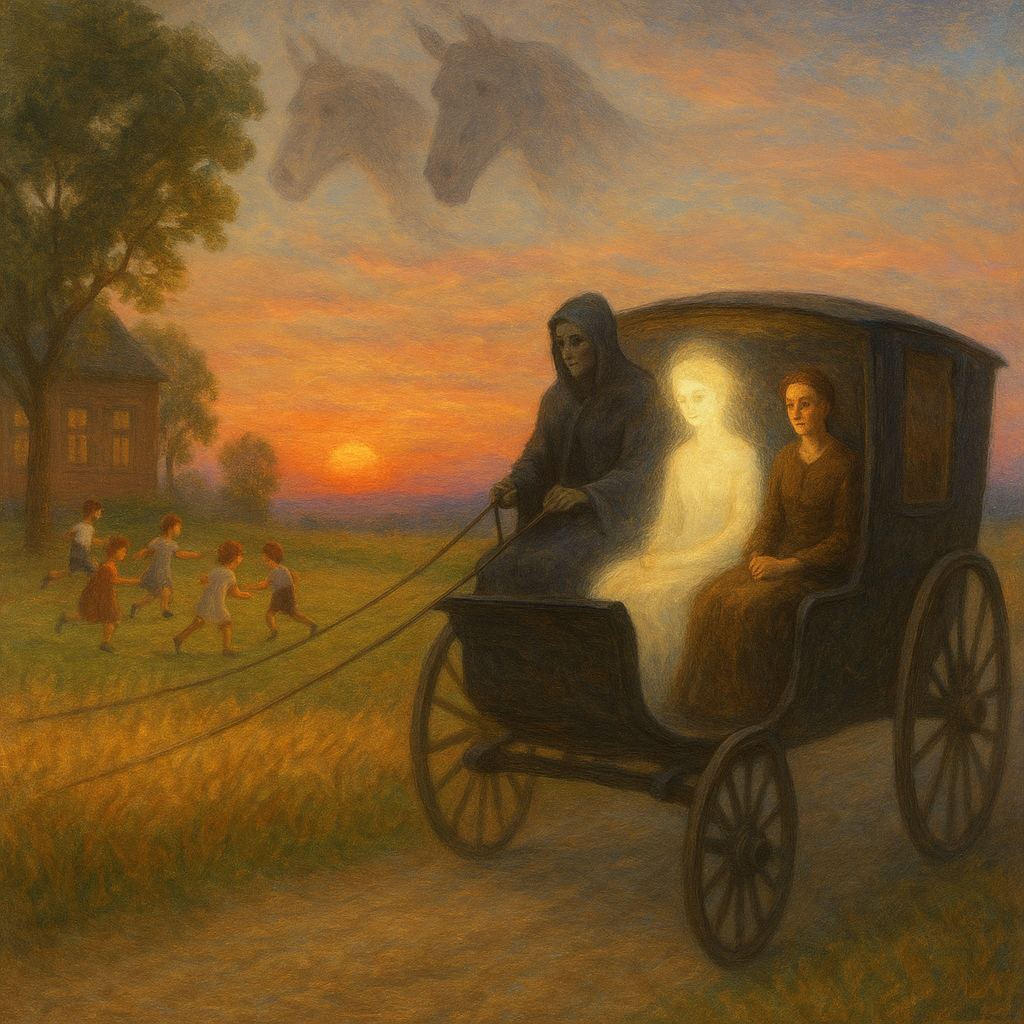
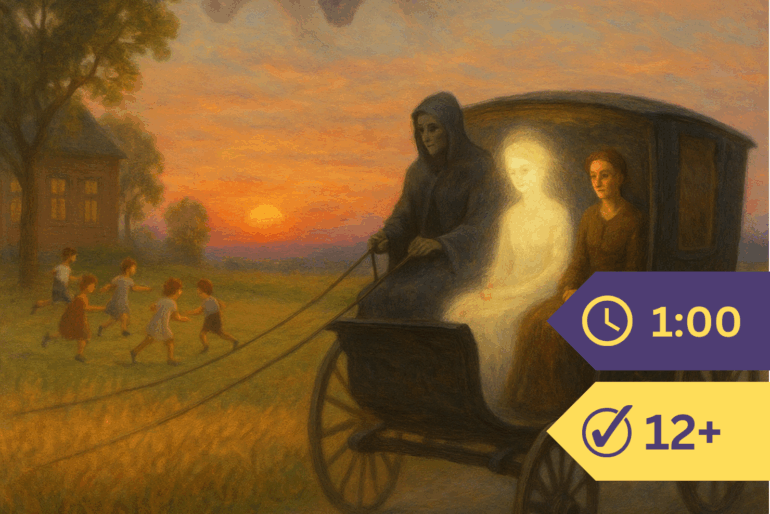
The carriage held but just ourselves
And Immortality.
We slowly drove, he knew no haste,
And I had put away
My labor, and my leisure too,
For his civility.
We passed the school where children played,
Their lessons scarcely done;
We passed the fields of gazing grain,
We passed the setting sun.
We paused before a house that seemed
A swelling of the ground;
The roof was scarcely visible,
The cornice but a mound.
Since then ‘t is centuries; but each
Feels shorter than the day
I first surmised the horses’ heads
Were toward eternity.