
Giambattista Basile
Dive into Giambattista Basile’s complete fairy tales and short stories — read them online for free, filter to discover your favorites, and learn more about the author.

Giambattista Basile (c. 1566–1632) was an Italian poet, soldier, and courtier from the Kingdom of Naples. He is best known as one of the earliest and most influential collectors of European fairy tales, producing a body of work that predates and directly inspired later writers such as Charles Perrault and the Brothers Grimm. His literary reputation rests almost entirely on a single major work: the Pentamerone, also known as Lo cunto de li cunti (“The Tale of Tales”), written in the Neapolitan dialect and published posthumously between 1634 and 1636.
The Pentamerone is a frame narrative containing fifty fairy tales told over five days, modelled loosely on Boccaccio’s Decameron. Basile drew on oral folk traditions circulating in southern Italy, weaving them into elaborate, often darkly comic literary prose. His writing is dense with wordplay, grotesque humor, and moral irony — a style that sets his tales apart from the more sanitized versions that would appear in later centuries. The stories frequently explore themes of fate, cunning, transformation, and the unpredictable nature of fortune.
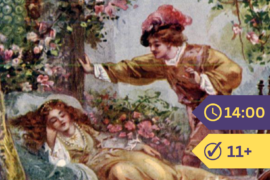
Among the tales attributed to Basile, Sun, Moon, and Talia stands as one of his most historically significant works — widely regarded as an early literary ancestor of the Sleeping Beauty story later popularized by Perrault and the Grimms. Its treatment of fate, innocence, and consequence reflects the moral complexity typical of Basile’s writing. Similarly, The Three Sisters explores the contrast between misfortune and luck among siblings, a recurring structural device in his storytelling. Pippo offers another example of Basile’s interest in resourceful younger sons and the overturning of social hierarchies — a theme that resonates across many tales in the Pentamerone.
Basile’s place in literary history is firmly established as a bridge between oral folk tradition and the literary fairy tale. His willingness to preserve the rougher, more complex edges of the stories he collected gives his work an ethnographic as well as artistic value. Scholars of folklore and comparative literature continue to study the Pentamerone as a foundational text in the development of the European fairy tale tradition.