
Gabrielle-Suzanne Barbot de Villeneuve
Dive into Gabrielle-Suzanne Barbot de Villeneuve’s enchanting fairy tales and discover the story that inspired generations — read it online for free, filter to find your favorite, or explore our article to learn more.
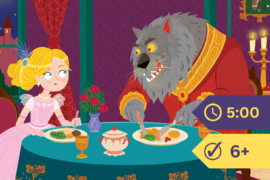
Gabrielle-Suzanne Barbot de Villeneuve (c. 1685–1755) was a French author who wrote during the early eighteenth century, a period when the literary fairy tale was flourishing in France. She is best remembered today as the originator of one of the most widely recognised fairy tale narratives in Western literature. Though her broader body of work has faded into relative obscurity, her contribution to the fairy tale tradition remains historically significant.
Villeneuve published her version of Beauty and the Beast in 1740, as part of a longer prose collection called La Jeune Américaine et les contes marins. Her original telling was considerably longer and more elaborate than the versions that most readers know today, featuring detailed backstory for both Beauty and the Beast, including explanations of their origins and the enchantment placed upon them. The story follows a kind-hearted young woman known as Beauty, the youngest daughter of a once-wealthy merchant, who comes to live in an enchanted castle belonging to a mysterious and frightening creature. Through patience, compassion, and growing understanding, Beauty looks beyond the Beast’s outward appearance — a theme that gave the tale much of its enduring moral weight.
Villeneuve’s narrative was later condensed and retold by Jeanne-Marie Leprince de Beaumont in 1756, and it is Beaumont’s shorter version that became the standard text taught and adapted across Europe and beyond. However, literary historians credit Villeneuve as the true author of the original story, and her fuller version offers a richer picture of the tale’s imaginative scope, with subplot elements involving fairies, royal lineage, and court intrigue that were stripped away in later adaptations.
The story of Beauty and the Beast belongs to a tradition of literary fairy tales shaped by French salon culture, in which educated women writers played a central role. Villeneuve’s work reflects the values and storytelling conventions of that milieu — elaborate narrative framing, moral underpinnings drawn from ideals of inner virtue, and a romance structure that rewards character over appearance. Her place in literary history rests firmly on this single celebrated narrative, which has since inspired countless stage, film, and literary adaptations across more than two and a half centuries.