
Carlo Collodi
Dive into Carlo Collodi’s classic fairy tales and stories, read them online for free, filter to discover your favorites, and explore our article to learn more.
Carlo Collodi (1826–1890) was an Italian author and journalist, born Carlo Lorenzini in Florence, Tuscany. He is one of the most significant figures in Italian children’s literature and is best known internationally for creating one of the most recognizable characters in the history of storytelling. Writing under the pen name Collodi — taken from the small Tuscan village where his mother was born — he spent much of his career contributing to newspapers and periodicals before turning his attention to literature for young readers.
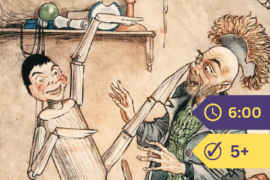
Collodi’s place in literary history rests firmly on his creation of Pinocchio, the story of a wooden puppet who dreams of becoming a real boy. First published in serial form in an Italian newspaper, Il Giornale per i Bambini, beginning in 1881, the tale was collected and published as a complete book in 1883 under the title Le avventure di Pinocchio. The story follows the wooden puppet carved by the kind old craftsman Geppetto, who brings him to life only to watch his creation repeatedly fall into mischief, deception, and danger before learning the value of honesty, responsibility, and hard work.
What distinguishes Pinocchio from many fairy tales of its era is its distinctly Italian setting and its blend of sharp moral instruction with genuine humor and adventure. The story draws on a long tradition of didactic literature for children while also reflecting the social anxieties of newly unified Italy, particularly around education and the responsibilities of citizenship. Collodi’s Pinocchio is not simply a charming character — he is a vehicle for exploring what it means to grow, to make mistakes, and to ultimately choose virtue over self-indulgence.
The global influence of Pinocchio has been extraordinary. The novel has been translated into hundreds of languages and adapted countless times across theatre, film, and television. Despite the many adaptations that have softened or reimagined the story, Collodi’s original text remains notable for its darker, more satirical edge. Carlo Collodi did not live to see the full scope of his creation’s international reach — he died in Florence in 1890 — but his single most famous work has secured his reputation as one of the enduring voices of world literature for young readers.