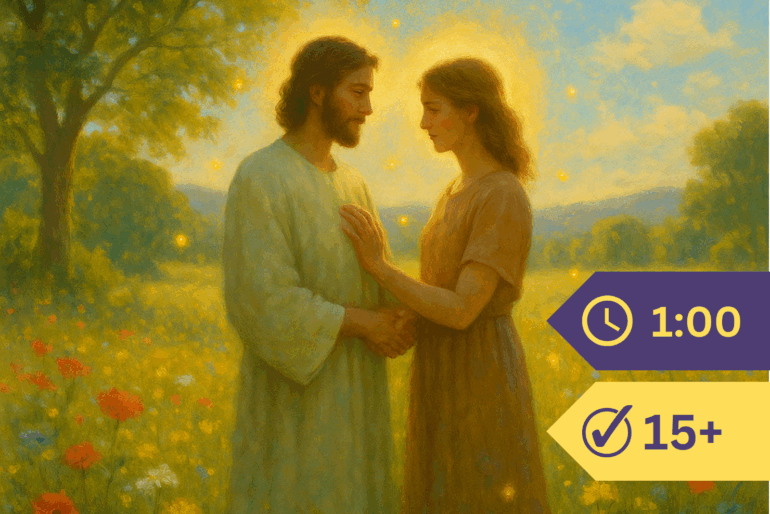
THERE came a day at summer’s full
Entirely for me;
I thought that such were for the saints,
Where revelations be.
The sun, as common, went abroad,
The flowers, accustomed, blew,
As if no soul the solstice passed
That maketh all things new.
The time was scarce profaned by speech;
The symbol of a word
Was needless, as at sacrament
The wardrobe of our Lord.
Each was to each the sealed church,
Permitted to commune this time,
Lest we too awkward show
At supper of the Lamb.
The hours slid fast, as hours will,
Clutched tight by greedy hands;
So faces on two decks look back,
Bound to opposing lands.
And so, when all the time had failed,
Without external sound,
Each bound the other’s crucifix,
We gave no other bond.
Sufficient troth that we shall rise—
Deposed, at length, the grave—
To that new marriage, justified
Through Calvaries of Love!