I went to thank her

Summary


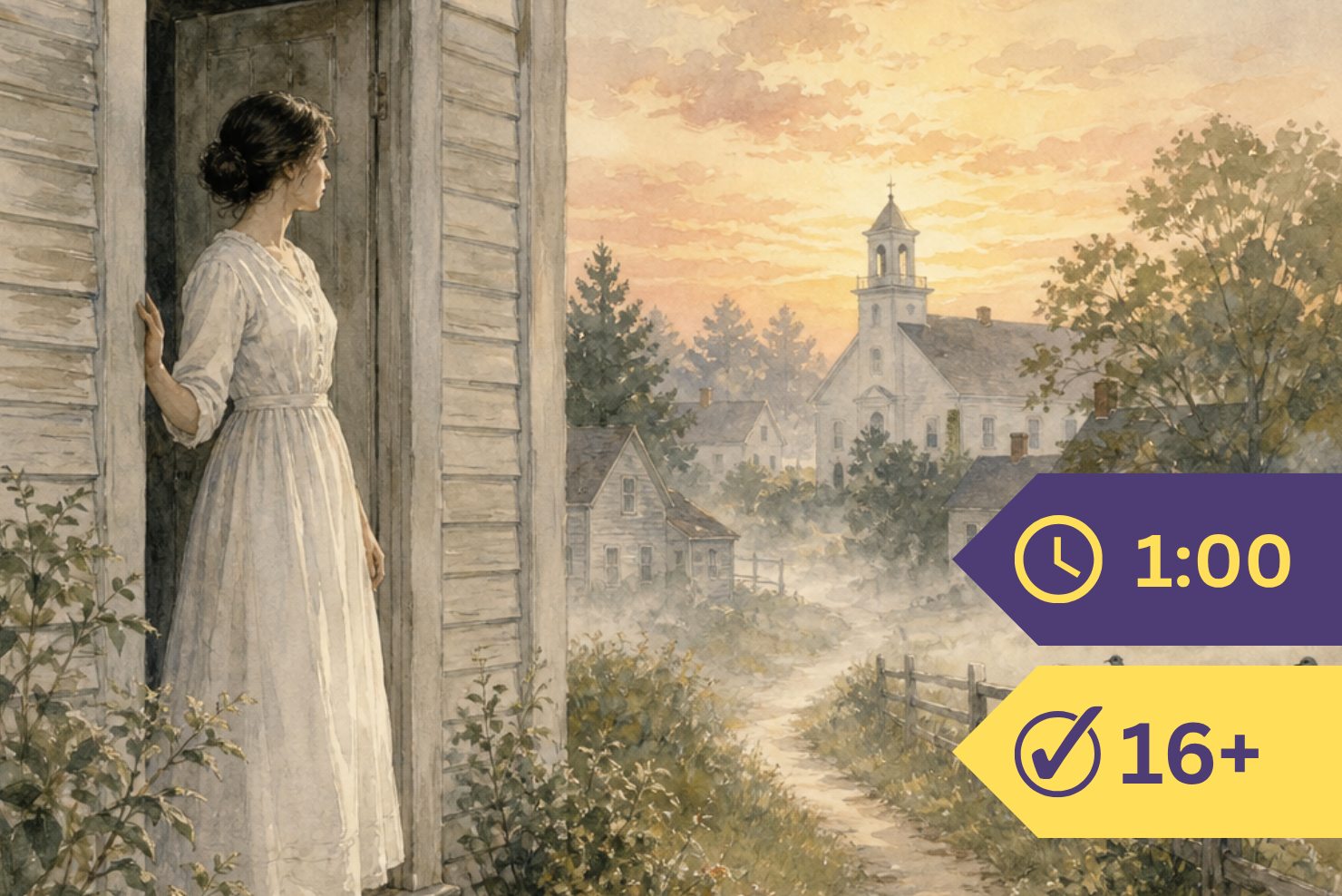
"I Went to Thank Her" by Emily Dickinson is a quietly devastating short poem about a speaker who travels to express gratitude, only to find the woman she sought already gone. The grave, marked by a stone and scattered flowers from other travellers, becomes the silent answer to an errand left too long. Dickinson captures the cruel irony of good intentions delayed — the journey felt short going, but unbearably slow on the return.

Read Online

I went to thank her,
But she slept;
Her bed a funnelled stone,
With nosegays at the head and foot,
That travellers had thrown,

Who went to thank her;
But she slept.
‘T was short to cross the sea
To look upon her like, alive,
But turning back ‘t was slow.


Credits

Emily Dickinson was a 19th-century American poet whose compressed, elliptical verse explored death, grief, and the inner life with startling originality. She published very little during her lifetime, yet is now considered one of the most important figures in American literature. This poem's circular structure — the repeated lines about going to thank her, only to find her sleeping in death — reflects Dickinson's characteristic technique of looping grief back on itself.