Hallow-E’en, 1914

Summary


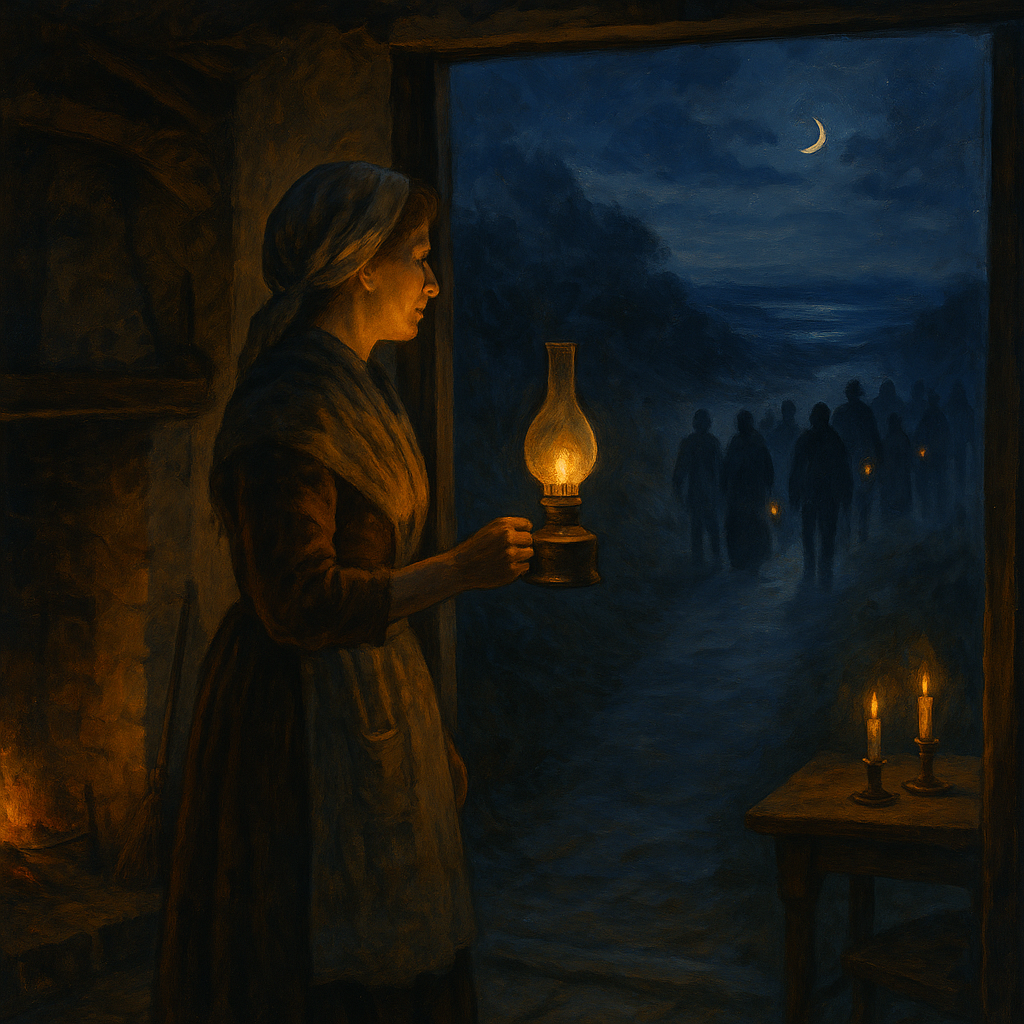
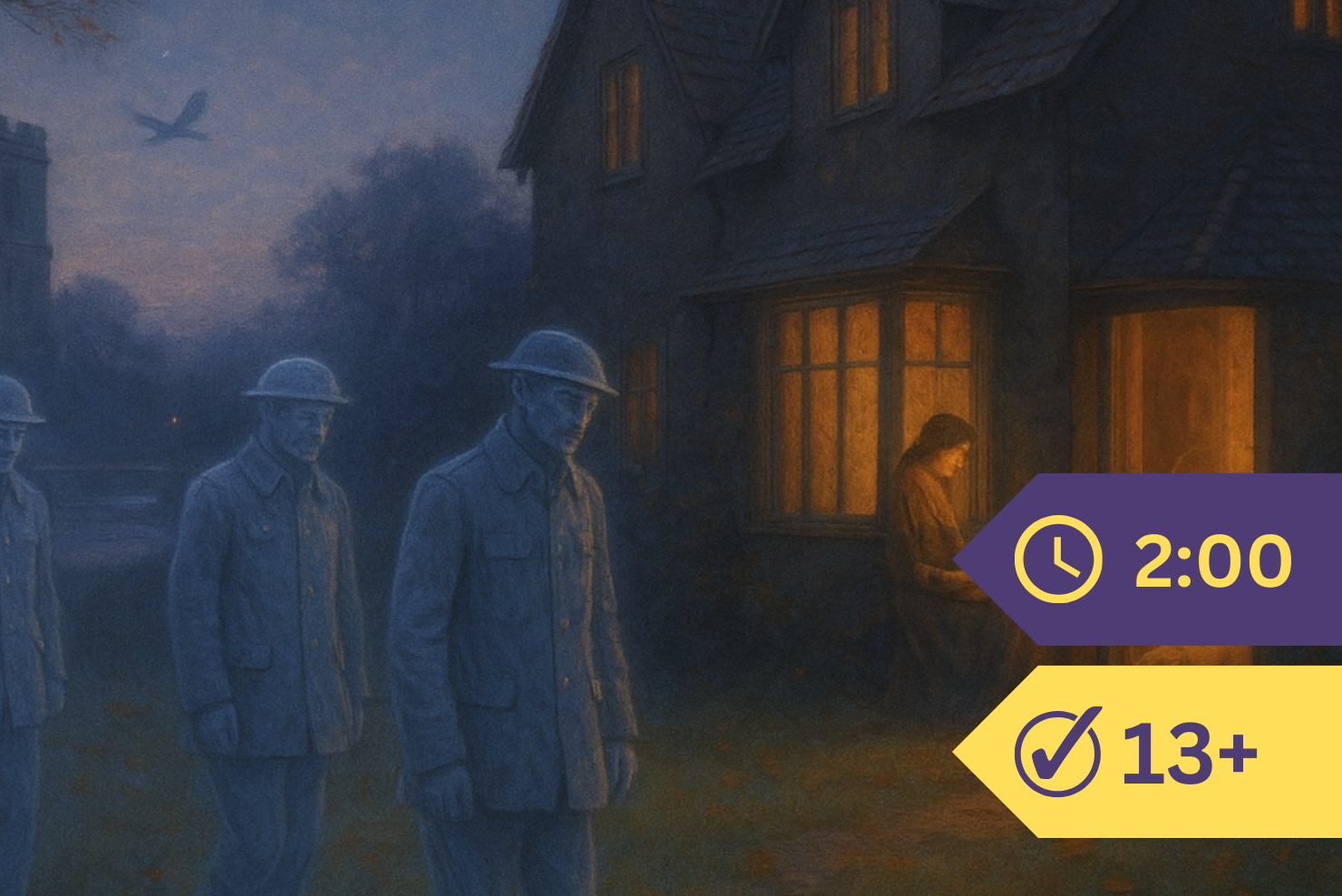
"Hallow-E'en, 1914" is a short WWI poem by Winifred M. Letts that opens on a woman standing alone in the dark, holding a light in her doorway. A stranger questions why she waits, and she speaks of a loved one traveling home across strange lands and pitiless seas. The conversation builds with quiet tension until her final words reveal the full weight of her vigil — she is not waiting for one, but for many, and none of them are living.

Read Online

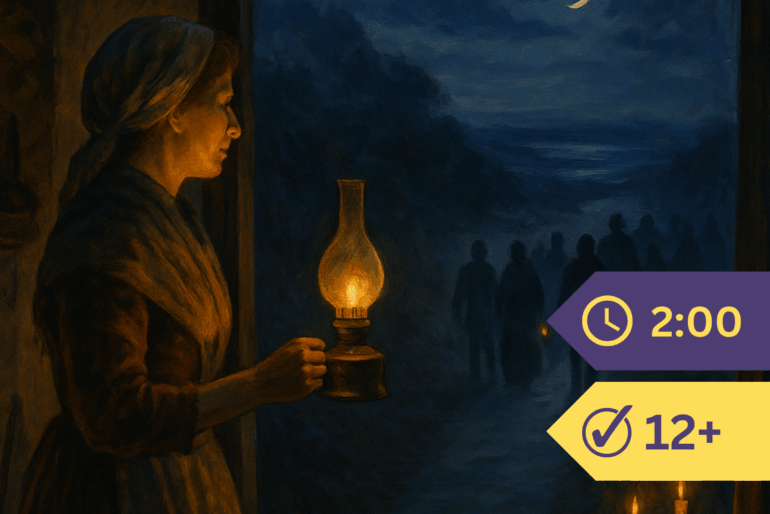
“Why do you wait at your door, woman,
Alone in the night?”
“I am waiting for one who will come, stranger,
To show him a light.
He will see me afar on the road
And be glad at the sight.”

“Have you no fear in your heart, woman,
To stand there alone?
There is comfort for you and kindly content
Beside the hearthstone.”
But she answered, “No rest can I have
Till I welcome my own.”

“Is it far he must travel to-night,
This man of your heart?”
“Strange lands that I know not and pitiless seas
Have kept us apart,
And he travels this night to his home
Without guide, without chart.”
“And has he companions to cheer him?”
“Aye, many,” she said.
“The candles are lighted, the hearthstones are swept,
The fires glow red.
We shall welcome them out of the night—
Our home-coming dead.”

Credits

Winifred M. Letts was an Irish poet and playwright, born in 1882, whose writing was shaped profoundly by the First World War. She worked as a nurse during the conflict, and that firsthand experience of loss gives poems like "Hallow-E'en, 1914" their aching emotional precision. Her verse often moves between the domestic and the devastating with remarkable restraint.