
Winifred M. Letts
Dive into Winifred M. Letts’s poems and discover the quiet grief and longing she wove into her verse — read them online for free, filter to find your favorites, and learn more about the author.
Winifred M. Letts (1882–1972) was an Irish poet and playwright born in Dublin. She is best known for her poetry written during and around the First World War, work that captures the emotional experience of those left behind on the home front rather than the soldier’s perspective from the trenches. Her writing sits within a tradition of Irish lyric poetry while also reflecting the broader upheaval of early twentieth-century European life.
Letts wrote with an economy of language and a strong sense of place, often evoking the domestic and rural landscapes of Ireland to frame experiences of loss, waiting, and remembrance. Her war poetry is particularly notable for its restraint — she conveys sorrow through imagery and dialogue rather than overt sentiment, giving her poems an enduring quiet intensity.
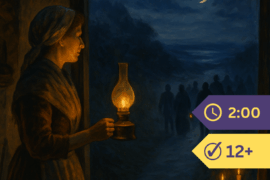
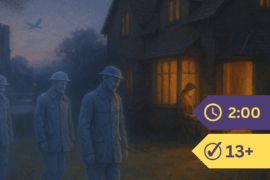
Among the poems collected here, Hallow-E’en, 1914 and Hallow-E’en, 1915 stand as a paired meditation on the war years, using the old Celtic festival of the dead as a framework for grief and longing. In Irish tradition, Hallow-E’en was the night when the boundary between the living and the dead grew thin, and Letts draws on this belief with quiet power. In the 1914 poem, a woman waits at her door by lamplight, watching the dark road for a soldier who may return. In the 1915 poem, the speaker addresses the fallen directly, asking whether the dead might leave their foreign graves and find their way home to familiar gables and eaves. Together, the two poems trace a year’s passage from anxious hope to mourning.
Letts published several collections of poetry during her lifetime, and her work appeared widely in journals and anthologies of the period. Though she never achieved the same prominence as some of her contemporaries, her poetry has been periodically rediscovered by scholars interested in women’s writing of the First World War and in Irish literary history. Her ability to anchor large historical events in specific, domestic images gives her work a human scale that continues to resonate with readers drawn to the literature of that era.