Good King Wenceslas look’d out,
On the Feast of Stephen;
When the snow lay round about,
Deep, and crisp, and even:
Brightly shone the moon that night,
Though the frost was cruel,
When a poor man came in sight,
Gath’ring winter fuel.
“Hither page and stand by me,
If thou know’st it, telling,
Yonder peasant, who is he?
Where and what his dwelling?”
“Sire, he lives a good league hence.
Underneath the mountain;
Right against the forest fence,
By Saint Agnes’ fountain.”
“Bring me flesh,and bring me wine,
Bring me pine-logs hither:
Thouand I will see him dine,
When we bear them thither.”
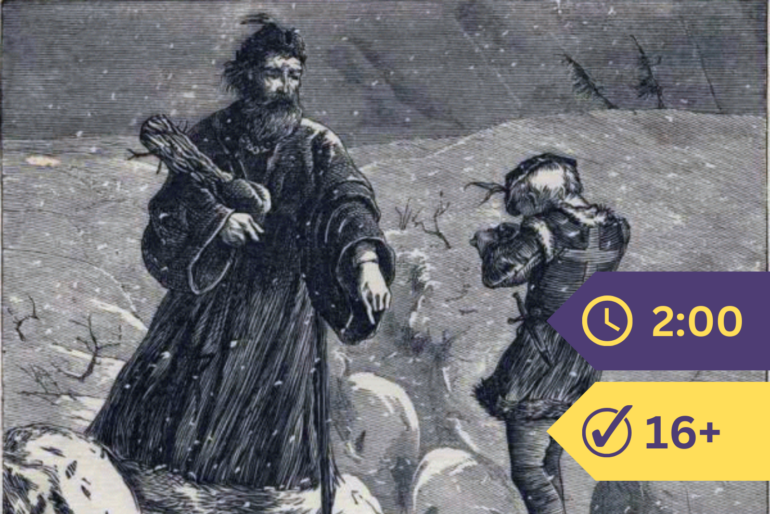
Page and monarch forth they went,
Forth they went together;
Through the rudewind’s wild lament,
And the bitter weather.
“Sire, the night is darker now,
And the wind blows stronger;
Fails my heart, I know now how,
I can go no longer.”
“Mark my footsteps, good my page;
Tread thou in them boldly;
Thou shalt find the winter’s rage
Freeze thy blood less coldly.”
In his master’s steps he trod,
Where the snow lay dinted;
Heat was in the very sod
Which the Saint had printed.
Therefore, Christian men, be sure,
Wealth or rank possessing,
Ye who now will bless the poor,
Shall yourselves find blessing.