Summary


"Fanny" is a short poem by Edgar Allan Poe in which a lovesick speaker mourns an unrequited devotion. Drawing on vivid natural imagery — a dying swan's final song, a sunburst breaking through midnight clouds — he captures both the overwhelming beauty of the woman he worships and the cold indifference she returns. The poem moves from breathless admiration to quiet heartbreak, as the speaker reflects on a boy who gave everything to a love that looked back only with disdain.

Read Online

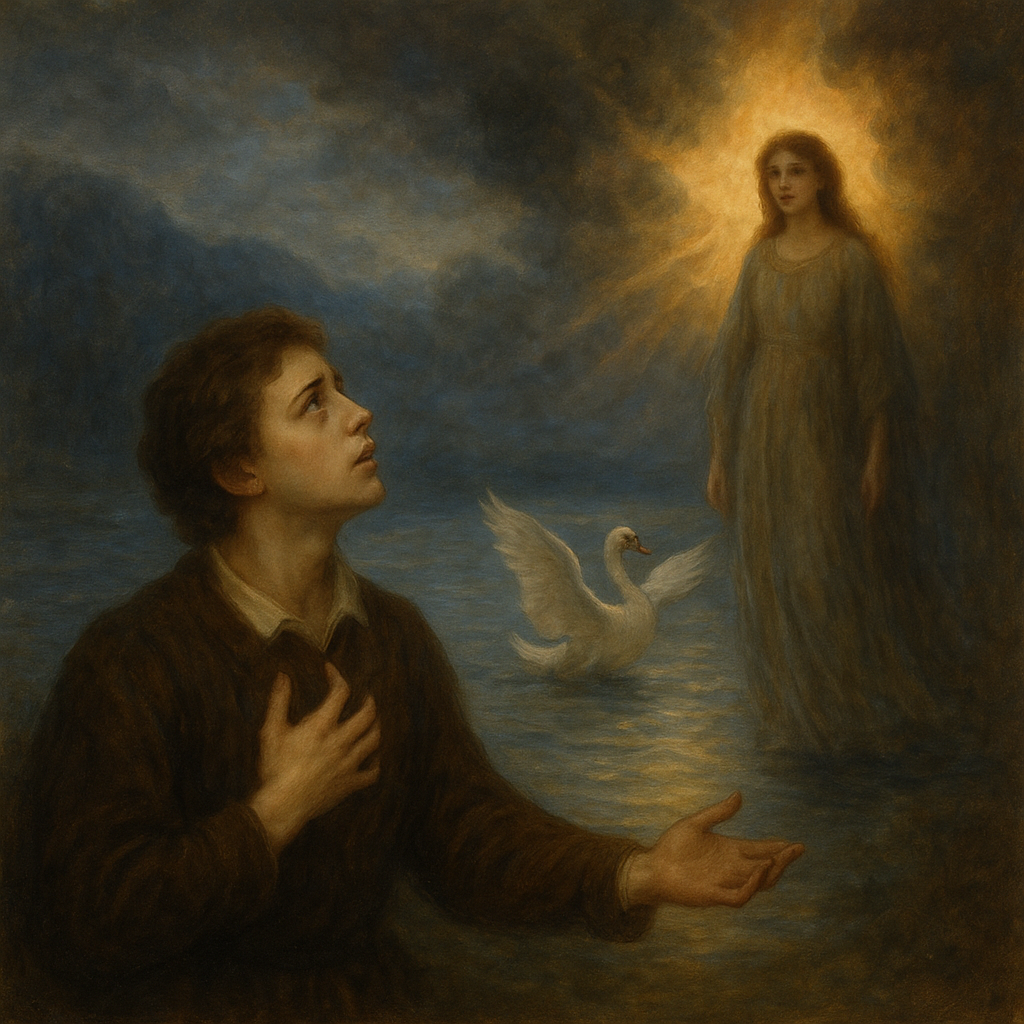
THE dying swan by northern lakes
Sing’s [Sings] its wild death song, sweet and clear,
And as the solemn music breaks
O’er hill and glen dissolves in air ;
Thus musical thy soft voice came,
Thus trembled on thy tongue my name.

Like sunburst through the ebon cloud,
Which veils the solemn midnight sky,
Piercing cold evening’s sable shroud,
Thus came the first glance of that eye ;
But like the adamantine rock,
My spirit met and braved the shock.

Let memory the boy recall
Who laid his heart upon thy shrine,
When far away his footsteps fall,
Think that he deem’d thy charms divine ;
A victim on love’s alter [altar] slain,
By witching eyes which looked disdain.

Tamerlane
Credits

Edgar Allan Poe was an American poet and writer of the early 19th century, best known for his gothic fiction and musical verse. "Fanny" is one of his lesser-known early lyric poems, believed to have been written during his youth and later attributed to the fictional speaker Tamerlane — a persona Poe used to explore themes of lost and unrequited love.