I could, for a year, tell you queer things about Mr. Crab.
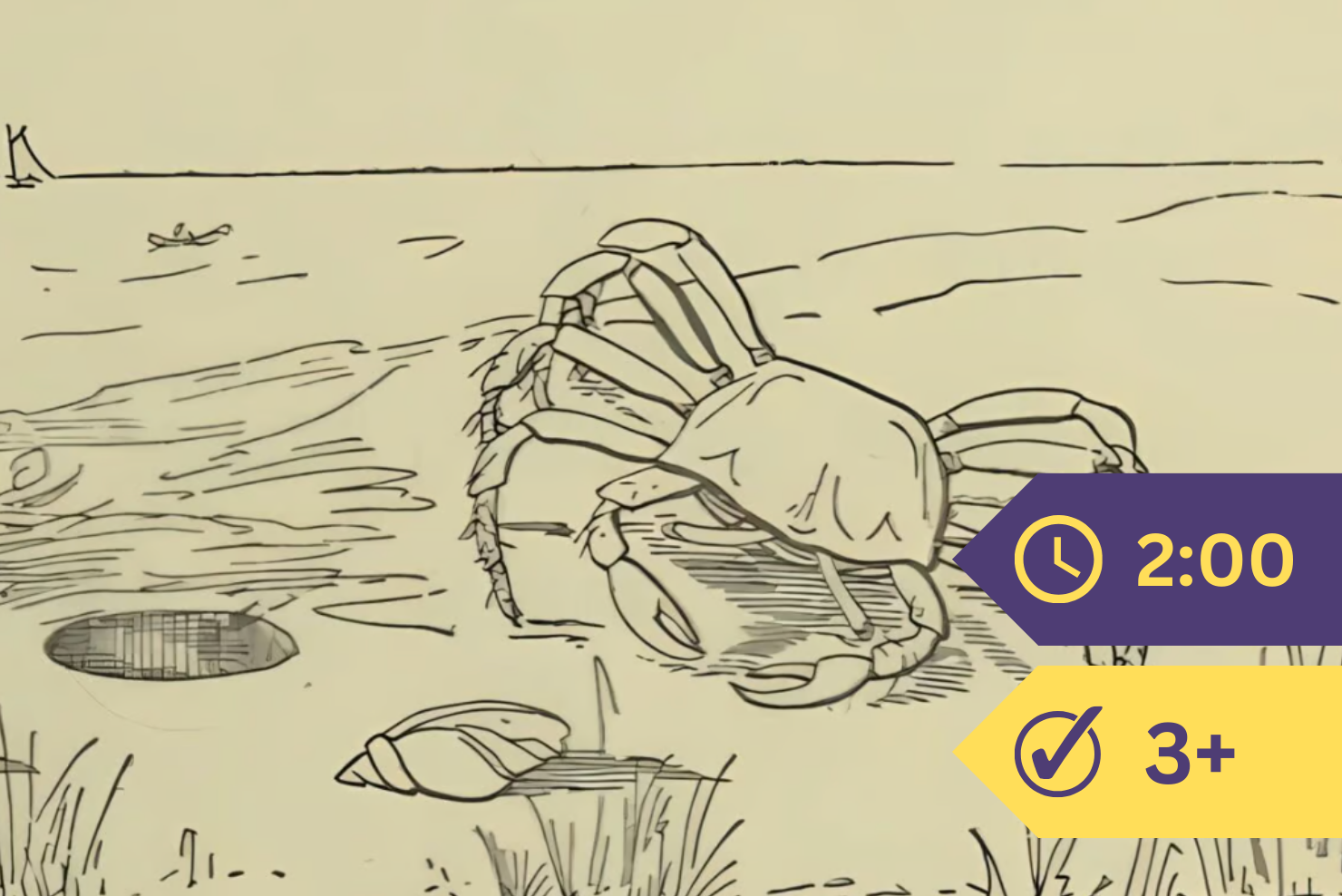
Where are your bones? They are inside your body. Your bones are a frame to hold up your soft flesh. Mr. Crab’s bones are on the outside of his body. His bones are his armor, to keep him from being hurt.
The crab can live and breathe either in water or on land. You can live only on land. He can both walk and swim.
Mrs. Crab lays eggs. A hen, you know, lays eggs, one by one, in a nest. She keeps them warm till the chicks come out.

The crab’s eggs are put in a long tube or sack. Mrs. Crab does not leave them in a nest. She carries them tied on her legs, or under her body. When the small crabs come out of the eggs, they grow very fast.
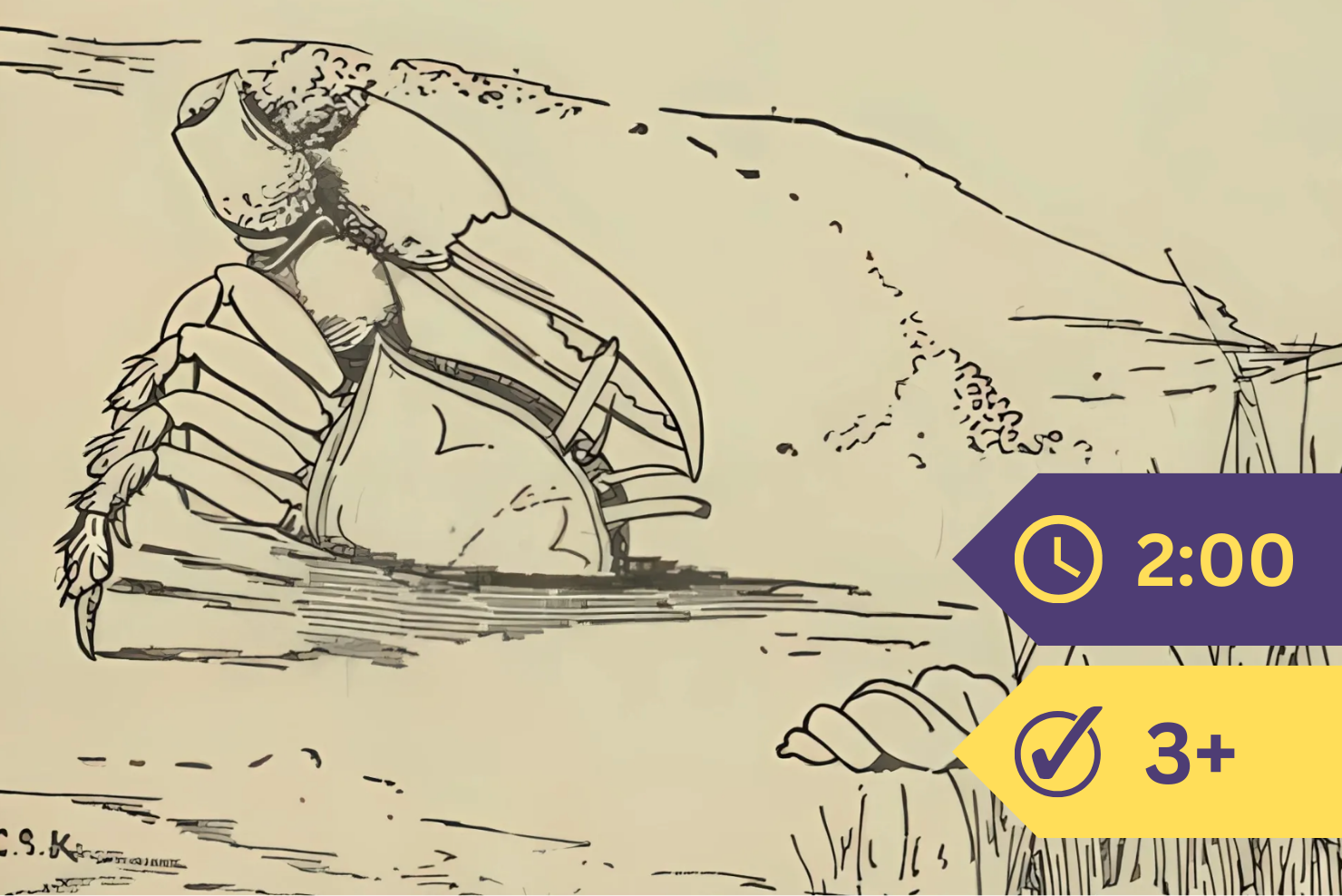
When you catch a crab by his arm or leg, if you do not let go, he drops off this arm or leg, and runs. He will first pinch you, if he can, with his big claw.
Could you run with one leg gone? The crab has legs to spare. Then, too, his legs will grow again. Yours would not. A crab’s leg, or hand, will grow again very soon, when one has been lost. But if his eye-peg is cut off, it takes a whole year for a new eye to grow.
I think he knows that; he is very careful of his eyes. The eye-pegs of one kind of crab are very long.
He has a wide, flat shell. There is a notch in each side of his shell. He can let his eyes lie in that notch.
How can he do that? His eye-pegs are so long he can bend them down flat to the shell and keep them safe in the notch.