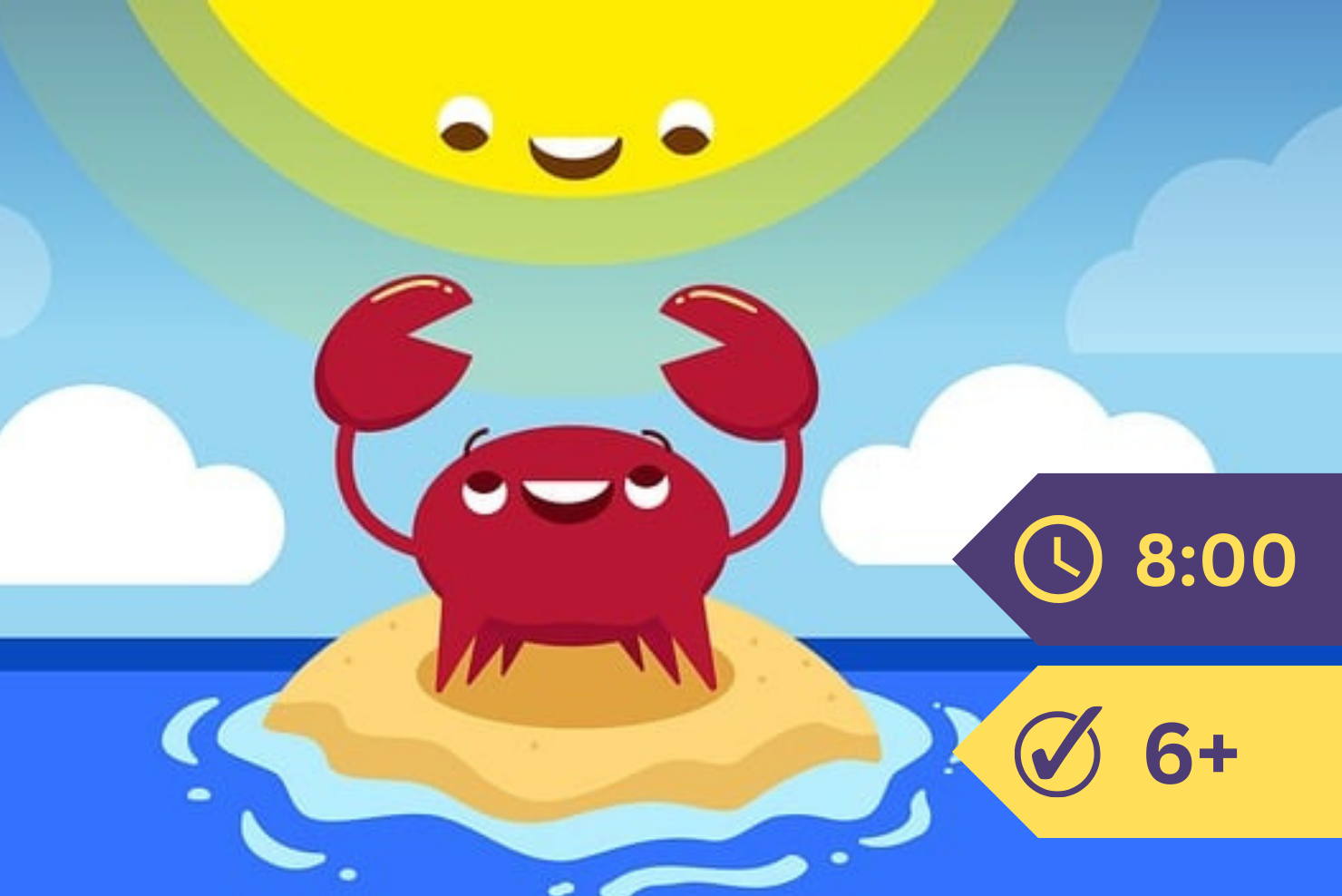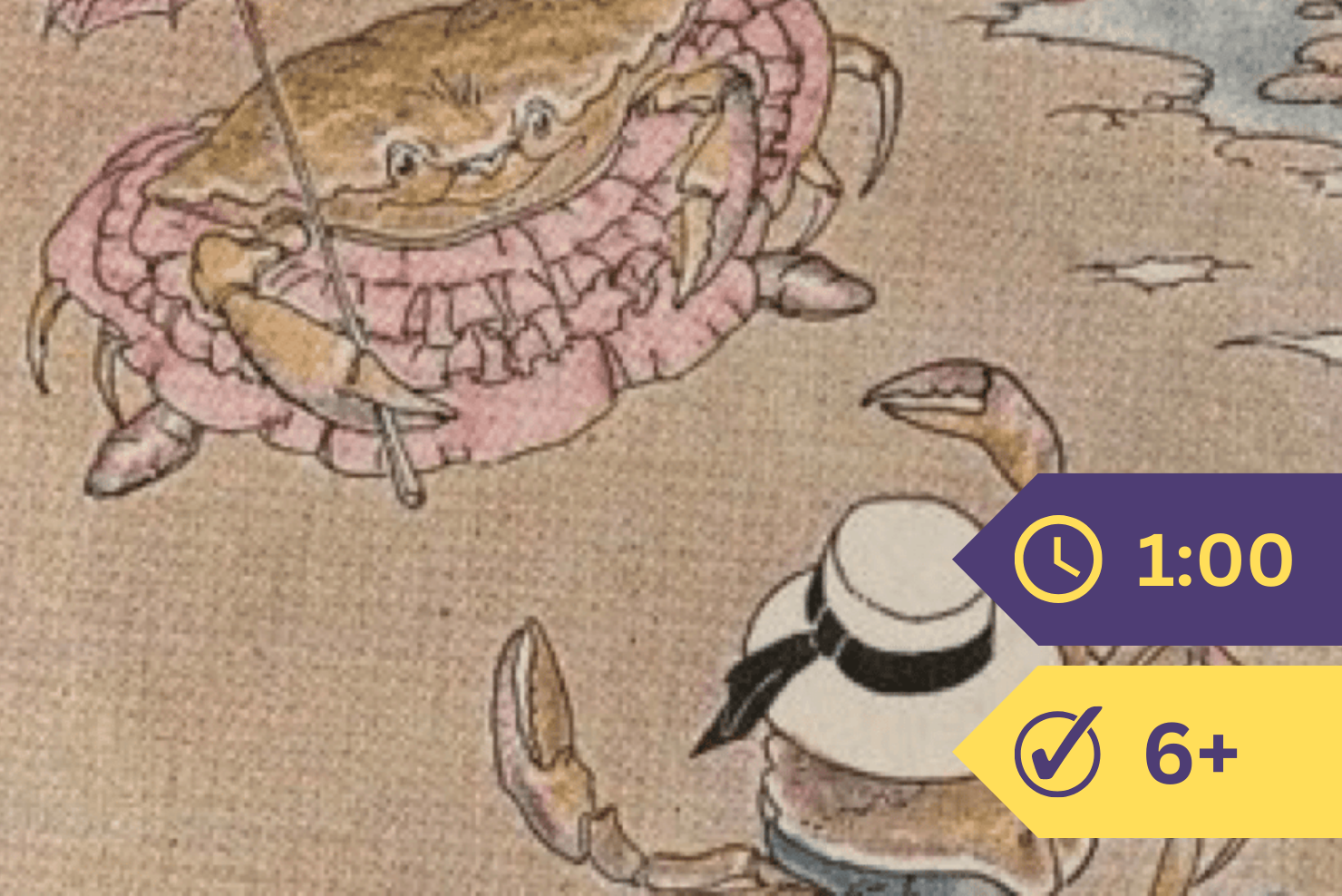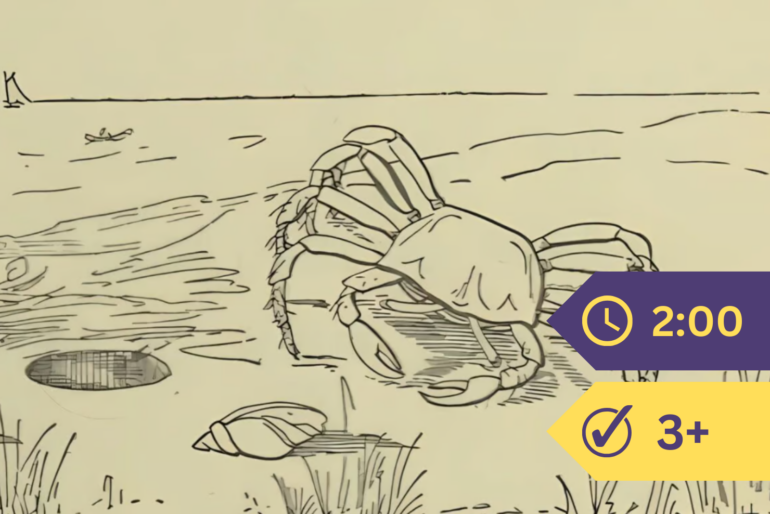
This is a picture of Mr. and Mrs. Crab.
Do you see the round hole?

It is the door of their house. Mr. Crab lives in the sand by the sea-side. He has a smooth, flat shell on his back. The crab has eight legs and two hands. One hand is large; the other hand is small. He fights with the big hand, and takes his food with the little hand, or with both hands.
Mr. Crab digs out his house in the sand. He makes a place for a hall, a bed-room, and a pantry.
Mrs. Crab does not dig. Both her hands are small and weak. She gets food to put into the pantry. She never fights. If she is in any trouble she runs home, or to a hole in a rock.
See what queer eyes! They are set on pegs; some call them stalks. The crab can push the eye-pegs out and pull them in. Would you not look odd if you could make your eyes stand out six inches?
When crabs go into their houses, they draw down their eyes and tuck in their feet.
Crabs are of many colors. They are red, brown, green, yellow, and blue. The claws are often of a very bright color. The color on the shell is less bright; it is in small dots. The color on some kinds of crabs is in lines. No crab is clear, bright red when it is alive.
When it is boiled it takes a fine, red hue.
Why is this?
We cannot tell why the heat makes it change color.