
Ruth Stiles Gannett
Dive into Ruth Stiles Gannett’s complete chapter book collection and read online for free, filter to discover your favorites, or explore our article to learn more about the author.
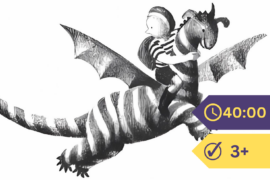
Ruth Stiles Gannett is an American author born in 1923, best known for writing the My Father’s Dragon trilogy for children. Her debut novel, published in 1948, was awarded a Newbery Honor the following year — a remarkable achievement for a first-time author. Gannett grew up in a literary household; her stepmother, Ruth Chrisman Gannett, illustrated all three books in the series, giving the stories a distinctly homespun, warmly illustrated character that has remained closely associated with them.
Her writing is rooted in the tradition of episodic adventure storytelling, where a young protagonist moves through a sequence of imaginative challenges, each encounter building naturally on the last. My Father’s Dragon (Chapter book) follows a boy named Elmer Elevator who travels to Wild Island to rescue a captive baby dragon. Across its chapters — from the moment his father first meets a stray cat who reveals the dragon’s plight, to encounters with tigers, crocodiles, and other wild creatures — the story unfolds with a cheerful, problem-solving logic that feels both inventive and grounded. Each chapter presents Elmer with a new obstacle, and he overcomes them using wit and whatever happens to be in his knapsack, rather than physical strength or magic.
What distinguishes Gannett’s storytelling is its tone: matter-of-fact and gently humorous, narrated as though recounting something that actually happened to a real family. The framing device — the story told as the narrator’s own father’s childhood adventure — lends the tale an intimate, oral quality, as if it were being passed down across generations. This voice gives the book an unusual warmth without sentimentality.
The My Father’s Dragon series continued with Elmer and the Dragon (1950) and The Dragons of Blueland (1951), completing a trilogy that has remained in print for decades. Gannett wrote relatively little outside this series, but its lasting presence in children’s literature speaks to the strength of those three books. The original novel in particular is frequently cited in discussions of mid-twentieth-century American children’s fiction, recognized for the way it balances accessible prose with genuine narrative tension and comic invention.