
J.M. Barrie
Dive into J.M. Barrie’s enchanting fairy tales and adventure stories, including the full and short versions of Peter Pan — read them online for free, filter to discover your favorites, and explore our article to learn more.
J.M. Barrie (1860–1937) was a Scottish author and playwright, best known for creating one of the most enduring characters in English-language literature: Peter Pan, the boy who never grows up. Born James Matthew Barrie in Kirriemuir, Scotland, he became a prominent figure in early twentieth-century British theatre and fiction, and his work continues to hold a significant place in the literary canon.
Barrie’s writing is deeply rooted in the tension between childhood innocence and the inevitability of growing up. His stories blend adventure, fantasy, and a quietly melancholic undertone that gives them a resonance beyond simple children’s entertainment. His narrative world is populated by pirates, mermaids, fairies, and lost children — figures that feel both fantastical and emotionally grounded. The character of Peter Pan first appeared in Barrie’s 1902 novel The Little White Bird before taking center stage in the 1904 stage play and the 1911 novel Peter and Wendy.
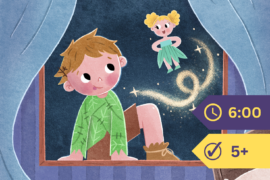
The story of Peter Pan (Full Book) follows the Darling children — Wendy, John, and Michael — who are whisked away to Neverland by the ageless Peter Pan, a place inhabited by the Lost Boys, the cunning Captain Hook, and the loyal fairy Tinker Bell. The novel is rich in adventure and laced with themes of imagination, belonging, and the bittersweet nature of childhood. For readers looking for a more accessible entry point, the Peter Pan (Short Version) captures the heart of the story, framed through the tales Wendy tells her brothers, conveying the magic of Barrie’s world in a compact and vivid form.
Barrie’s legacy rests largely on Peter Pan, though he was a prolific writer across multiple forms throughout his career. He donated the rights to the Peter Pan story to Great Ormond Street Hospital for Children in London in 1929, a gesture that tied his most famous work to charitable purpose long after his death. His creation of Neverland remains one of literature’s most recognizable imaginary landscapes, and Peter Pan himself has become a cultural shorthand for the refusal — or inability — to leave childhood behind.