
J.H. Ewing
Dive into J.H. Ewing’s complete short stories and children’s tales — read them online for free, filter to discover your favorites, and explore our article to learn more.

Juliana Horatia Ewing (1841–1885) was a British author celebrated for her children’s fiction during the Victorian era. Born in Ecclesfield, Yorkshire, she became one of the most respected writers for young readers of her time, contributing regularly to Aunt Judy’s Magazine — a publication founded by her own mother, Margaret Gatty. Ewing’s work was distinguished by its warmth, moral clarity, and a remarkable sense of domestic life that resonated deeply with nineteenth-century families.
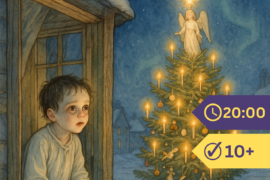
Ewing had a particular gift for capturing the rituals and emotions of childhood, often weaving together humor, sentiment, and a quiet sense of wonder. Her stories frequently drew on seasonal traditions, family customs, and the small but significant moments of everyday life. Old Father Christmas is a fine example of her approach: the story reflects on the origins of the Christmas tree tradition in England, tracing its roots to Germany and observing how it spread from grand households to village schoolrooms. It is the kind of narrative in which a social custom becomes a lens for exploring memory, generosity, and the passage of time.
Throughout her writing career, Ewing produced novels, short stories, and picture book texts that were widely admired by contemporaries including John Ruskin and Rudyard Kipling, who cited her as an early influence. Her stories were notable for avoiding condescension toward young readers — she wrote with respect for a child’s intelligence and emotional life, which set her apart from many of her peers.
Ewing’s legacy endures in the history of children’s literature as a bridge between the didactic moral tales of the early nineteenth century and the more imaginative, character-driven fiction that followed. Her ability to find meaning in ordinary domestic scenes, seasonal celebrations, and the quiet ceremonies of family life gave her work a lasting sincerity that literary historians continue to recognize.