
Evelyn Sharp
Dive into Evelyn Sharp’s complete fairy tales and children’s stories, read them online for free, filter to discover your favorites, and explore our article to learn more about the author.
Evelyn Sharp (1869–1955) was a British author, journalist, and suffragette whose literary output spanned fiction, journalism, and political activism. Writing at the turn of the twentieth century, she made a notable mark in the world of children’s literature by contributing inventive fairy tales and fantasy stories to prominent publications of her day, including the famous Yellow Book. Her work sits at the intersection of Victorian whimsy and Edwardian imagination, drawing on folk tradition while shaping it into something distinctly her own.
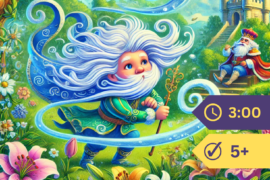
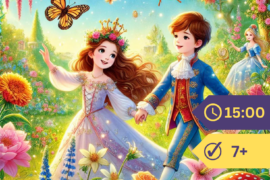
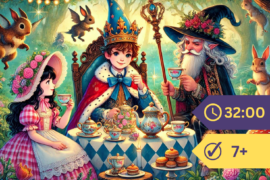
Sharp’s fairy tales are populated by royalty who are refreshingly flawed, magicians who are delightfully inept, and magical creatures who cause more mischief than wonder. In The Country Called Nonamia, an absent-minded magician sets the tone for her particular brand of humour — gentle, ironic, and full of quiet wit. That same spirit runs through The Magician’s Tea-Party, where Little King Wistful sneaks out of his palace in search of something new, only to find the world is stranger and kinder than he expected.
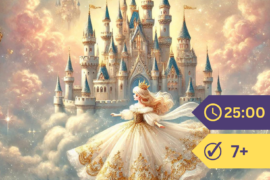
Princesses in Sharp’s stories are rarely passive. The Wonderful Toymaker opens with Princess Petulant in tears on the nursery floor, discontented with her lot — a figure Sharp treats with both affection and a faint comic edge. Similarly, The Tears of Princess Prunella follows a beautiful but lonely princess whose isolation drives the entire narrative forward. Even The Lady Daffodilia, the idlest and most careless woman in her kingdom, is drawn with more complexity than the archetype might suggest.
Among her most distinctive creations are the Wymps — mischievous fairy-world creatures who appear in both Why the Wymps Cried and Those Wymps Again. These stories, set in a Fairyland where the sun occasionally shines crookedly and ancient feuds between magical factions simmer beneath the surface, show Sharp’s talent for building a consistent imaginative world across multiple tales.
Evelyn Sharp’s children’s fiction, though less widely remembered today than her suffrage journalism, represents a thoughtful and original contribution to early twentieth-century fantasy literature. Her stories combine social observation with invention, and her recurring interest in outsiders — lonely princesses, unwanted poets, absent-minded magicians — gives her fairy tales a quiet emotional coherence that distinguishes them from the genre’s more conventional output of the era.