
A limpet is a small shellfish, a shade smaller than a snail, that makes its home on the rocks along the sea coast. Walk any rocky shore at low tide and you’ll find hundreds of them, each one clamped firmly to its chosen stone, living on seaweed and salt water and the slow rhythm of the tides.
When I was a boy, we used to spend part of the summer near the sea. Below a green grassy bank we called Greenbank, there were great rocks that jutted into the water — perfect for hiding behind, perfect for that mysterious feeling of being invisible with the whole ocean stretching out beyond. One large flat rock was so thickly covered with limpets that we simply called it Limpet Rock.
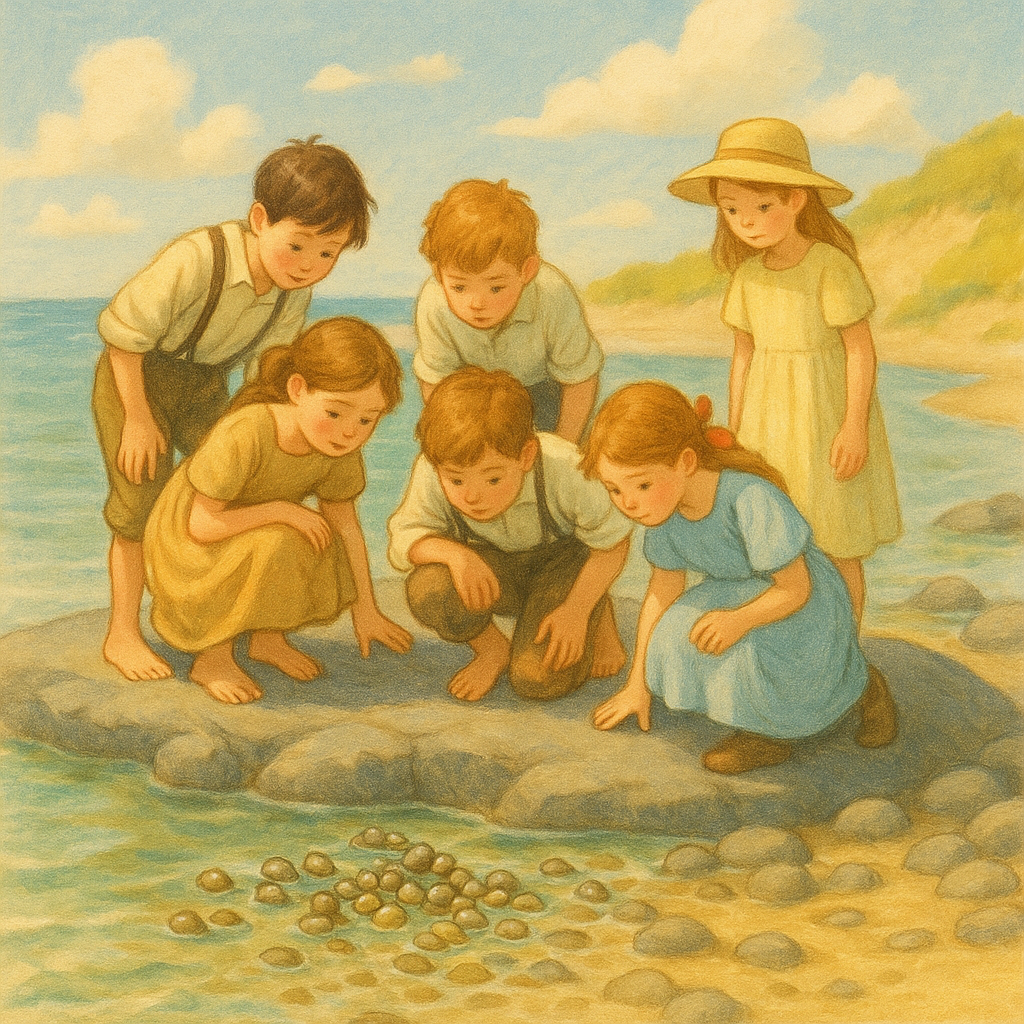
One Saturday, six of us packed a lunch basket and went down to spend the day. There had been a fierce storm the night before.
We went straight to Limpet Rock, as we always did. But Limpet Rock was bare. Not a single limpet on its grey surface.
We looked at each other, puzzled. Limpets were built for storms — they gripped their rocks tighter than anything. Where could they have gone?
Then we found them: all huddled on smaller pebbles and low rocks in the shallows, looking rather miserable. The storm had been too much even for them. Their rock was damaged, and they had lost their home.
But here is the thing about limpets: by the time we had finished our lunch, they had found a new rock. A larger one, further along the shore. We watched them settle in, one by one, clamping themselves down and going still. By afternoon they looked exactly as contented as they had ever been on the old rock.
We called it New Limpet Rock.
I have thought about those limpets many times since. They made no fuss at all. They simply found what they had lost and replaced it, quietly and without drama, before the day was out. There is something worth admiring in a creature who, when driven from home, just gets on with finding another one.