
Mary Graham Bonner
Dive into Mary Graham Bonner’s complete collection of children’s stories and bedtime tales — read them online for free, filter to discover your favorites, and explore our article to learn more.





















Mary Graham Bonner was an American author active in the early twentieth century, best known for her warm and imaginative children’s stories. Writing during a period when wholesome family literature was in high demand, she crafted tales that spoke directly to young readers and the parents who read aloud to them. Her work appeared in books and periodicals of the era, earning her a place among the writers who shaped early American children’s literature.
Bonner had a distinct storytelling style built around a gentle, conversational frame: many of her tales are told by a father figure called “Daddy,” who spins stories for his children at the end of the day. This narrative device gives her work an intimate, firelit quality that suits bedtime reading particularly well. In The Best Dream, Daddy recounts a tale about children who imagine great wealth and grand adventures, only to discover something more meaningful beneath their wishes. Similarly, A Brother’s Plan follows a boy named Worthington — Worthy for short — and his sister Mimmie, as Daddy unfolds a story about sibling loyalty and ingenuity.
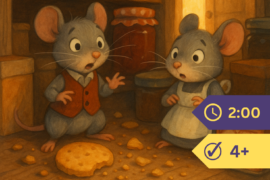
Not all of Bonner’s stories rely on the Daddy frame. Several feature animals with richly comic personalities drawn from human social life. Mrs. Hippopotamus opens with a satirical observation about vanity, delivered through the voice of its self-important hippo narrator. A Feast for the Mice follows Mr. Gray Mouse through an elaborate celebration complete with biscuits and soft cream cheese, capturing the small pleasures of community and appetite. The Sun and the Thunder personifies natural forces — a lazy Mr. Sun and a boisterous King Thunder — in a playful cosmological romp that sits comfortably in the tradition of nature fables.
Across these stories, Bonner returns consistently to themes of imagination, modest virtue, and the comedy of everyday life rendered in miniature. Her animal characters carry just enough human foible to be funny without becoming cynical, and her child characters are drawn with sympathy rather than sentimentality. Her writing occupies a quiet but genuine corner of the early twentieth-century tradition of American children’s literature — one concerned less with grand moral instruction than with the simple pleasures of a well-told tale.