Two men were finishing their Christmas shopping late on Christmas Eve.
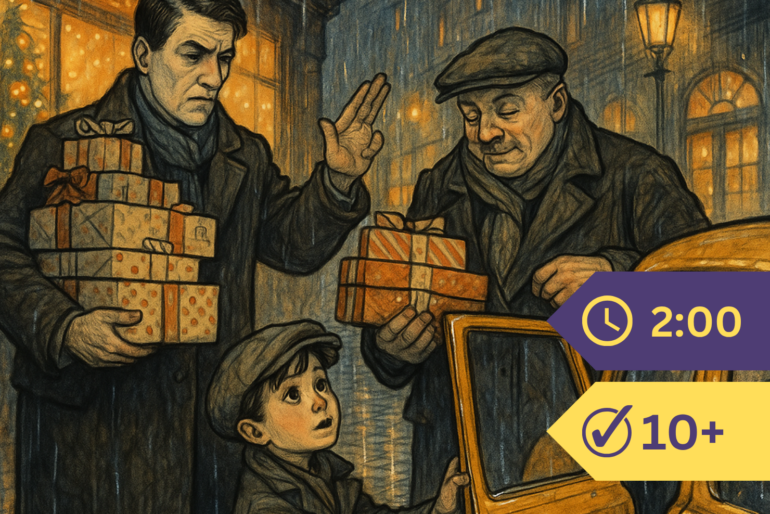
“Let’s call a taxicab,” said one. “We have so many bundles and it’s starting to rain.”
A small boy offered to find one for them. He only had to go a few steps before he spotted a cab and held the door open wide, the way he had seen carriage starters do.
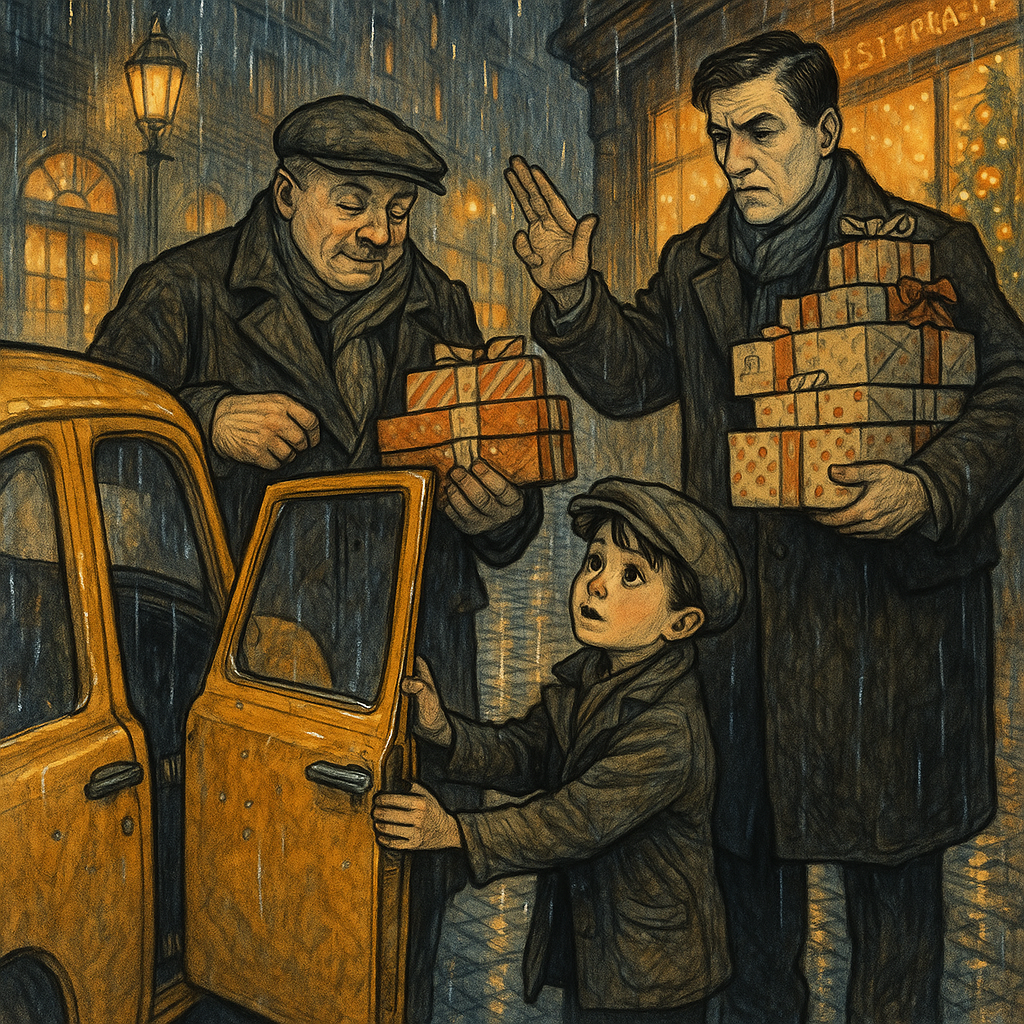
If he could get ten cents now, he would have exactly enough. That would buy his mother’s present — a pink carnation, ten cents apiece, and he had been watching them in the window all week.
One of the men paid no attention to him. The other fumbled at his coat pocket.
“Here — don’t be silly, you’ll give the child bad ideas,” said his friend. “He really didn’t do anything. He’ll think he can beg for anything. That’s a bad influence you’re exerting,” he went on muttering, as the other man drew out a shiny ten-cent piece and handed it to the boy, whose pale face and dark eyes lit up with joy.
Later, they stopped at a restaurant. The man who had lectured about bad influences pressed a large tip into the waiter’s palm the moment they sat down, which made the waiter immediately fawning.
“We’ll get better service,” he explained cheerfully. “And besides, it’s Christmas.”
His friend, who had been reproved, said quietly: “You don’t think you’re exerting a bad influence by any chance, do you?”
The boy bought his carnation and went home successful and happy. The waiter, flush from his tip, snubbed the next customer who failed to match it.