Wassail! Wassail!

Summary


"Wassail! Wassail!" is a lively celebratory poem evoking the rowdy, ale-filled revelry of medieval England, where knights, monks, and yeomen alike cast off their cares in communal festivity. From candlelit priestly houses to the warm hearth of a yeoman's cottage, the poem paints a vivid portrait of free-spirited merriment and open-door hospitality. The final image — a simple home glowing with honest laughter, welcoming all who pass — gives the boisterous celebration an unexpectedly warm and generous heart.

Listen to audio


Read Online

Wassail! wassail! Ye merry men, hail,
Who brightened the days of old;
What brave conceits, and humorsome feats,
Are sung of our fathers bold!
From morning chime, unto vesper time,
They revelled in careless glee,
And danced at night with spirits as light
As the notes of their minstrelsy.

Wassail! wassail! At the knight’s regale
‘Twas the signal for deep carouse,
Nor there alone, for the joyous tone
Shook many a priestly house;
The monks forgot their bachelor’s lot,
Surrounded by goodly cheer,
And raised the cup, in its brim full up,
To the utter contempt of care.

Wassail! wassail! cried the yeoman hale,
As he shouldered his quarter-staff,
And homeward rode, where the spiced ale stood
Awaiting his hearty quaff;
The cot meanwhile, lit up by the smile
Of a frank, good-hearted mirth,
And free to all who might chance to call,
Was the happiest place on earth!
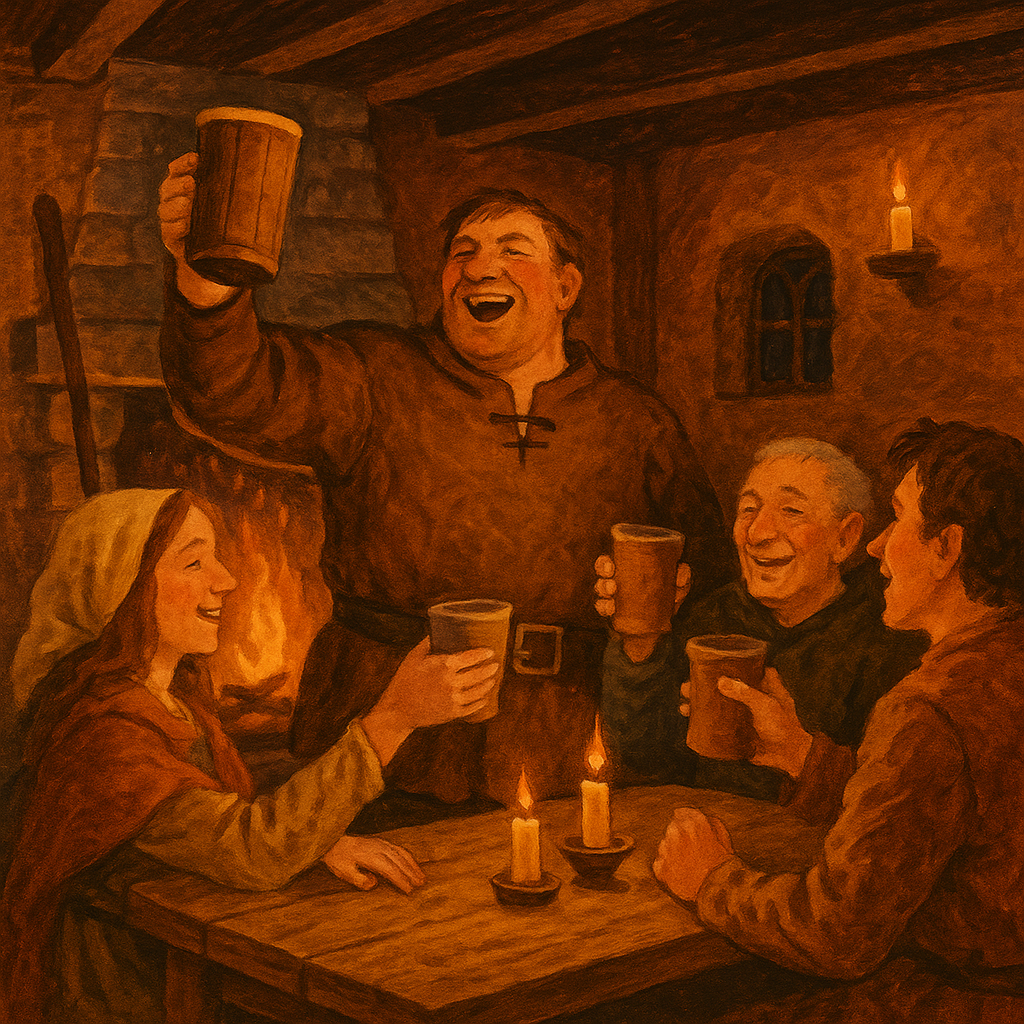

A laughing yeoman raises a cup of spiced ale at a firelit medieval feast, illustrating Wassail! Wassail!

Credits

Unknown writer is the attributed author of this traditional English wassail verse, rooted in the medieval custom of communal drinking toasts that celebrated health, harvest, and fellowship. "Wassail!" — derived from the Old Norse "ves heill," meaning "be in good health" — was a festive cry heard in halls and cottages alike across England during the winter season.