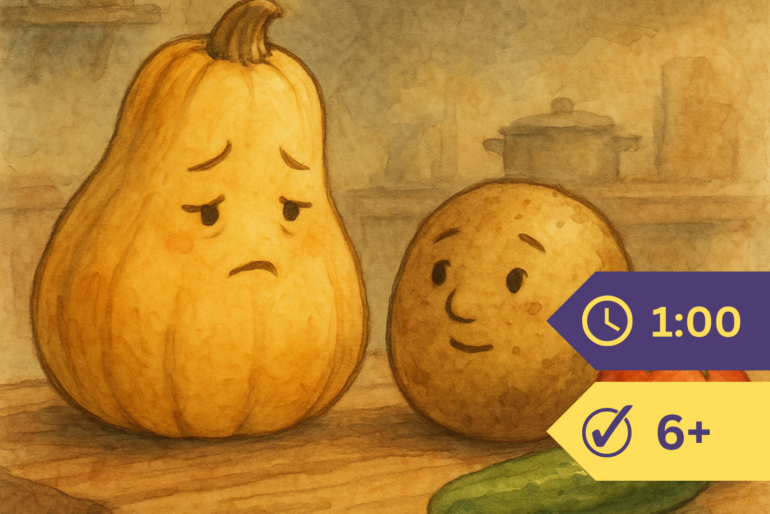
“It’s all right to be a winter vegetable,” said the squash. “It’s all right to be a summer vegetable. It’s all right to be any kind of vegetable at all. But it is very sad to be a squash.”
“Why?” asked the potato.
“The name, for a start. Squash. Doesn’t it sound flat? Trampled? Hopeless? It sounds like something that’s already been walked on.”
“Your name does have that quality,” the potato agreed. “But you yourself are not flat. I haven’t seen anyone trampling on you.”
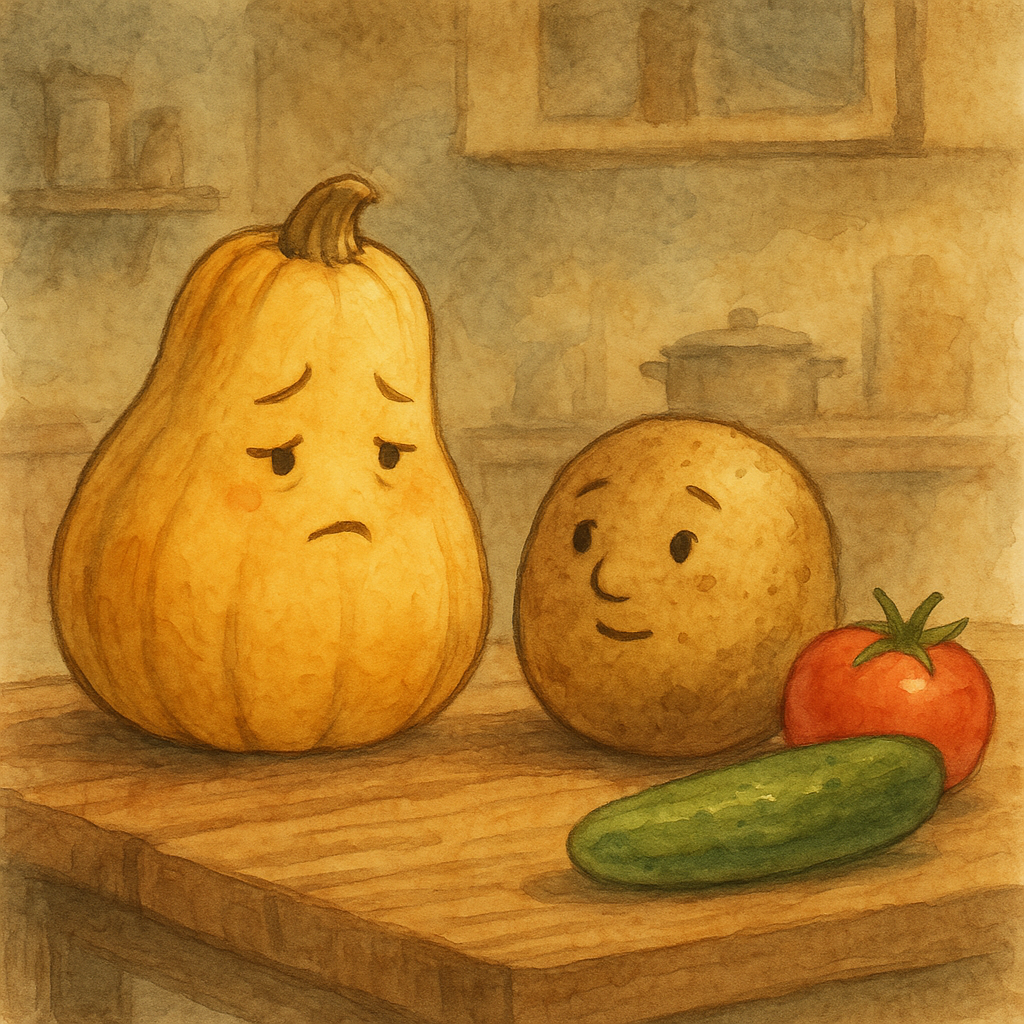
“That’s not the point,” said the squash. “We are a dull family. We haven’t any enemies — which sounds like a virtue, but it isn’t, because we haven’t any real admirers either. Tomatoes are beautiful. Cucumbers are polarizing — some love them, some can’t stand them. At least cucumbers provoke a feeling.
“And we? People say we’ll do. People say we’re all right. No one gets excited about squash. No one says they’ve been longing for squash. We just… exist. Adequately.”
The potato had no good answer to this.
It was, indeed, sad to be a squash.