“Did our mother receive this leaf as a gift?” asked the first little brown caterpillar.
“Oh no,” said the second. “She just liked the look of it, or thought it would suit us—so she took it.”
“Caterpillars can’t wait to be invited to their meals,” said the third.
“They can’t wait to be given leaves,” agreed the fourth.
“They’d never eat at all if they did,” said the fifth.
“And we must have leaves in our lives,” said the sixth.
“How handsome we shall be when we become Blue Swallowtail Butterflies,” said the seventh.
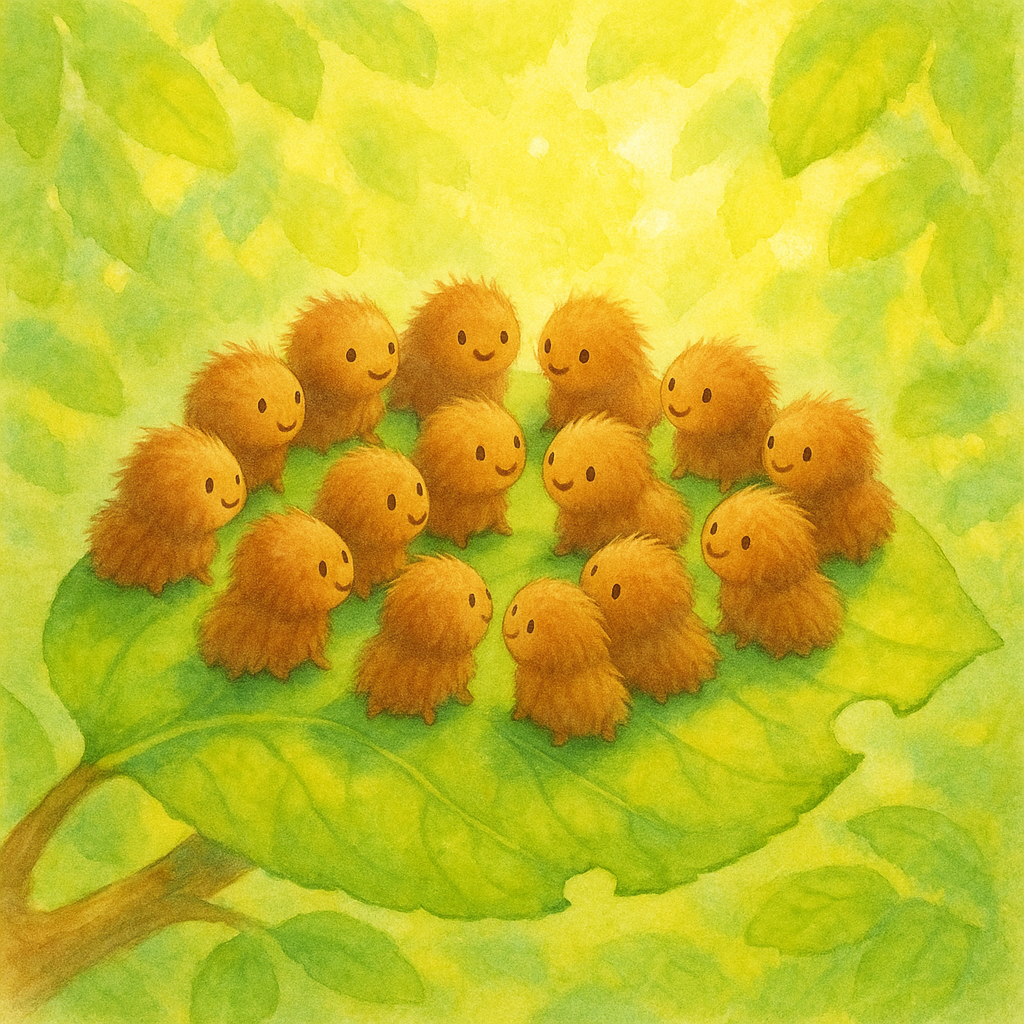
“I greatly look forward to that day,” said the eighth.
“Then we shall fly and drink honey,” said the ninth.
“And people will forget that we were caterpillars,” said the tenth, “and say: Look at those beautiful butterflies with their blue markings.”
“We’ll pretend not to hear them,” said the eleventh, “but it will please us very much.”
“Of course it will please us,” said the twelfth.
“We’ll eat and grow strong, so we’ll be beautiful,” said the thirteenth.
“And eat because it’s pleasant to eat,” added the fourteenth, taking an especially large nibble from their leaf dining room.
So they ate until they were a little bigger, and then they each went off alone to look for more food and adventures.