The Knighting of the Sirloin

Summary


"The Knighting of the Sirloin" retells the popular legend of King Charles II of England, who — after an exhausting Christmas hunt through the snowy Chingford woods — sits down to a warming feast at Friday Hall. So impressed is he by a magnificent loin of beef that the king draws on his royal authority and, in a moment of gleeful whimsy, knights the joint on the spot. The poem captures the warmth of a roaring fire, hungry men finding relief, and a monarch's playful pride in a truly exceptional meal.

Read Online

The Second Charles of England
Rode forth one Christmas tide,
To hunt a gallant stag of ten,
Of Chingford woods the pride.

The winds blew keen, the snow fell fast,
And made for earth a pall,
As tired steeds and wearied men
Returned to Friday Hall.

The blazing logs, piled on the dogs,
Were pleasant to behold!
And grateful was the steaming feast
To hungry men and cold.

With right good-will all took their fill,
And soon each found relief;
Whilst Charles his royal trencher piled
From one huge loin of beef.

Quoth Charles, “Odd’s fish! a noble dish!
Ay, noble made by me!
By kingly right, I dub thee knight —
Sir Loin henceforward be!”
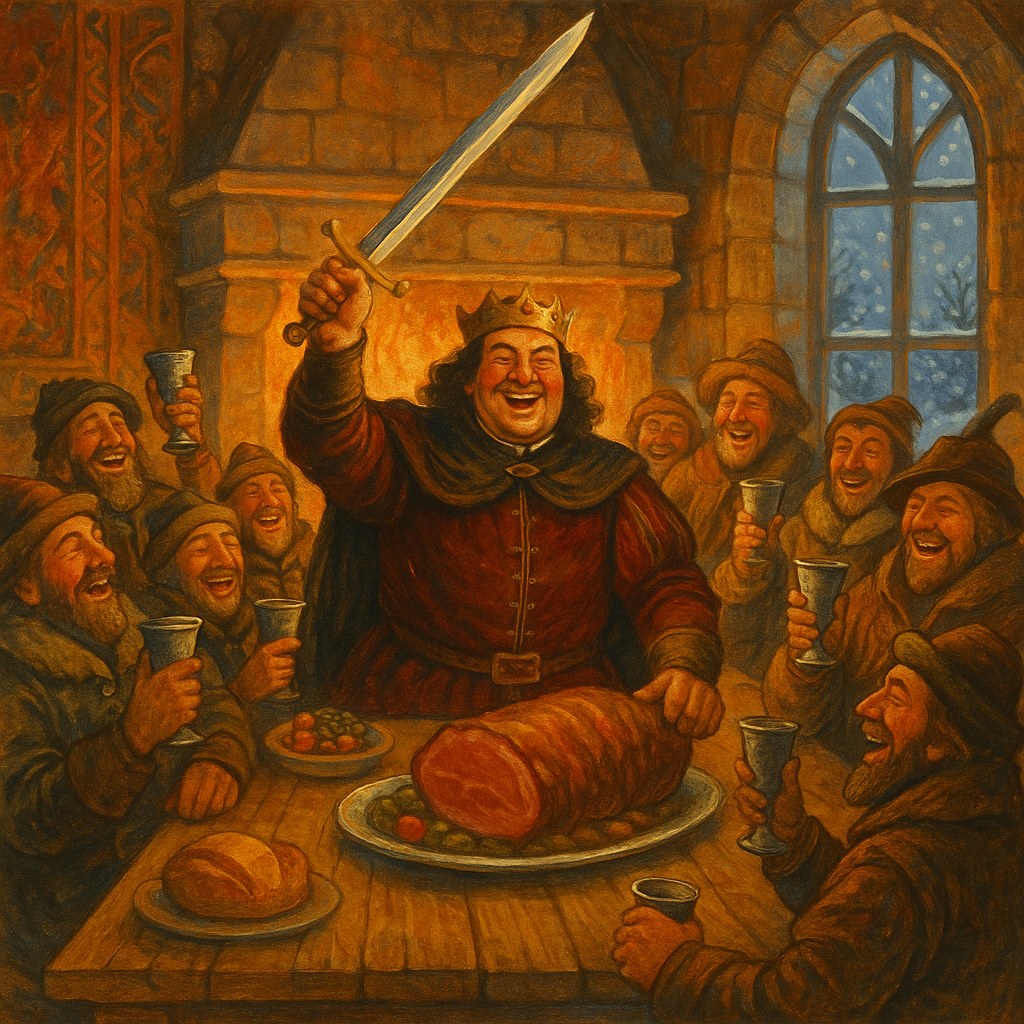
King Charles II knighting a loin of beef at a feast in "The Knighting of the Sirloin"

And never was a royal jest
Received with such acclaim:
And never knight than good Sir Loin
More worthy of the name.

Credits

Unknown writer. This poem is an anonymous English verse celebrating the popular folk legend that gave the cut of beef known as "sirloin" its name — a story long associated with King Charles II and a royal hunting lodge in Essex. Its cheerful, ballad-like rhythm and patriotic humour made it a favourite in collections of English comic verse.