The play is done — the curtain drops,
Slow-falling to the prompter’s bell;
A moment yet the actor stops,
And looks around, to say farewell.
It is an irksome word and task;
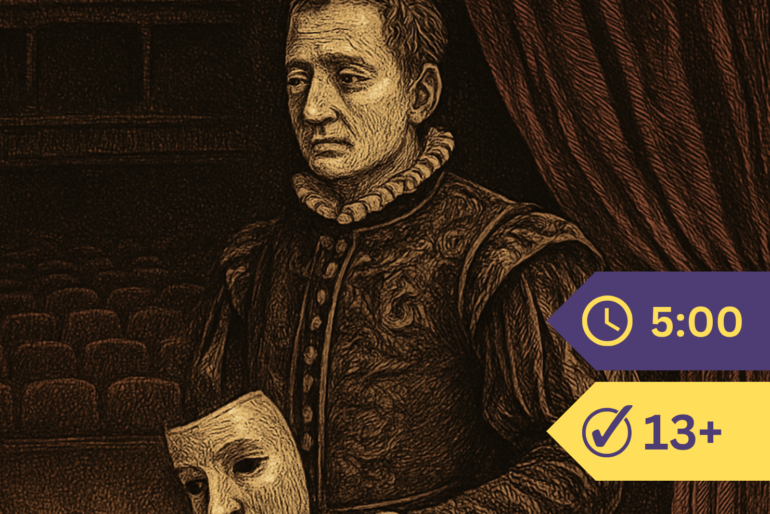
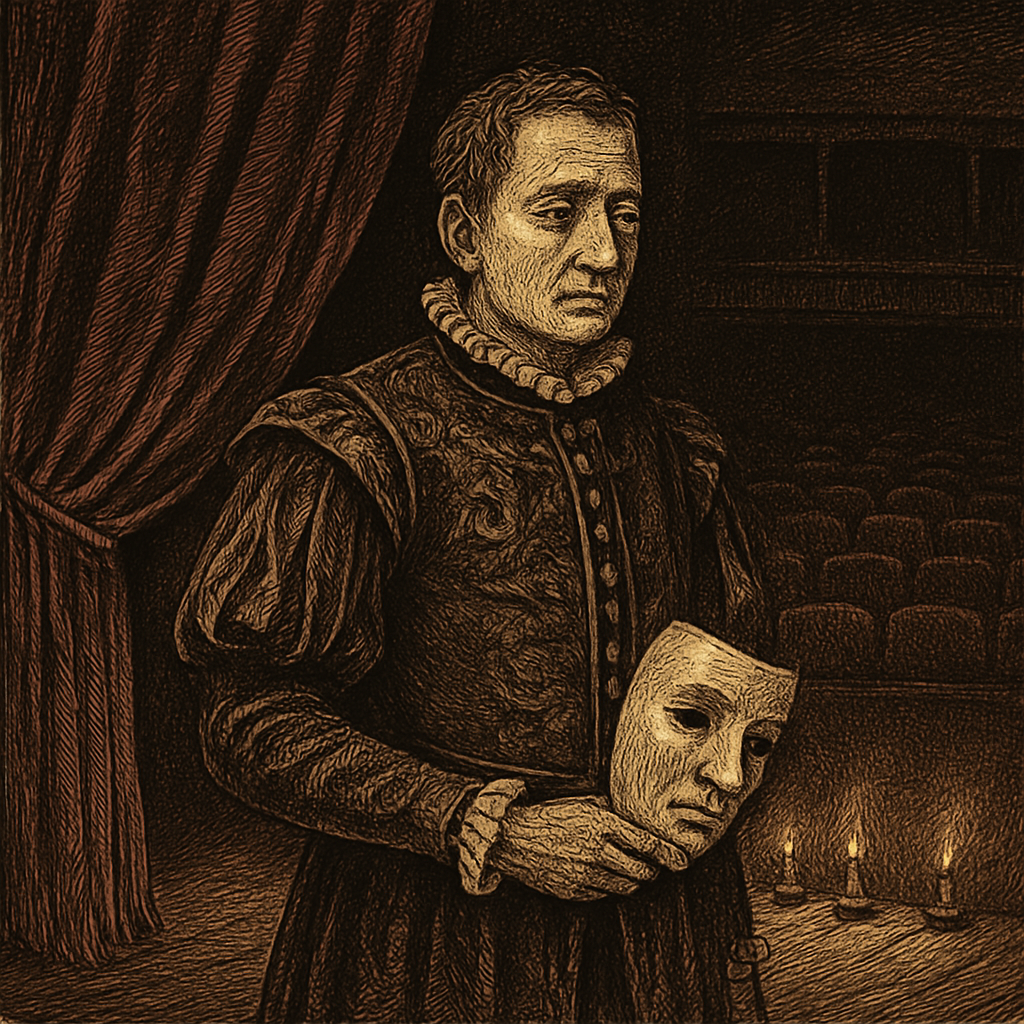
And, when he’s laughed and said his say,
He shows, as he removes his mask,
A face that’s anything but gay.
One word, ere yet the evening ends,
Let’s close it with a parting rhyme;
And pledge a hand to all young friends,
As fits the merry Christmas time.
On life’s wide scene you, too, have parts
That fate erelong shall bid you play;
Good-night! — with honest, gentle hearts
A kindly greeting go alway!
Good-night! — I’d say the griefs, the joys,
Just hinted in this mimic page,
The triumphs and defeats of boys,
Are but repeated in our age.
I’d say your woes were not less keen,
Your hopes more vain than those of men,
Your pangs or pleasures of fifteen
At forty-five played o’er again.
I’d say we suffer and we strive,
Not less nor more as men than boys,
With grizzled beards at forty-five
As erst at twelve in corduroys;
And if, in time of sacred youth,
We learned at home to love and pray,
Pray Heaven that early love and truth
May never wholly pass away.
And in the world as in the school
I’d say how fate may change and shift,
The prize be sometimes to the fool,
The race not always to the swift:
The strong may yield, the good may fall,
The great man be a vulgar clown,
The knave be lifted over all,
The kind cast pitilessly down.
Who knows the inscrutable design?
Blessed be He who took and gave!
Why should your mother, Charles, not mine,
Be weeping at her darling’s grave?
We bow to Heaven that willed it so,
That darkly rules the fate of all,
That sends the respite or the blow,
That’s free to give or to recall.
This crowns his feast with wine and wit, —
Who brought him to that mirth and state?
His betters, see, below him sit,
Or hunger hopeless at the gate!
Who bade the mud from Dives’s wheel
To spurn the rags of Lazarus?
Come, brother, in that dust we’ll kneel,
Confessing Heaven that ruled it thus.
So each shall mourn, in life’s advance,
Dear hopes, dear friends, untimely killed;
Shall grieve for many a forfeit chance,
And longing passion unfulfilled.
Amen! — whatever fate be sent,
Pray God the heart may kindly glow,
Although the head with cares be bent,
And whitened with the winter snow!
Come wealth or want, come good or ill,
Let young and old accept their part,
And bow before the awful Will,
And bear it with an honest heart.
Who misses or who wins the prize,
Go, lose or conquer, as you can;
But if you fail, or if you rise,
Be each, pray God, a gentleman!
A gentleman, or old or young!
(Bear kindly with my humble lays;)
The sacred chorus first was sung
Upon the first of Christmas days;
The shepherds heard it overhead, —
The joyful angels raised it then:
“Glory to Heaven on high,” it said,
“And peace on earth to gentle men!”
My song, save this, is little worth;
I lay the weary pen aside,
And wish you health and love and mirth,
As fits the solemn Christmas-tide.
As fits the holy Christmas birth,
Be this, good friends, our carol still:
Be peace on earth, be peace on earth
To men of gentle will!