
William Makepeace Thackeray
Dive into William Makepeace Thackeray’s complete works and stories, read them online for free, and explore our article to learn more about the author.
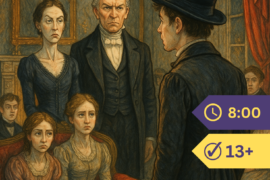
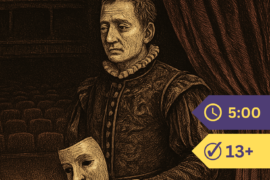
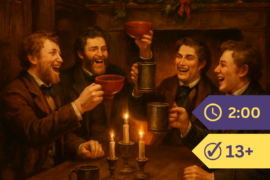
William Makepeace Thackeray (1811–1863) was one of the foremost British novelists of the Victorian era. Born in Calcutta, then part of British India, he was sent to England for his education and later studied at Trinity College, Cambridge, though he left without a degree. He went on to become a journalist, illustrator, and writer, eventually earning his place alongside Charles Dickens as one of the defining literary voices of nineteenth-century England.
Thackeray is best known for his sharp, ironic examination of English society, particularly the middle and upper classes. His writing is marked by a satirical wit that exposed vanity, snobbery, and moral hypocrisy without resorting to simple moralizing. His most celebrated work, Vanity Fair (1847–48), follows the ambitious and unscrupulous Becky Sharp as she navigates the social ladders of Regency England — a novel widely regarded as one of the greatest in the English language. His other major novels include Pendennis, The History of Henry Esmond, and The Newcomes, each offering a panoramic view of English society across different periods and social strata.
Beyond his longer fiction, Thackeray was a prolific contributor to magazines and periodicals, particularly Punch and Fraser’s Magazine. Under various pen names, he published essays, sketches, and shorter fiction that cemented his reputation as a keen social observer. His The Book of Snobs, originally serialized in Punch, is a witty catalogue of the pretensions and affectations found across English society. He also wrote fairy tales and lighter fiction, including The Rose and the Ring, a burlesque fairy tale written for children that showcases his playful humor alongside his satirical instincts.
Thackeray served as the first editor of The Cornhill Magazine from 1860, a prestigious literary journal that published work by some of the most prominent writers of the day. His influence on Victorian literature is considerable — his narrative technique, including his habit of addressing the reader directly and commenting on his own storytelling, anticipates many later developments in literary realism and metafiction. He died in London in 1863 and was buried at Kensal Green Cemetery. His work remains an essential record of Victorian social life, rendered with intelligence, wit, and an unflinching eye for human weakness.