WHEN Christmas approaches, each bosom is gay,
That festival banishes sorrow away;
While Richard he kisses both Susan and Dolly,
When tricking the house up with ivy and holly;
For never as yet it was counted a crime
To be merry and cherry at that happy time.
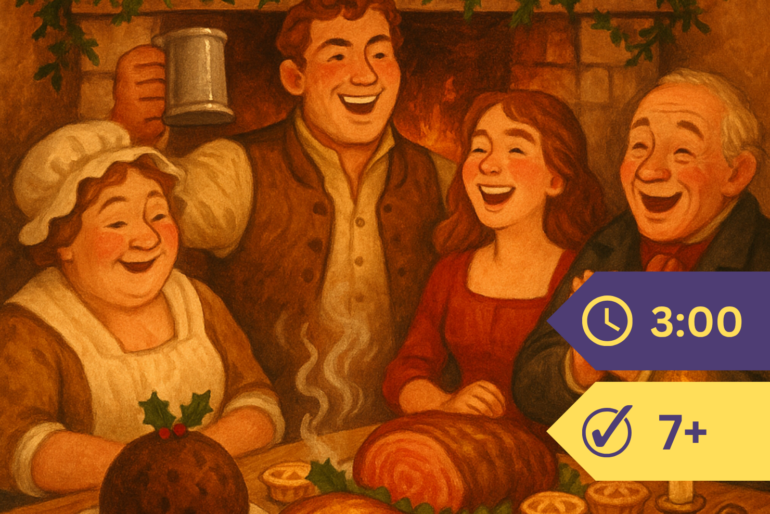
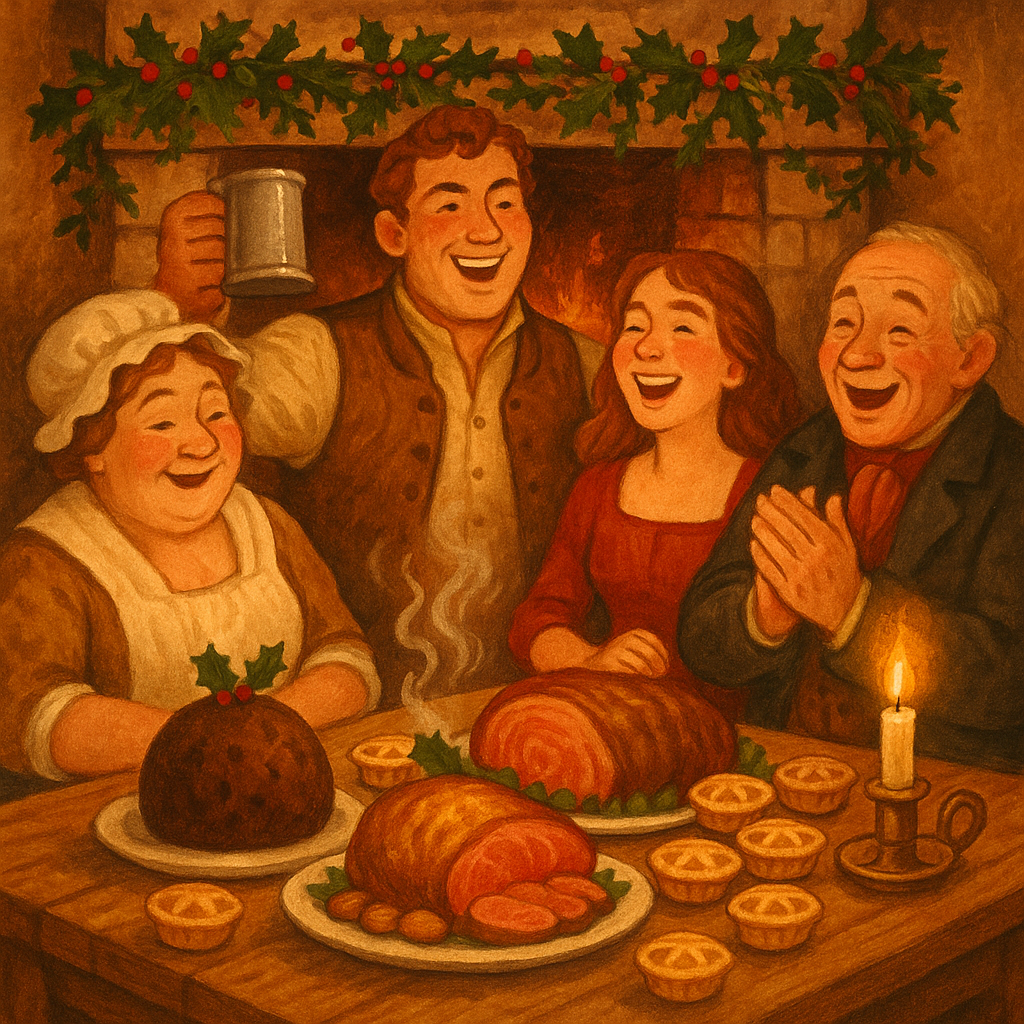
Then comes turkey and chine, with the famous roast beef,
Of English provisions still reckoned the chief;
Roger wishes the cook-maid his wishes to crown,
“Oh, Dolly! pray give me a bit of the brown;”
For never as yet it was counted a crime
To be merry and cherry at that happy time.
The luscious plum pudding does smoking appear,
And the charming mince pie is not far in the rear;
Then each licks his chops to behold such a sight,
For to taste it affords him superior delight;
For never as yet it was counted a crime
To be merry and cherry at that happy time.
Now the humming October goes merrily round,
And each with good humor is happily crown’d,
The song and the dance, and the mirth-giving jest,
Alike without harm by each one is expressed,
For never as yet it was counted a crime
To be merry and cherry at that happy time.
Twelfth Day next approaches, to give you delight,
And the sugar’d rich cake is display’d to the sight;
Then sloven and slut, and the King and the Queen,
Alike must be present to add to the scene;
For never as yet it was counted a crime
To be merry and cherry at that happy time.
May each be found thus as the year circles round,
With mirth and good humor each Christmas be crown’d,
And may all who have plenty of riches in store
With their bountiful blessings make happy the poor;
For never as yet it was counted a crime
To be merry and cherry at that happy time.