Hey, may talk as they list of their pies and their patties —
Their hoe-cake and oat-cake, galettes and gateaux —
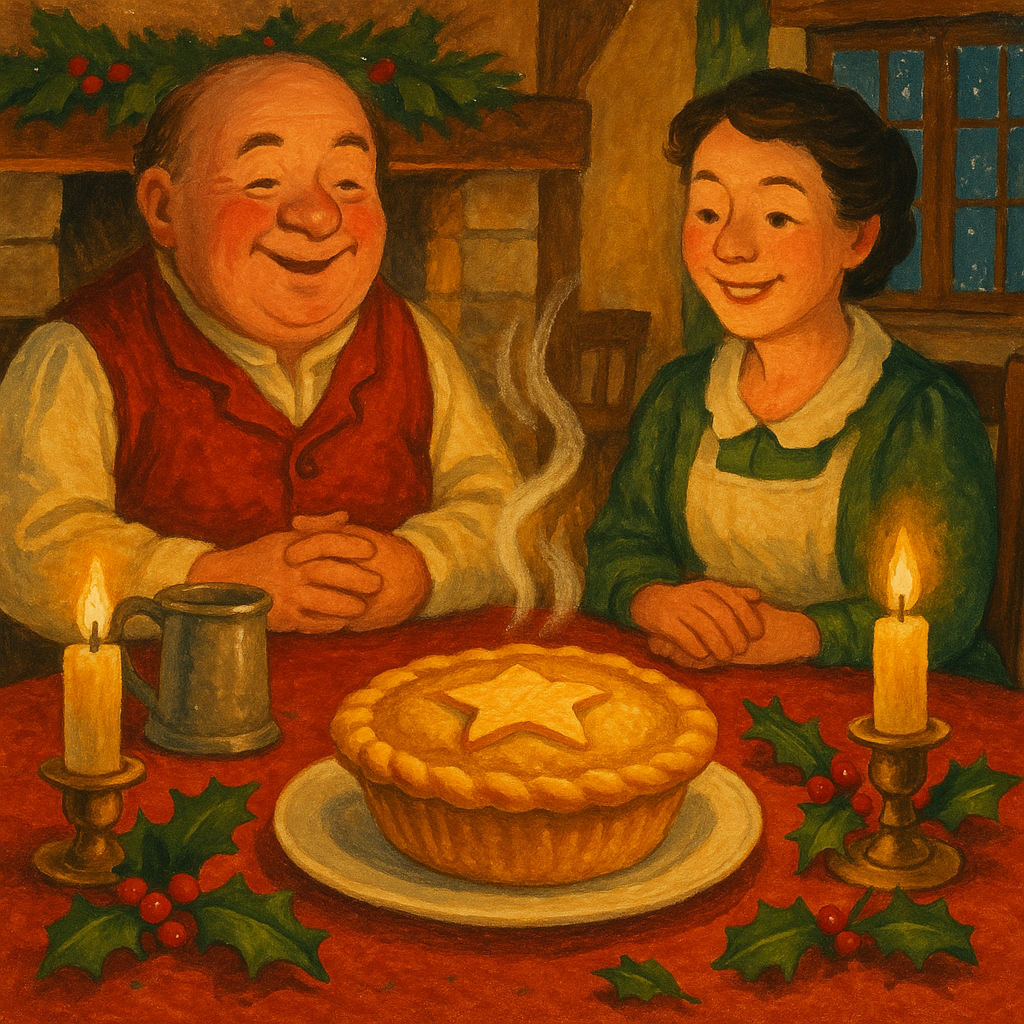
Their Mince Pie of all cakes the aristocrat is,
The best of the lot, as each epicure knows.
‘Tis lined with prime beef, with good fruit for relief —
Nutmeg and currants and spices enow;
Well-seasoned — the Season will do it fair reason —
E’en Majesty honours the Mince Pie, I trow.
‘Tis the pie of Old Christmas, both savoury and stable,
Unworthy to pine ‘neath confectioner’s yoke,
Most warmly ’tis welcomed to every table
Which hails Merrie Christmas with good cheer and joke.
E’en the humblest cottage will postpone its pottage
For once in the year, to rejoice in the Pie;
And Little Jack Horner, who sat in a corner,
Could very well all of its beauties descry.
Ay! the twelfth cake so proud, the admired of the crowd,
Need crow not so loud o’er the pie that we laud —
Though its sugar-crust sheen, with Lords, Commons, and Queen,
Are characters which we can fairly applaud.
Between me and you, it derives half its goût
From the fun that surrounds it on festival night;
But the choicest of spirits will ne’er deem its merits
Above the prime Mince Pie — the schoolboy’s delight.
And though our land hath with adversity striven,
And stoutly must strive to the last “crack of doom” —
Though Famine’s foul car o’er one island hath driven,
And flings o’er the other forebodings of gloom,
Yet, still let us hope that from Heaven’s high cope
Fair Plenty may come on the pinions of Spring —
That Ceres shall nourish — and Commerce shall flourish —
And England her heart-hymns of jubilee sing.