Signs of the Season

Summary


"Signs of the Season" paints a vivid picture of an old-fashioned Christmas, where kitchens bustle day and night with cooks preparing plum pudding, roast goose, and mince pies. Smoke rises from chimneys, ale and wine flow freely, and travellers are welcomed into gentlemen's halls to rest beside the fire. The poem's warmest moment arrives in its final lines, where even the poor are promised a place at the feast — a reminder that the season's abundance is meant for all.

Listen to audio


Read Online

The cooks shall be busied, by day and by night,
In roasting and boiling, for taste and delight,
Their senses in liquor that’s happy they’ll steep,
Though they be afforded to have little sleep;
They still are employed for to dress us, in brief,
Plum-pudding, goose, capon, minc’d-pies, and roast beef.
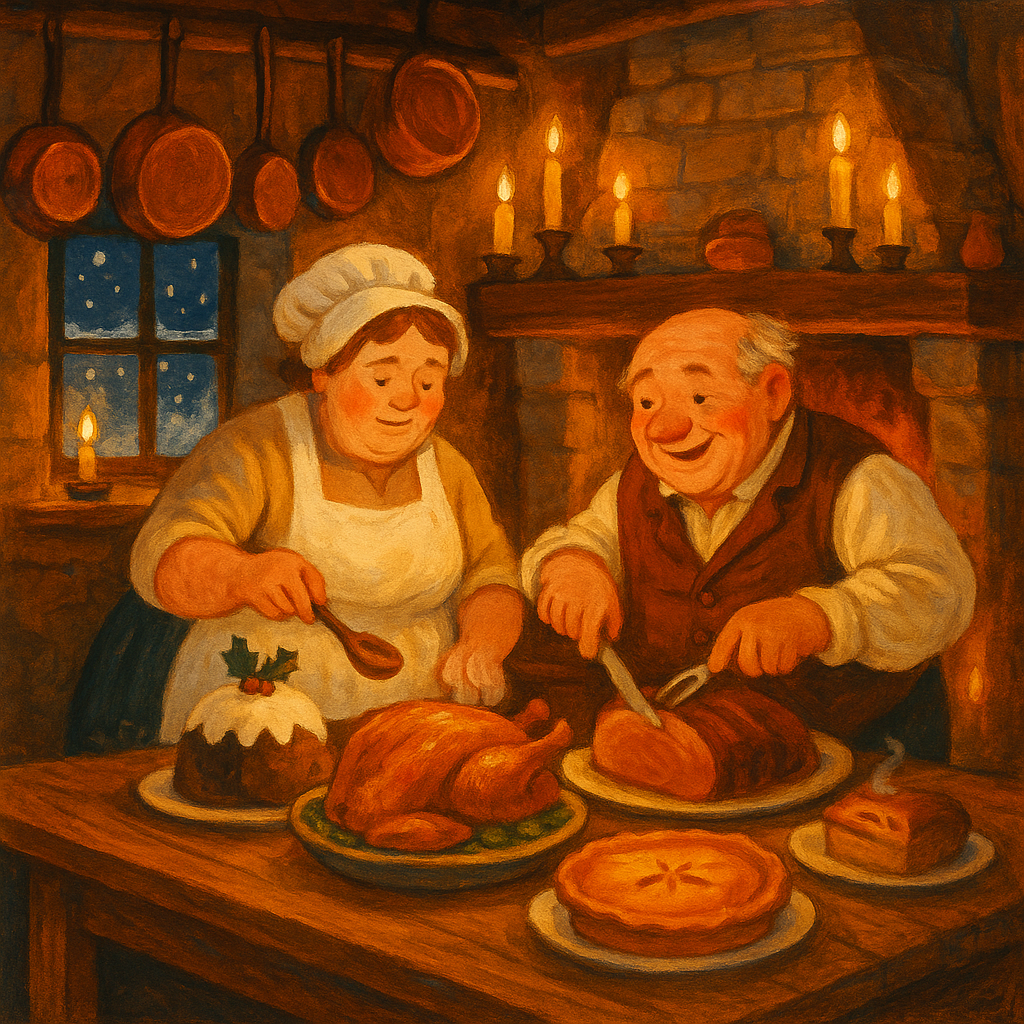
Bustling Christmas kitchen with festive feast dishes in the poem Signs of the Season

Although the cold weather doth hunger provoke,
‘Tis a comfort to see how the chimneys do smoke;
Provision is making for beer, ale, and wine,
For all that are willing or ready to dine:
Then haste to the kitchen for diet the chief,
Plum-pudding, goose, capon, minc’d-pies, and roast beef.

All travellers, as they do pass on their way,
At gentlemen’s halls are invited to stay,
Themselves to refresh and their horses to rest,
Since that he must be old Christmas’s guest;
Nay, the poor shall not want, but have for relief
Plum-pudding, goose, capon, minc’d-pies, and roast beef.


Credits

Unknown writer is the anonymous author of this cheerful seasonal verse, which belongs to the tradition of English Christmas poetry celebrating communal feasting and hospitality. Its rollicking refrain — listing plum pudding, goose, capon, mince pies, and roast beef — echoes the style of broadside ballads popular in the 17th and 18th centuries.