Summary


"Mildew" by Charlotte Dacre conjures a grotesque figure dwelling in a cold, dripping cavern, his cheeks mottled green and purple, his hands discoloured and chill. He feeds on damp vapours rising from the earth, lingers at freshly dug graves, and roams the night sea-spray before retreating to his mossy cell. Dark, sensory, and quietly unsettling, the poem personifies decay itself — a creature so at home in rot and ruin that he would not trade his grim existence for anything warmer or living.

Read Online

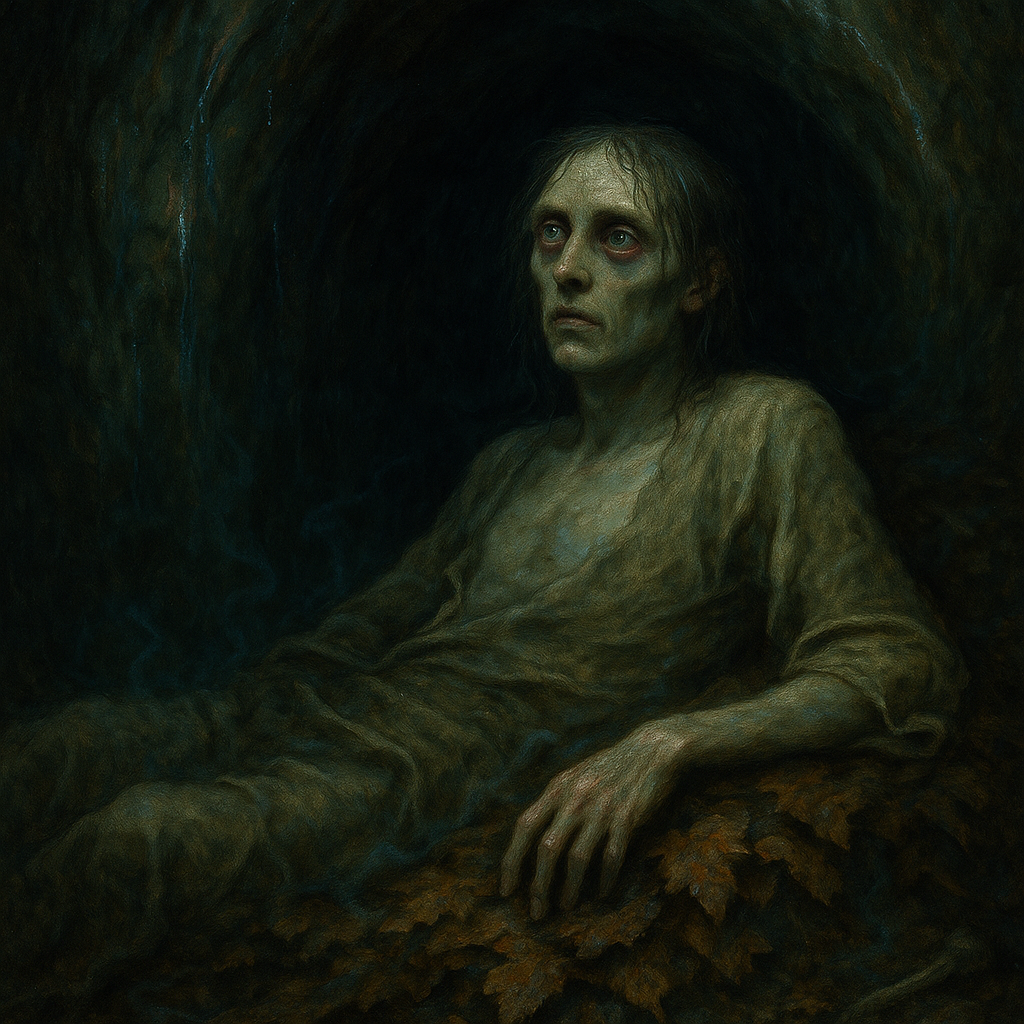
Behold, within that cavern drear and dank,
Whose walls in rainbow tints so dimly shine,
A wretch, with swollen eyes and tresses lank,
Does on a heap of mould’ring leaves recline.
Unwholsome dews for ever him surround,
From his damp couch he scarcely ever hies,
Save when blue vapours, issuing from the ground,
Lure him abroad, to catch them as they rise.

Or else at eve the dripping rock he loves,
Or the moist edge of new‐dug grave, full well;
To get the sea spray too at night he roves,
And, gem’d with trickling drops, then seeks his cell.

Such his delights, his green and purple cheek,
His bloated form, his chill, discolour’d hand
He would not change; and if he guests would seek,
He steals among the church‐yard’s grisly hand.


Credits

Charlotte Dacre was a British Romantic-era poet and novelist, active in the early nineteenth century, best known for her gothic novel Zofloya, or The Moor (1806). Writing under the pseudonym "Rosa Matilda," she cultivated a boldly dark aesthetic that influenced later Gothic literature. "Mildew" exemplifies her gift for personifying corruption with visceral, almost painterly detail.