
Charlotte Dacre
Dive into Charlotte Dacre’s complete poems and Gothic writings — read them online for free, filter to discover your favorites, and explore our article to learn more.
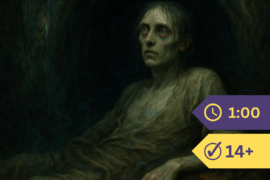
Charlotte Dacre (c. 1772–1825) was a British writer active during the Romantic period, known for her contributions to Gothic literature in both poetry and prose. Writing under the pen name “Rosa Matilda,” she attracted considerable attention in the early nineteenth century for her intensely atmospheric and emotionally charged work. She is perhaps best remembered as the author of the Gothic novel Zofloya, or The Moor (1806), a darkly sensational story that drew comparisons to Matthew Lewis’s The Monk and left a mark on subsequent Gothic writers, including Percy Bysshe Shelley.
Dacre’s poetry occupies a distinctive corner of the Romantic canon. Where many of her contemporaries reached toward the sublime or the pastoral, Dacre was drawn to decay, obsession, and the shadowed edges of human experience. Her verse frequently inhabits Gothic landscapes — caverns, ruins, and places touched by rot and ruin — using them as mirrors for psychological and emotional states. This is evident in Mildew, a poem that opens on a wretched figure reclining amid mouldering leaves in a dank cavern, surrounded by unwholesome dews and dim, discolored light. The imagery is deliberately oppressive, evoking not just physical decay but a kind of spiritual or moral decomposition.
Her writing style is marked by sensory intensity and an almost theatrical investment in suffering and atmosphere. Dacre was not interested in polite sentiment; her work tends toward extremity, exploring passions that polite Romantic verse often avoided. This made her a somewhat controversial figure in her own time, and critics alternately dismissed and praised her for the raw energy of her compositions. Her Gothic sensibility anticipated later Victorian preoccupations with darkness, the body, and moral ambiguity.
Though Dacre fell into relative obscurity after the early nineteenth century, scholarly interest in her work has grown steadily since the late twentieth century, particularly as critics have re-examined women writers at the margins of the Romantic movement. Her poetry and fiction are now recognized as important contributions to the Gothic tradition, offering a female perspective on themes — desire, transgression, decay — that were often monopolized by male authors of the period. Her place in literary history is that of a writer who pushed against the boundaries of what was considered appropriate for women’s writing, producing work of genuine unsettling power.