MARY.
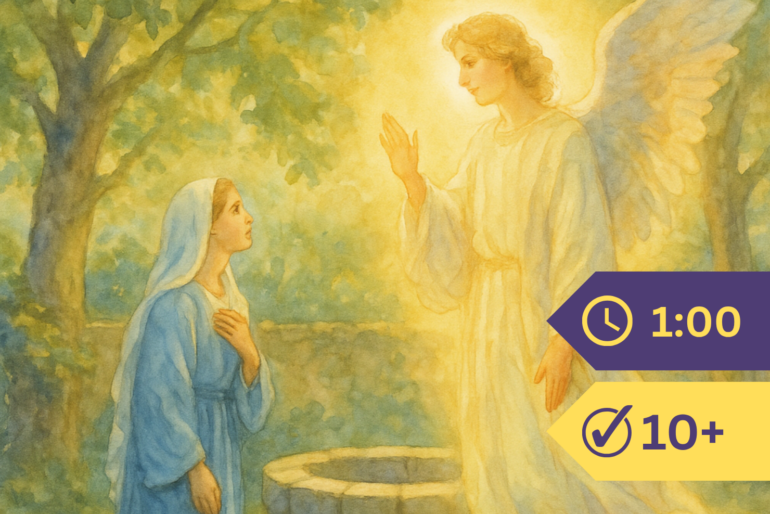
Along the garden walk, and thence
Through the wicket in the garden fence
I steal with quiet pace,
My pitcher at the well to fill,
That lies so deep and cool and still
In this sequestered place.
These sycamores keep guard around;
I see no face, I hear no sound,
Save bubblings of the spring,
And my companions, who, within,
The threads of gold and scarlet spin,
And at their labor sing.
THE ANGEL GABRIEL.
Hail, Virgin Mary, full of grace!
Here MARY looketh around her, trembling, and then saith:
MARY.
Who is it speaketh in this place,
With such a gentle voice?
GABRIEL.
The Lord of heaven is with thee now!
Blessed among all women thou,
Who art his holy choice!
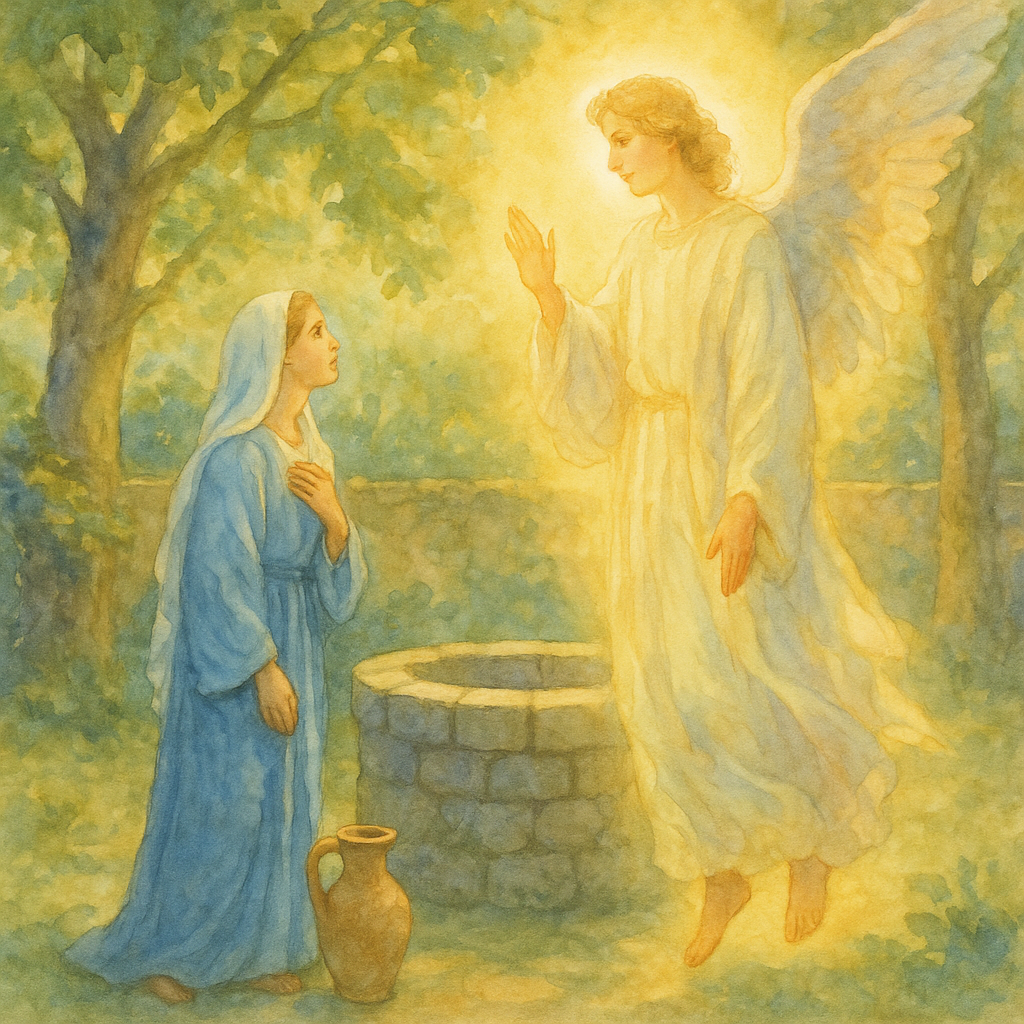
MARY, setting down the pitcher.
What can this mean? No one is near,
And yet, such sacred words I hear,
I almost fear to stay.
Here the ANGEL, appearing to her, shall say:
GABRIEL.
Fear not, O Mary! but believe!
For thou, a Virgin, shalt conceive
A child this very day.
Fear not, O Mary! from the sky
The Majesty of the Most High
Shall overshadow thee!
MARY.
Behold the handmaid of the Lord!
According to thy holy word,
So be it unto me!
Here the Devils shall again make a great noise, under the stage.