
Henry Wadsworth Longfellow
Dive into Henry Wadsworth Longfellow’s complete poems and discover his rich, resonant verse — read them online for free, filter to find your favorites, and explore our article to learn more.
Henry Wadsworth Longfellow (1807–1882) was one of the most widely read American poets of the nineteenth century. Born in Portland, Maine, he spent much of his career as a professor of modern languages at Harvard University, where his scholarly background deeply informed his literary output. Longfellow was the first American poet to be honored with a bust in Poets’ Corner at Westminster Abbey, a recognition that speaks to his extraordinary standing both at home and abroad.
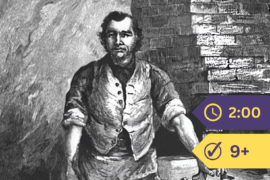
Longfellow’s poetry is known for its melodic rhythms, moral clarity, and vivid imagery drawn from everyday life as well as history and legend. He had a particular gift for finding the universal in the specific — whether portraying the honest labor of a working man or meditating on grief and faith. The Village Blacksmith is among his most recognized works, painting an enduring portrait of a craftsman whose steady life beneath a spreading chestnut tree becomes a quiet meditation on industry, family, and the passage of time.
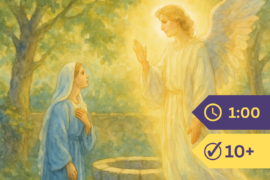
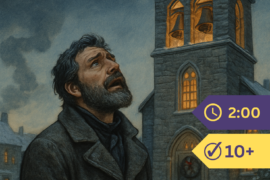
Religious and seasonal themes also run through Longfellow’s verse with great feeling and restraint. The Three Kings retells the journey of the Magi with lyrical dignity, while Christmas Bells — written during the American Civil War — moves from the joyful peal of holiday carols to a profound reckoning with conflict, despair, and the stubborn hope for peace on earth. The poem is widely understood as a personal response to the war and to the wounding of his son Charles in battle.
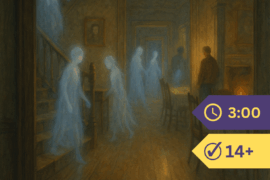
Longfellow also explored more philosophical and supernatural territory. Haunted Houses offers a thoughtful reflection on memory and mortality, arguing that every home where people have lived and died retains the presence of those who came before — a meditation that is eerie yet ultimately consoling. This range — from the domestic and celebratory to the elegiac and metaphysical — is characteristic of Longfellow’s broad literary ambition.
Throughout the nineteenth century, Longfellow’s poems were recited in schools, read in parlors, and translated across Europe, making him one of the most influential voices in shaping how Americans understood their own history, values, and emotional life. His legacy endures as a poet who believed that verse could speak plainly and beautifully to readers of every background.