Mark well my heavy doleful tale,
For Twelfth-day now is come,
And now I must no longer sing,
And say no words but mum;
For I perforce must take my leave
Of all my dainty cheer,
Plum-porridge, roast beef, and minced pies,
My strong ale and my beer.
Kind-hearted Christmas, now adieu,
For I with thee must part,
And for to take my leave of thee
Doth grieve me at the heart;
Thou wert an ancient housekeeper,
And mirth with meat didst keep,
But thou art going out of town,
Which makes me for to weep.
God knoweth whether I again
Thy merry face shall see,
Which to good-fellows and the poor
Was so frank and free.
Thou lovedst pastime with thy heart,
And eke good company;
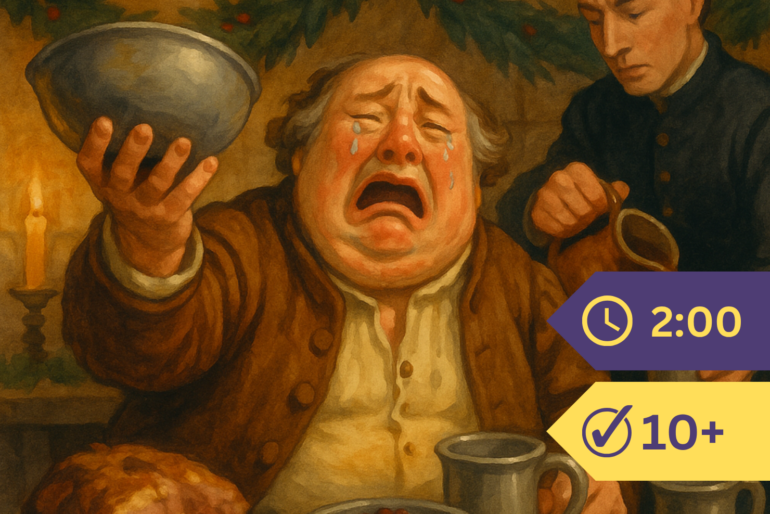
Pray hold me up for fear I swoon,
For I am like to die.
Come, butler, fill a brimmer up
To cheer my fainting heart,
That to old Christmas I may drink
Before he doth depart;
And let each one that’s in this room
With me likewise condole,
And for to cheer their spirits sad
Let each one drink a bowl.
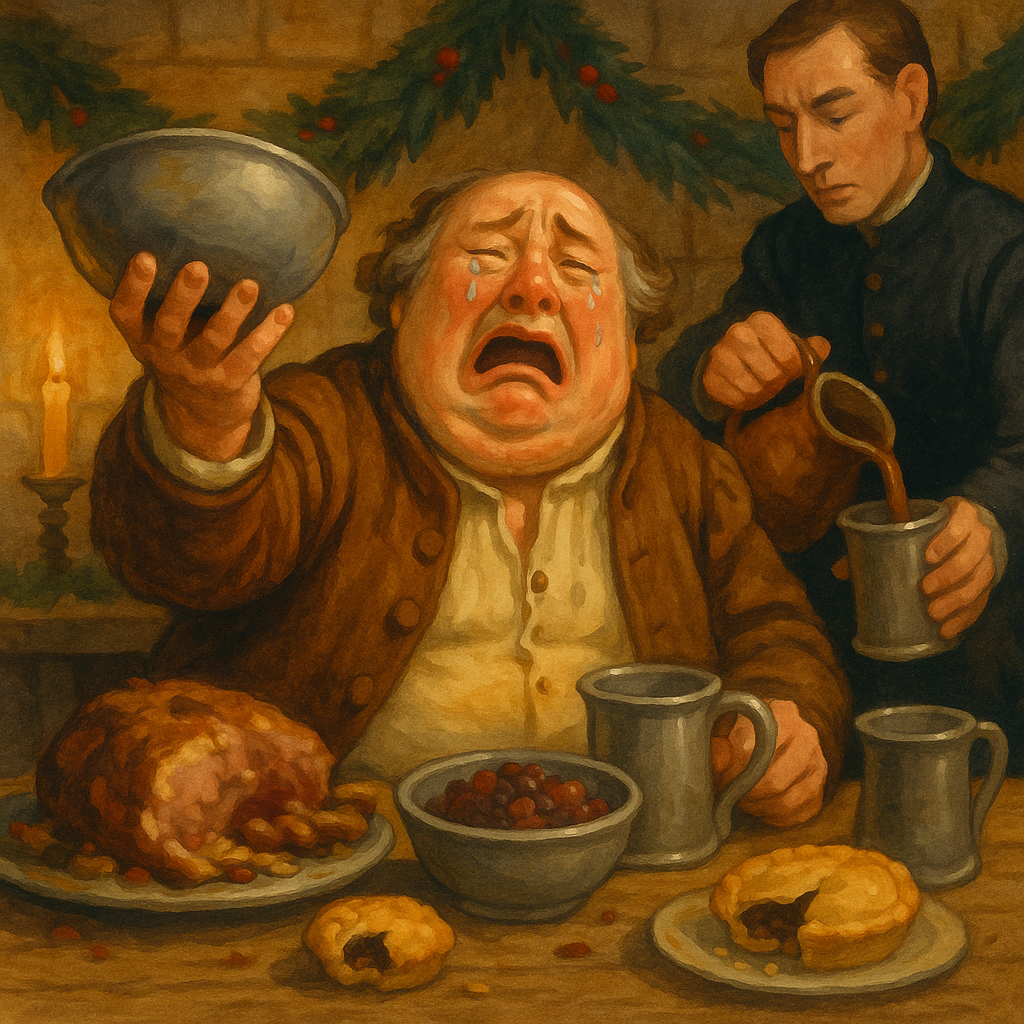
And when the same it hath gone round
Then fall unto your cheer,
For you do know that Christmas time
It comes but once a year.
But this good draught which I have drunk
Hath comforted my heart,
For I was very fearful that
My stomach would depart.
Thanks to my master and my dame
That doth such cheer afford;
God bless them, that each Christmas they
May furnish thus their board.
My stomach having come to me,
I mean to have a bout,
Intending to eat most heartily —
Good friends, I do not flout.