If you were coming in the fall

Summary


In "If you were coming in the fall," Emily Dickinson turns the ache of waiting into a poem of five quiet stanzas. A speaker imagines brushing summer aside like a housewife shooing a fly, winding months into balls of thread, and counting centuries on her fingers. Each promise of patience grows more extravagant, until uncertainty undoes her calm. The poem balances playful domestic images against deep longing, and the closing stanza sharpens into a sting.

Read Online

IF you were coming in the fall,
I’d brush the summer by
With half a smile and half a spurn,
As housewives do a fly.

If I could see you in a year,
I’d wind the months in balls,
And put them each in separate drawers,
Until their time befalls.

If only centuries delayed,
I’d count them on my hand,
Subtracting till my fingers dropped
Into Van Diemen’s land.

If certain, when this life was out
That yours and mine should be,
I’d toss it yonder like a rind,
And taste eternity.

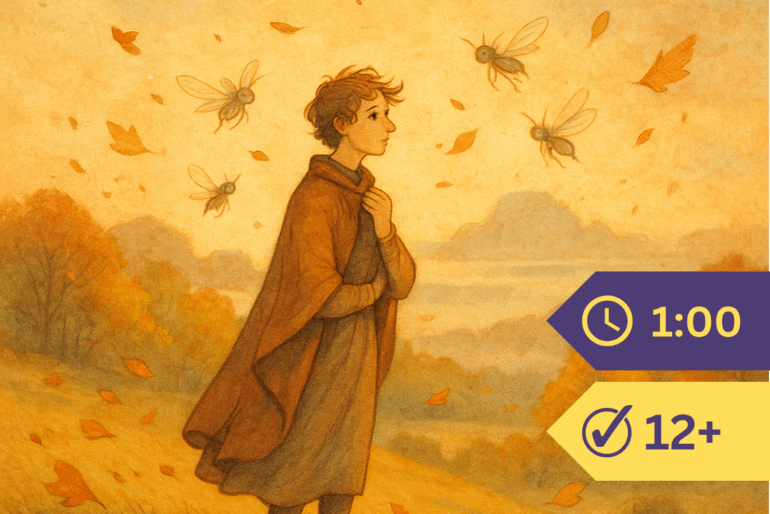
But now, all ignorant of the length
Of time’s uncertain wing,
It goads me, like the goblin bee,
That will not state its sting.


Add Ririro as a Preferred Source on Google


Credits

Emily Dickinson was a 19th-century American poet from Amherst, Massachusetts, famous for her compact, dash-filled verse that was mostly published after her death. The reference to "Van Diemen's land," the old name for Tasmania, shows her habit of using far-off places to measure emotional distance.