I never saw a moor,
I never saw the sea;
Yet know I how the heather looks,
And what a wave must be.
I never spoke with God,
Nor visited in heaven;
Yet certain am I of the spot
As if the chart were given.


 Read Anywhere, Anytime
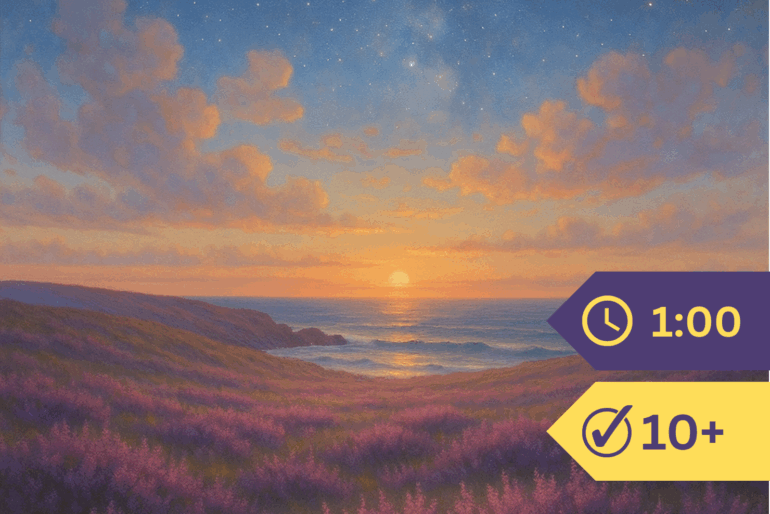
"I Never Saw a Moor" is a short poem by Emily Dickinson that explores the power of faith and inner knowing. In just two compact stanzas, Dickinson reflects on how the human mind can hold absolute certainty about things never directly witnessed — from the texture of heather on a moor to the existence of heaven itself. The poem moves from the natural world to the divine, drawing a quiet but striking parallel between imaginative conviction and spiritual belief.
I never saw a moor,
I never saw the sea;
Yet know I how the heather looks,
And what a wave must be.
I never spoke with God,
Nor visited in heaven;
Yet certain am I of the spot
As if the chart were given.
Emily Dickinson was an American poet of the 19th century, now regarded as one of the most original voices in English literature, though she published very little during her lifetime. "I Never Saw a Moor" is believed to have been written around 1865 and was published posthumously, like the vast majority of her nearly 1,800 poems. Her signature style — slant rhyme, compressed imagery, and dashes — is on full display in this brief but resonant piece.